Bella turns 12
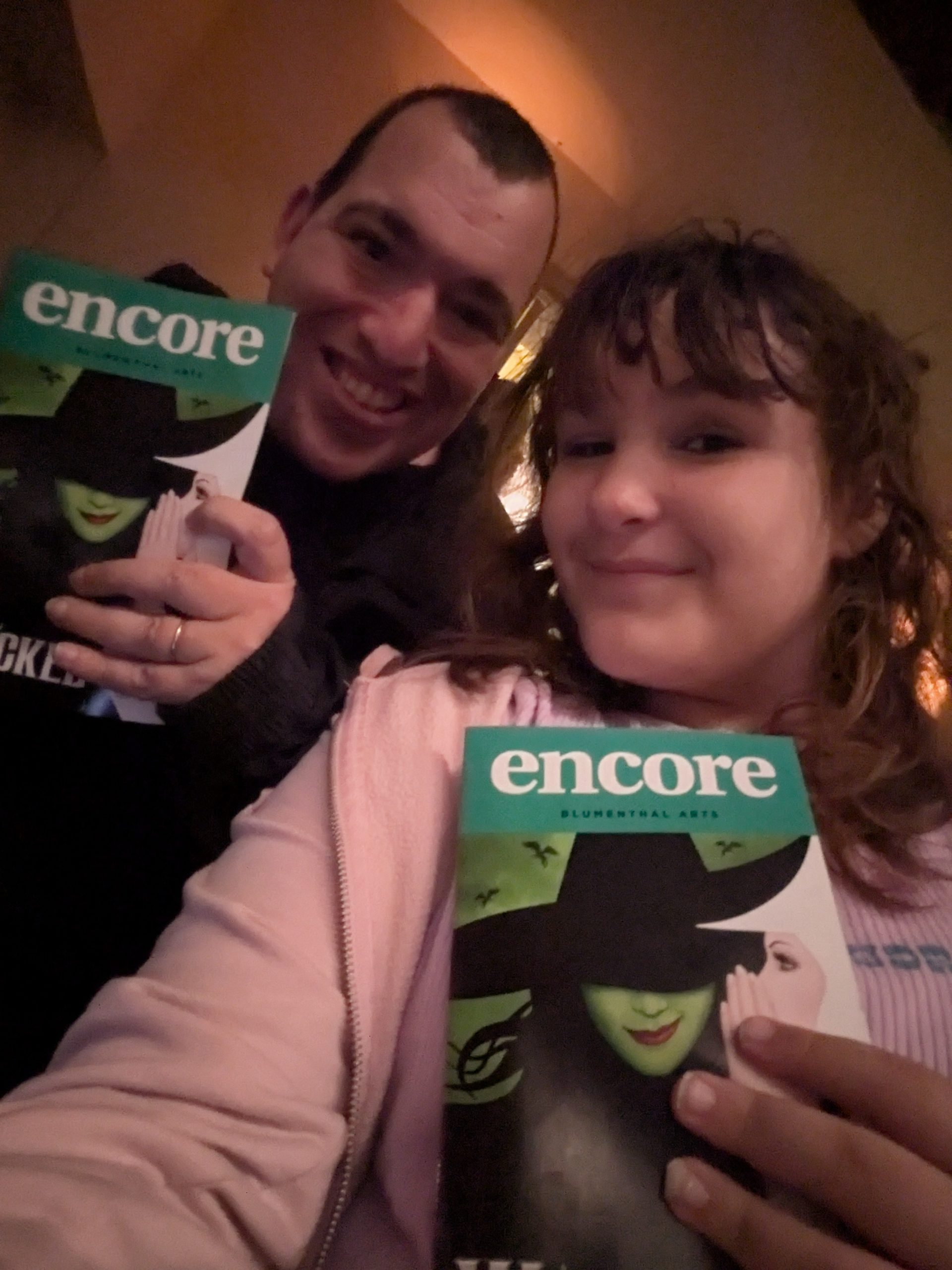
There are moments in life that redefine who we are forever. For me, that moment came on a stormy Tuesday night — May 27, 2014, at 9:04 p.m. — when my daughter Bella entered this world. Today, the joy of my life turns 12 years old. Becoming a father was never something I truly expected, but the moment Bella arrived, it became my purpose. I could not be prouder of the young woman she is becoming. She inherited her mother’s beauty and kind heart, but she also carries a healthy dose of my no-nonsense personality. Thankfully, she inherited my love for live entertainment as well, and that shared passion has given us some unforgettable memories. This past year has been especially memorable for us. We traveled to Charlotte to see the touring Broadway production of Wicked and even met members of the cast afterward. Earlier this month, we attended Vicki Lawrence’s “Vicki Lawrence and Mama: A Two Woman Show” and had the opportunity to meet her afterward as well. Then, just days before Bella’s birthday, we saw comedian Tim Meadows perform at the Millwald Theatre here in Wytheville. I know Meadows from his legendary years on Saturday Night Live. Bella knows him from Mean Girls. It was one of those perfect father-daughter moments where two generations met in the middle. Of course, nothing tops Disney World for either of us. Thanks to my mother — Bella’s grandmother — whose magical powers may rival Disney itself, our family will once again head to the Most Magical Place on Earth during the first week of June. We are already counting down the days. Bella’s first concert was Genesis, our favorite band. Over the years, she has joined me in seeing legendary artists like Paul McCartney, Ringo Starr, Bonnie Raitt, and our late friend, the incomparable comedian James Gregory. But as she has grown older, her musical tastes have naturally shifted toward the artists of her own generation. These days, she is completely captivated by One Direction and the solo careers of its members. Now it is my turn to take her to the concerts she wants to see. Harry Styles ticket prices may require a second mortgage, so that dream may have to wait. Zayn Malik recently canceled tour dates due to health issues. But we already have tickets to see Louis Tomlinson at Charlotte’s Spectrum Center, the same venue where she saw Genesis in 2021. We are also headed back there to see a rising artist named Sombr, who I must admit is exceptionally talented. If all goes according to plan, we may even catch Niall Horan when he tours through Raleigh next spring. People say a father earns a special badge of honor when he takes his daughter to a boy band concert. By next year, I believe I will have earned mine several times over. As wonderful as this year has been, it has also been one of the hardest Bella has ever faced. Within roughly 14 months, she lost both of her grandfathers, her dog, and her cat. My father passed away on October 26, 2025, the day after his 83rd birthday. Living in Murrells Inlet, South Carolina, he did not get nearly as much time with Bella as I wish he could have had. Still, I remain grateful for the memories they shared. Bella often reminds me not to worry because she has wonderful memories with “Pop.” I still remember sitting beside my father shortly after Bella was born as we watched her sleep in amazement. He looked at me and quietly said, “She’s going to do something very special with her life.” I believe he was right. Then, on February 11, 2026, Bella lost her maternal grandfather as well. She spent countless hours with her Pawpaw at his home in Elizabethton, Tennessee, often hanging out in “Dave’s Cave,” watching movies, listening to The Beatles, and talking about everything under the sun. They shared a special bond built on music, humor, and simple time together. She also continues to miss her beloved dog, Sophie, who had been by her side virtually every day of her life until Sophie had to be put down on March 14, 2025, just two months after Bella lost her cat, Sketch. For a child who loves animals as deeply as Bella does, those losses were heartbreaking. When a dog sleeps beside you every night of your childhood and suddenly is not there anymore, the silence is enormous. Yet through all of it, Bella has handled life with remarkable strength, positivity, and perseverance. One of the most important things I ever wanted to do as a father was to never crush her imagination or enthusiasm. Ironically, she has become the one encouraging me not to give up on my own dreams. Without her encouragement, I never would have landed the biggest interview of my career with Vicki Lawrence or shared that experience with my family. Bella has also never allowed my being in a wheelchair to define what we can do together. Whenever I worry about limitations, she immediately reminds me: “Are you kidding? We do more together than any father and daughter I know.” As I write these words through tears, I hope she always knows how much those words mean to me. Years ago, a counselor asked me to create a dream board filled with goals for my life. On that board, I placed a picture of infant Bella dressed in a Minnie Mouse outfit beside a simple phrase: “Take Bella everywhere she wants to go.” At the top of that list was Disney World. By the end of this June, we will have gone three times together. Along the way, we have attended concerts, met celebrities, traveled, laughed, cried, and made memories I would not trade for anything in this world. Most people never get to meet their heroes. Mine calls me Daddy. Happy 12th birthday to my Bubzie — the greatest joy of my life.