Jackson resurrected with tribute show at Chautauqua Festival
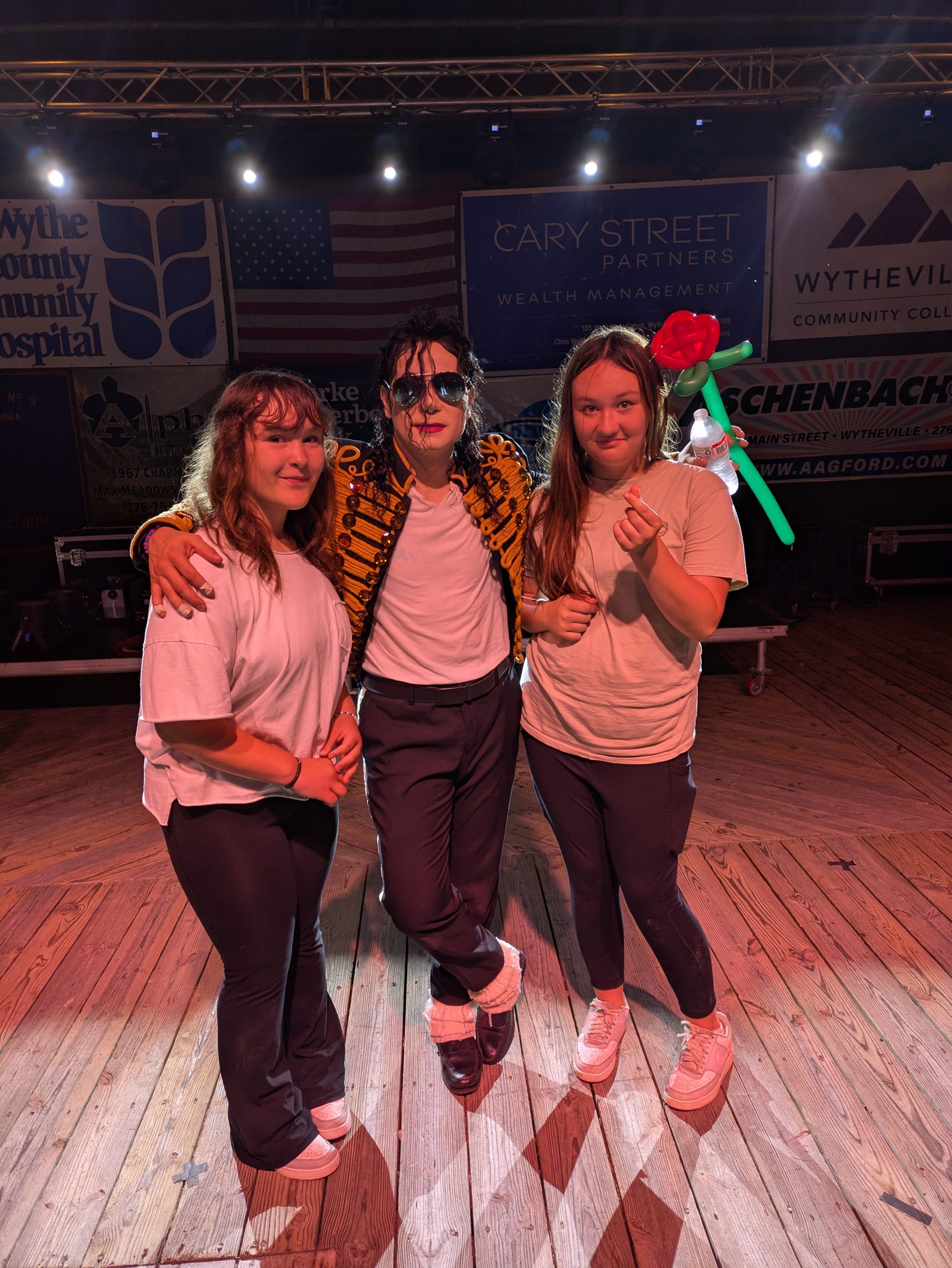
When Michael Jackson died 17 years ago, just two weeks before rehearsals for his highly anticipated This Is It tour concluded, millions of fans were left wondering what might have been. On June 27, attendees at the Chautauqua Festival in Wytheville received perhaps the closest glimpse anyone could hope to experience of that unrealized concert. Las Vegas-based tribute production MJ Déjà Vu, led by Justin Dean as Michael Jackson, left an audience of thousands in absolute pandemonium. With the recent resurgence of Jackson’s popularity following the release of his biopic, Michael, children who never experienced the Thriller era firsthand knew every lyric and dance move just as well as the adults who lived through it. Judging by the sea of fans crowding the stage and the screams echoing throughout the evening, one could almost believe it was 1983 all over again. Dean captured Jackson’s signature vocals, dance moves, and unmistakable stage presence with remarkable accuracy. Watching him perform, it was difficult not to wonder whether the excitement could have been any greater had Jackson himself somehow appeared in Wytheville. The production faithfully recreated much of the spectacle planned for the original This Is It concerts. Dean performed songs featured prominently in the rehearsal film, including “Thriller” and “Earth Song,” while incorporating many selections from the intended 2009 setlist such as “Jam,” “Wanna Be Startin’ Somethin’,” “Human Nature,” “Smooth Criminal,” and “Black or White.” There were also welcome surprises. Fans of Jackson’s legendary Wembley Stadium concert were treated to The Jacksons’ “Heartbreak Hotel,” while Off the Wall classics “Workin’ Day and Night” and “She’s Out of My Life” made appearances as well. Thankfully, Dean spared the audience the lengthy emotional breakdown Jackson often displayed during the latter, and he wisely toned down the famous crotch-grabbing choreography—something I appreciated since I attended with my 12-year-old daughter, along with countless other families who had brought their children to enjoy the show. The Jackson 5 medley showcased not only Dean’s versatility but also the talents of his outstanding dancers and backup vocalists. During “Beat It,” two performers even recreated the famous gang confrontation with an authentic-looking knife fight reminiscent of the music video. “Billie Jean” generated one of the evening’s loudest audience reactions, rivaled only by the spectacular production of “Thriller,” complete with impressive choreography and theatrical effects. One of my personal highlights was “Another Part of Me,” the energetic anthem from the Bad album that was featured in Disney’s Captain EO. Another pleasant surprise came when the band performed the Beatles’ “Come Together,” which Jackson famously recorded for Moonwalker. Despite the showcase of the military drill choreography that was planned as a transition into “They Don’t Care About Us” during the original This Is It concerts, my daughter was disappointed when it didn’t lead into her favorite Michael Jackson song. For the encore, the opening chords of “Heal the World” briefly suggested it would be the evening’s finale. Instead, Dean wisely closed with Jackson’s traditional concert ending, “Man in the Mirror,” a decision that sent the audience home on an emotional high. The athleticism of Dean’s dancers—with their backflips, cartwheels, and flawless synchronization—was every bit as impressive as Dean’s uncanny recreation of Jackson himself. In choreography, theatrical presentation, and vocal performance, this production delivered everything fans had once hoped to experience from the This Is It tour but never had the chance to see. It is remarkable how Michael Jackson’s popularity seems to experience a renaissance every decade or so. When I was ten years old, there wasn’t a bigger Michael Jackson fan anywhere. Thirty years later, when my daughter reached that same age, she became just as devoted—and today she’s an even bigger fan than I ever was. Watching her stand at the front of the stage, singing every word before meeting Justin Dean afterward for a photograph, was one of those father-daughter memories I’ll treasure forever. The evening was made possible by the Wythe Arts Council, and I remain deeply grateful for everything they do to enrich our community. I am equally thankful to Lily Formato, who welcomed my family with a wonderful catered meal of roasted chicken, fresh rolls, roasted vegetables, and plantains at Formato Fine Arts Gallery. During the evening, I also had the pleasure of meeting the members of Soul Jam, the Winston-Salem band that opened the show. Their musicianship and showmanship were exceptional as they effortlessly moved from Aretha Franklin, The Temptations, Chaka Khan, and Stevie Wonder to modern artists like Usher and Bruno Mars. They proved they could perform virtually anything with a groove. Outstanding as the entire group was, trumpeter Oliver Coutlee emerged as the undeniable star of their set. One of the highlights of the evening was finally having the opportunity to spend time talking with Lily Formato herself. Since opening her gallery at just 18 years old in 2018, she has earned my admiration as the youngest woman in Wytheville history to own her own business. Seeing her breathtaking artwork firsthand while experiencing her warmth, generosity, and intelligence made the evening even more memorable. It truly was a VIP Chautauqua experience and reminded me how fortunate we are to have people in Wytheville who genuinely care about preserving and enriching our community. They deserve not only our appreciation after special events like this, but our gratitude every day.