Zach Cooley

Tag: Wytheville

Easton sells out Wytheville’s Millwald in enthralling showcase

Easton sells out Wytheville’s Millwald in enthralling showcase

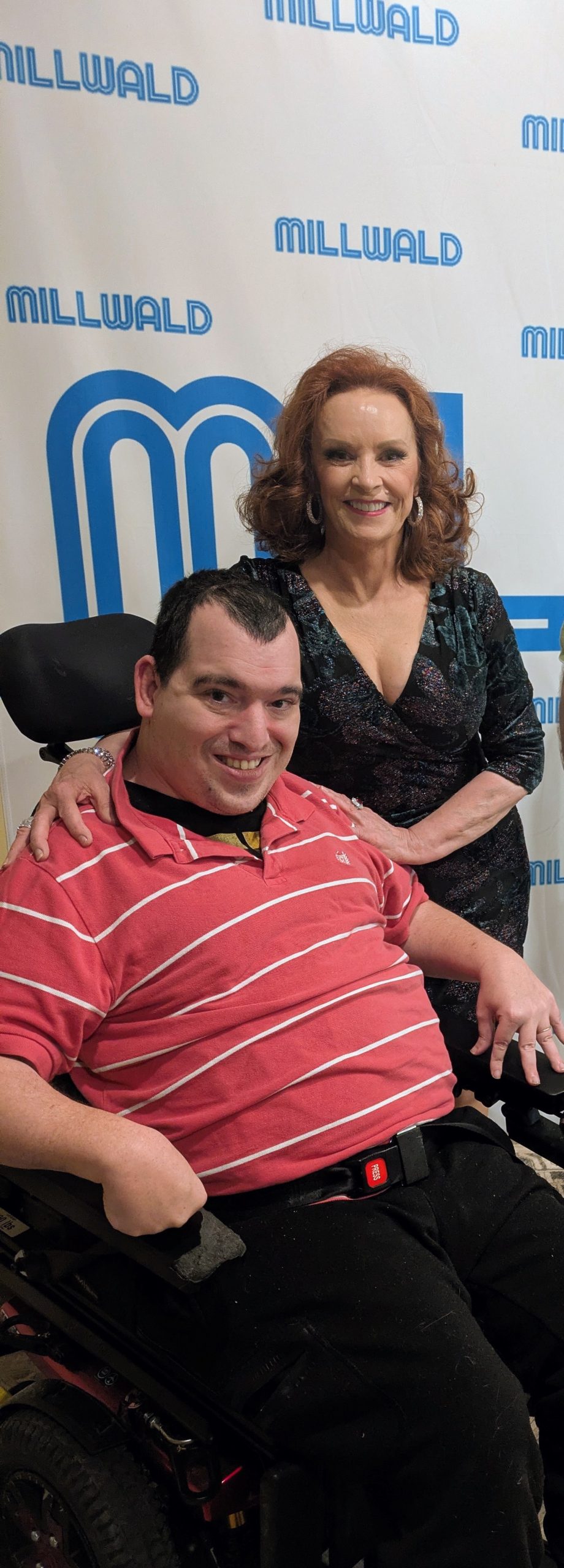
Despite turning 67 this month, Scottish pop star Sheena Easton proved she still has what it takes to wow an audience when she brought her nostalgic ’80s dance sound to the Millwald Theatre on Saturday, March 21. Opening with the Lisa Stansfield classic “Around the World,” Easton immediately had the sold-out crowd of 500 on their feet, and the energy never dipped throughout the 85-minute set. She followed with her 1988 hit “Days Like This,” setting the tone for an evening that balanced humor, nostalgia, and vocal strength. “Some of you are here because you know my name,” she joked after sipping from a mug she claimed was “fifty percent likely to have tea in it.” Then, with a grin, she added, “But let’s face it—some of you are here because your mother dragged you.” Before launching into the ballad “Almost Over You,” Easton shared that its tear-jerking lyrics reflected a true story from her own life. The performance was met with warm appreciation from the audience. She followed with a heartfelt rendition of “It Must Have Been Love” by Roxette, then delivered the Burt Bacharach classic “Always Something There to Remind Me” in a style closer to Sandie Shaw’s original version than the later ’80s interpretation by Naked Eyes. “That is my trilogy about getting dumped,” she quipped at the end of the sequence. “I would never dump you!” one audience member shouted. “Hi, sugar,” Easton replied in a playful Mae West-style drawl. Later in the evening, a fan called out, “You lost your accent!” “That’s because I stole yours,” she shot back, effortlessly keeping the crowd engaged. Introducing her hit “Strut,” Easton teased, “This next song will remind you of the moment your mother regretted playing you my music—after she came home and found you in her high heels singing the naughty lyrics.” She added with a laugh, “Some of the girls were doing it too.” A highlight of the night came during her tribute to her late friend Prince, whom she credited with boosting her confidence as a songwriter. She performed “The Arms of Orion,” their duet from the Batman soundtrack, alongside “Nothing Compares 2 U”—famously recorded by Sinéad O’Connor. Easton joked that she had been “dead jealous” that O’Connor recorded the song instead of her. Both numbers featured her backup singer and duet partner, Jason Martinez, whose versatility—ranging from country to R&B—added depth throughout the evening. “The Lover in Me” stood out as a high-energy callback to her ’80s peak, while a Prince medley—including “U Got the Look” and “Sugar Walls,” with a nod to Sheila E.’s “The Glamorous Life”—kept the momentum strong. Martinez rejoined Easton for her country hit “We’ve Got Tonight,” originally recorded with Kenny Rogers and written by Bob Seger. Of course, the show would not have been complete without Easton’s talented band. As she noted in a prior interview, she truly brought “the best musicians in Vegas.” Saxophonist Tony Q drove many songs to their peak energy, while guitarist Andrew Weir delivered standout performances—perhaps inspired, as Easton joked, by his wife Ann being in the audience for her birthday. Musical director Brian Triola anchored the sound on keyboards, and drummer Michel Angelo Vattima provided a powerful rhythmic backbone. “Telefone (Long Distance Love Affair)” proved to be a major crowd-pleaser, but it was her signature hit “Morning Train (9 to 5)” that brought the audience to its feet before the first note—and kept them standing through the final chord. Easton closed the night with her James Bond theme, “For Your Eyes Only,” ending the show with grace, warmth, and consummate professionalism. As delighted as the Wytheville crowd was to welcome her, one can only hope that this performance marks the beginning of many more artists of Easton’s caliber gracing the stage at the Millwald Theatre. As for Easton herself, the artist could not have been warmer and more gracious. Having been given the honor to meet and interview her was an even greater privilege than watching the double Grammy winner perform. She has lost nothing in talent or showmanship in a half-century of performing. One can only hope she will see fit to return to our humble, but grateful hamlet again soon.  

Strictly Observing

Not A Sparrow Falls drops today

Not A Sparrow Falls drops today

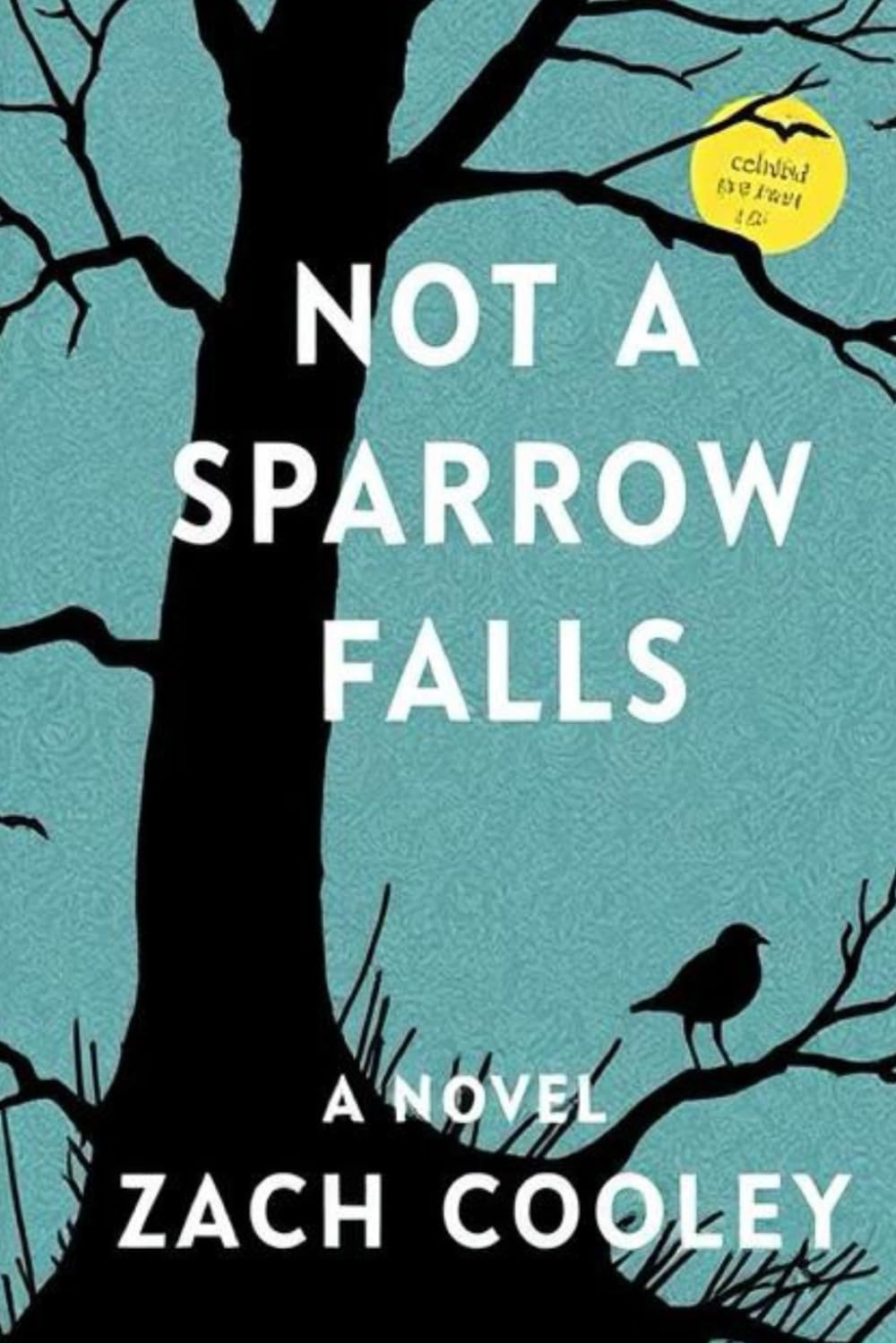
On August 15, 1926, Wytheville experienced perhaps the darkest hour in its history, when one of its citizens was lynched solely because the color of his skin was Black. Long before the lynching of Raymond Byrd was memorialized on a plaque at the site of the former Wythe County jail, a friend of mine, David Monahan, approached me with the idea of writing a novel inspired by this tragic event. From the very beginning, the idea both compelled and frightened me. I was deeply drawn to the story, yet I felt I lacked both the courage and, perhaps more importantly, the lived experience to tell it responsibly. For more than a decade, I wrestled with that truth. Ultimately, I arrived at a novel that includes this history—but in fictionalized form. Names have been changed, and certain circumstances differ from the historical record. I still do not feel qualified to tell the full truth of this story as it deserves to be told. That work has already been done with great care and scholarship by the late local historian John Johnson in his book They Gathered a Mob. My novel, however, seeks to tell a more multifaceted story. While I do not understand—and would never claim to understand—what it means to be societally ostracized because of race, I do know what it feels like to be treated as a third-class citizen as a person with a disability. A century ago, the experience was far harsher. If a disabled child survived birth at all, institutionalization was often immediate and permanent. That reality was another truth I wanted to confront in this story. One of my sister’s favorite books is To Kill a Mockingbird. It is one of mine as well. Inspired by it, I introduced a disabled teenage boy and his younger sister into the narrative, drawing from our own childhood. I included memories of strolling the streets of our neighborhood together, planning imaginary journeys, always accompanied by our dog, Fluffy—who was tragically killed by a car. After I lost another dog years later, I was devastated by the thought that I might never see him again. I had been told that animals do not go to heaven. That idea broke my heart. Dogs love unconditionally in the way God calls humans to love—and so often, we fall short where animals do not. I could not accept that such love would be excluded from eternity. Years later, a caseworker visited my home, and I shared that grief with her. She introduced me to Matthew 10:29: “Are not two sparrows sold for a penny? And yet not one of them will fall to the ground apart from your Father.” I held onto that verse. I carried it with me for years. It became the spiritual foundation of this book. I knew I wanted to write a story that paid tribute to Raymond Byrd, to the pets I have loved and lost, and to people with disabilities like myself—to affirm that a meaningful quality of life should never be denied to any of us. At its heart, though, this book is also a tribute to my sister. She is six years younger than I am, yet she often took better care of me than I ever did of her as her big brother. My childhood was wonderful because I had the greatest playmate in the world. She was my baby, and she is the reason I wanted to become a father. Through her, I learned the joy, tenderness, and purpose that come from loving a child. She has always been kind, funny, generous, and loving. Today, she remains among my truest friends and my most trusted confidants. This book is as much a tribute to her as it is to anything else. On a more serious note, I want readers to see the connection—however uncomfortable—between the mistreatment and misunderstanding of people of color, people with disabilities, and even animals. These are very different experiences, but they share a common root: the denial of dignity. In the end, we are all God’s creatures, and we are far more alike than different. If the idea that “not a sparrow falls” does not convey that truth, then my work has failed. Not a Sparrow Falls has the potential to be the most important book of my career—but only if people are willing to engage with its message. If you are open to examining the unsettling parallels between our present moment and the world of a hundred years ago, I humbly invite you to read it. As its back cover summarizes, “In the shadowed hills of 1920s Virginia, teenager Eli Ellis moves through life in a wheelchair, his sharp eyes and quiet strength carrying more than just the weight of his own body. Beside him is his little sister Sill, brave and bold with a sketchbook always in hand, and their dog Fluffy — until the day violence steals more than just their peace. When a lynching in their town is hushed, the siblings record the dirty secrets of Stones Mill. Their handmade book spreads faster than whispers in the church pews, drawing admiration, suspicion — and danger. As community support swells and opposition turns threatening, the Ellis family is pushed to the edge, facing down the powerful men who would rather preserve silence than face justice. Eli must find his voice, not just on the page but in the town square, as the truth begins to stir hearts and shake foundations. Based on true events, Not a Sparrow Falls is a tender, unflinching portrait of a small town at the crossroads of conscience. Told through Eli’s wise and wounded voice, it is a story of resistance, remembrance, and the quiet resilience of those who refuse to be erased.” This is the strongest statement I have ever made as an author. If you give it a chance, I would genuinely love to hear whether its message reached you. Not a Sparrow Falls is now available on Amazon in hardcover…

Strictly Observing

Atlanta Rhythm Section rocks Millwald

Atlanta Rhythm Section rocks Millwald

Twenty years ago, the Atlanta Rhythm Section lit up the Chautauqua Festival in Wytheville in what was promised to be one of the most exciting performances our hometown summer tradition had ever seen. By all accounts, it was. Unfortunately, I missed it—my father was undergoing open-heart surgery in Cleveland, and I was staying with a relative who couldn’t take me to the show. Two decades later, I finally had another chance to see this legendary rock ’n’ roll group in my hometown. This time, it was in the beautifully restored Millwald Theatre, playing to a sold-out crowd of more-than-enthusiastic fans—many of whom had waited as long as I had, and some even longer. I had the added career highlight of interviewing the band’s original lead singer, Rodney Justo, before the event. He assured me I would not be let down. That turned out to be a serious understatement. The Atlanta Rhythm Section delivered a non-stop, 90-minute set of pure rock and roll. They started at 7:30 on the dot on Saturday, August 9, and didn’t let up until the last note rang through the Millwald. “We’re not a band who jumps around the stage or does a lot of gimmicking,” Justo told the crowd. “We play and sing songs—that’s our job. We come on stage, we do our job, and that’s it. We have a good time doing it, and we want to make sure the audience has a good time as well.” As my Aunt Hazel would say, a good time was had by all. The Atlanta Rhythm Section has been steadfast for 56 years, and their fans have been equally loyal. One woman sitting behind me—barred from sneaking backstage—waited after the show to tell Justo, “I fell in love with you all when I was 12 years old. I’m 61 now, and I’m still in love.” Every one of the dozen-plus songs blended high-energy rock with the soul and blues edges that make ARS impossible to pigeonhole into a single genre. “Some people like to say we’re a Southern rock band,” Justo said. “But we don’t sing about trailer hitches and Jack Daniels. We like to sing songs with a clear message from beginning to end—musically and lyrically.” Opening with “Homesick” and “Champagne Jam,” the band treated the crowd to “Spooky”—a nod to the Classics IV, the band from which ARS was formed. “Half of us came from the Classics IV,” Justo explained. “The other half came from Roy Orbison’s backing band, The Candymen.” The set rolled on with “Doraville,” their tribute to hometown Georgia, followed by rousing dance numbers “Large Time” and “Boogie Smoogie.” “I’m Not Going to Let It Bother Me Tonight” was paired with a medley of “Do It” and “Angel.” Then came “Crazy,” and finally, their 1977 Top 10 hit, “So Into You,” which featured a blistering five- or six-minute guitar solo from Steve Stone that brought the crowd of 500 to its feet. From my front-row seat, I had a direct view of guitarist David Anderson, whose shimmering gold electric guitar matched his flawless playing. Drummer Rodger Stephan drove the evening forward with riveting licks, while bassist Justin Senker kept the funk alive and keyboardist Lee Shealy added the bluesy textures. Before launching into another of their biggest hits, Justo grinned and said, “The Atlanta Rhythm Section is the only band in history who can predict the future. Everybody wants a selfie with us these days—we were writing about selfies decades ago. Back then, we just called it ‘Imaginary Lover.’” That tune sent the band offstage to a roaring ovation before they returned for one last electrifying number: “Back Up Against the Wall”—the perfect closer for Wytheville’s rock ’n’ roll party. I’m grateful to my friend Jeremy Miller for getting me to the show, and to Donnie Bales, Lydia Showalter, and Mastin Paisley at the Millwald Theatre for ensuring this night was a career highlight—from the concert to my interview with Rodney Justo. Meeting all the current members of ARS was an honor. Justo, still holding his own at 80, and the rest of the band—none under 50—played non-stop jams for the entire set. They may not be household names like some who’ve passed through ARS’s ranks, but these men have spent decades—three, four, even five—keeping the band’s legacy alive with the highest class and talent. Here’s hoping they make good on their word and return to Wytheville. If they do, it will be our reward.  

Strictly Observing

Oasis Head Spa gives royal cranial treatment

Oasis Head Spa gives royal cranial treatment

When my family and I were invited to Oasis Head Spa in Wytheville on July 23 by its owner, Jenna Williams, I had no idea what to expect. I told her I had struggled with psoriasis for decades, and she assured me that they offered several treatments that might help. I assumed it would be something simple—a light facial, perhaps. I was completely wrong. From the moment we walked in, the experience was far more involved, therapeutic, and compassionate than I imagined. The first thing Jenna and her co-owner, Christine Hite, did was help transfer me from my wheelchair to a full-body massage chair. At 180 pounds, I worried I’d be too much for them to lift. But with 40 years of combined nursing experience between them, they handled the transfer with ease and confidence. That chair, which I was told has no built-in sensors, seemed to know exactly where my pain was. Having lived with cerebral palsy my entire life, I often suffer from chronic pain in my hips, lower back, and sacroiliac joints—especially since turning 40 earlier this year. Somehow, the chair focused on each of those trouble spots with precision. As the massage chair worked, it also gently squeezed my legs. Christine explained this was part of the lymphatic drainage system. Since I spend 12 to 14 hours a day seated, my legs often swell. This treatment clearly addressed that as well. Then came targeted skin care. The mask of my CPAP machine frequently irritates the psoriasis around my nose, and Christine applied a special exfoliant to those areas. My face was then covered for a red light therapy session, followed by a series of shampoo treatments designed to relieve scalp psoriasis. “We started your treatment with an exfoliant and a head serum painted directly onto the roots,” Christine explained. “Then we washed your hair with a specialty shampoo, reapplied it using different tools to help loosen dry skin and improve circulation, and finally applied a conditioning agent that was steamed in to restore moisture.” I left that spa room feeling like I had shed 10 years’ worth of dead skin, muscle tension, and stress. “Am I going to look 30 when we’re done?” I joked. “Even if you don’t look it,” Christine said with a smile, “you’re definitely going to feel it.” And she was absolutely right. A standout part of my visit was a detailed scalp analysis using a microscopic camera. For years, I assumed my dandruff was caused by psoriasis. Christine quickly discovered it was more likely due to dry skin and seasonal allergies. “You don’t just get allergies in your nose,” she explained. “Your skin gets them too—especially the scalp.” She pointed out only minor redness and flaking, with small psoriasis patches—not the severe flare-ups I feared. Meanwhile, my wife received the premium treatment, which included many of the same services, but customized for her longer, fuller hair. Jenna explained her exfoliant and scalp serum were blended with oils and scents for hair growth and softness. Her scalp analysis also showed some dryness, so her treatment was adjusted accordingly. “There’s a lot of massage in our treatments,” Jenna shared. “We use our hands and specialized tools—brushes, rollers, and more. When we apply the scalp detox, we section the hair and brush it in directly. That helps exfoliate dead skin, product buildup, and sebum. Then we follow up with shampoos tailored to each client’s needs.” My wife’s treatment included a luxurious hot towel wrap, as well as a lymphatic drainage massage that worked from the forehead down through the shoulders—relieving inflammation, tension, and even headaches. While I experienced my treatments on the massage chair, my wife opted for the spa bed. “Some clients prefer the chair,” Jenna said. “Others find it overstimulating and prefer to focus on just the head and neck massage. We let everyone choose the experience that suits them.” One highlight for both of us was the Water Halo—a rainfall-like rinse that felt like a gentle waterfall flowing over the scalp. Unlike some spas that recycle rinse water, Oasis Head Spa uses only clean, fresh, sterilized water. “You’d be surprised how many places use recycled rinse water,” Christine said. “We don’t do that here. Everything we use is clean and hygienic—especially important with guests who may have skin sensitivities or medical concerns.” I had never met either Christine or Jenna before, but within an hour I felt like I had known them for years. Even just sitting in their tranquil lobby—with relaxing music and the scent of peppermint in the air—felt like a gift. “That’s our goal,” Christine said. “We want people to know we genuinely care. Whether they’re here for a treatment or just need a safe place to rest for an hour, we’re here for them.” There’s truly no better place than Oasis Head Spa to unwind, heal, and be cared for—body and soul. Hour-long treatments range from $100 to $150, with monthly subscribers receiving premium treatments for just $100. To book your appointment, call (276) 200-8655 or visit them at 1480 East Main Street, Suite 403, Wytheville, VA. You can also visit their website: www.theoasisheadspa.com.

Strictly Observing

Tams light up Chautauqua Festival

Tams light up Chautauqua Festival

My wife and I have spent more than $100 a ticket to see legendary entertainers like Smokey Robinson. Those are unforgettable memories, no doubt. But we often find ourselves reminiscing about the time we saw The Tams perform live at the Wytheville Meeting Center in 2013 for only $5. That night still ranks among the best shows we’ve ever seen. Their sheer showmanship and musical energy far exceeded anything we could have imagined. Despite being wheelchair-bound, I danced with my wife that night. We met bandleader Albert “Little Red” Cottle and the rest of The Tams, and the warmth they shared was as unforgettable as their performance. I missed them when they came to the Chautauqua Festival in 2014 and had been waiting eleven long years to see them again. This year, I finally got the chance—this time, with my daughter by my side. Though not a fan of what she calls our “old music,” even she couldn’t deny The Tams’ unbelievable dance moves and undeniable musicianship. Robert Arnold, the group’s senior member, joined The Tams in 1991. Onstage with him were 15-year veteran Elton Richardson, Mikai Cottle (18-year-old son of Little Red), and Little Red himself. Together, they lit up the Elizabeth Brown Memorial Park during their hour-long set at the Chautauqua Festival on Wednesday, June 25th as the 8:30 headliner. It was almost hard to believe the performance was free. As Little Red told the crowd, “I joined the band when I was 6 years old. That was in 1976. I’m 56 now. My father told me, ‘Do what I say, and you’ll be all right. The show must go on.’” Clearly, he’s given his son the same advice. Mikai was a revelation—an electrifying dancer who brought back the spirit of classic Motown with mid-air spins, full-stage jumps, and footwork so crisp it would put the Temptations to shame. Watching from my wheelchair, I can tell you without a doubt: there are no better dancers in the world than these men. As they closed with the Isley Brothers’ “Twist and Shout,” Little Red reminded his son—and the audience—that he could still move just as well as the next generation. The Tams have become a musical dynasty: the legacy began with Charles Pope. After his passing in 2013, Little Red seamlessly took over. Now, young Mikai appears ready to inherit the crown when the time comes—and it’s clear he’ll wear it with style and soul. Little Red spent much of the set singing among the crowd, while many eyes followed his path through the audience. Those who kept their gaze on stage witnessed something remarkable: three performers, aged 18 to 71, in perfect sync, never missing a beat. Even when a toddler girl ran unattended through the last third of the show—trying to steal microphones and drumsticks, the band didn’t flinch. Professionals through and through, they never missed a note. In a crowd-pleasing moment, audience members young and old were invited to dance onstage. “I picked the right group tonight,” Little Red said with a grin. “These white boys know how to do it.” They opened with the O’Jays’ “Love Train” and followed it up with a Tina Turner-tinged rendition of The Trammps’ “Disco Inferno”—fitting, as my wife had performed a Tina Turner tribute earlier that same day. The crowd went wild. Then came the Tams’ signature classics: “Hurt,” “What Kind of Fool (Do You Think I Am),” “Laugh It Off,” and “Be Young, Be Foolish, Be Happy” — a personal favorite of the late President Jimmy Carter. They also delivered flawless covers of Jackie Wilson’s “(Your Love Keeps Lifting Me) Higher and Higher,” KC and the Sunshine Band’s “Shake Your Booty,” and Wilson Pickett’s “Don’t Let the Green Grass Fool You.” It was a setlist that had the entire park dancing from start to finish. Over the past 40 years, The Tams have become a beloved fixture of the Chautauqua Festival in Wytheville, and this year was no exception. “Tell your people we want to come back on a Friday or Saturday night when we can play longer,” Little Red told the audience. “We love playing in Wytheville, where we’re all family.” This year, Beach Music Night was moved to Wednesday just to accommodate The Tams’ schedule. And aside from my beautiful wife’s performance earlier that day, they were undoubtedly the highlight of the festival. “God is love,” Little Red reminded the audience during a moment of reflection. “We need more love in the world, y’all.” After the show, it was an honor for my family and me to meet the band again. As he prepared to leave for the night, he turned to me and said: “Let’s do this again. We’re going to make some history.”  

Strictly Observing

Emily Cooley honors rock queen at Chautauqua

Emily Cooley honors rock queen at Chautauqua

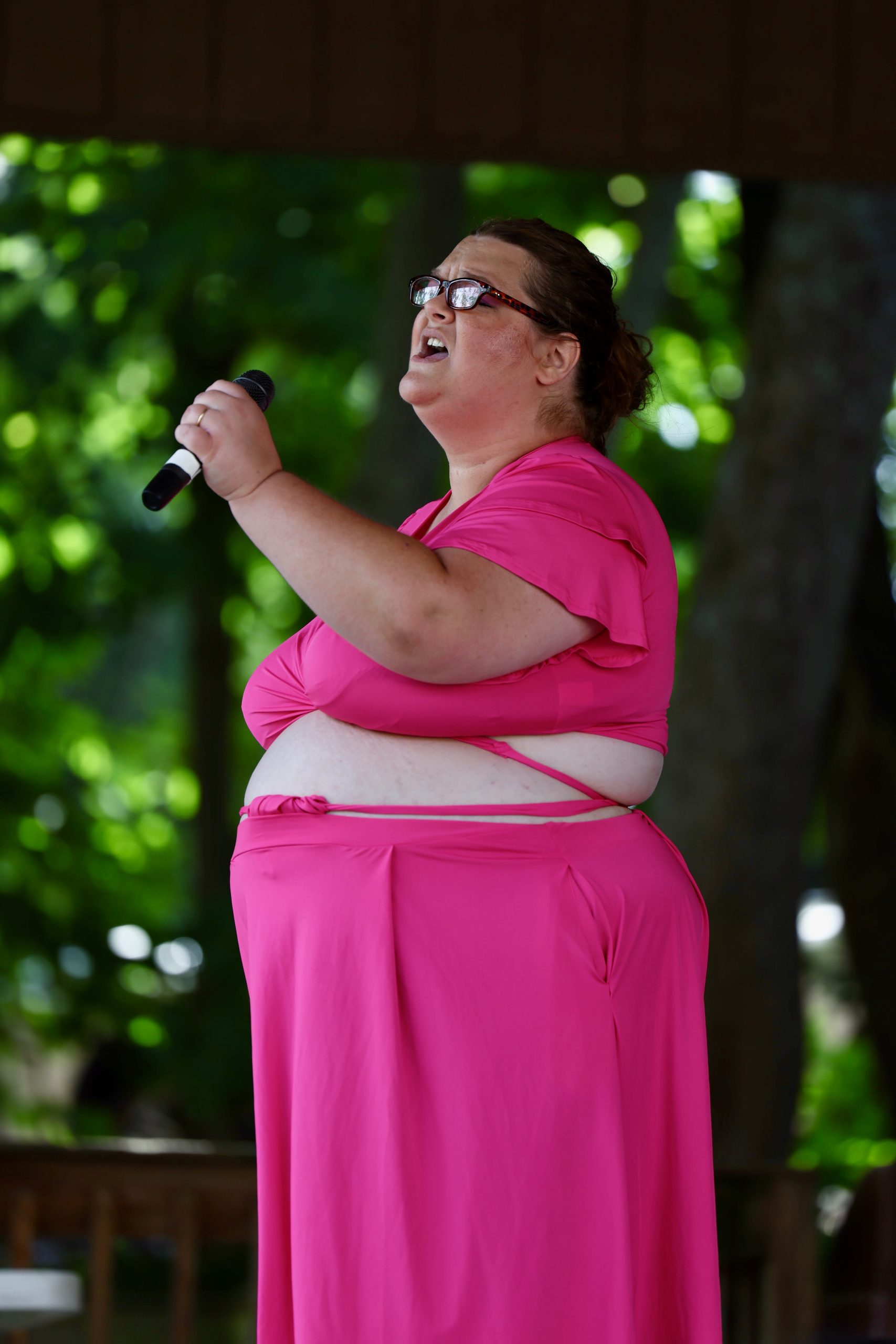
There are very few days in my life as good as Friday, June 25th. At noon, I had the pleasure of proudly watching my wife pay tribute to the Queen of Rock and Roll in an hour-long program showcasing Tina Turner’s heaviest rock songs. She had performed this program last year at the Wytheville Moose Lodge, but being invited this year to the Chautauqua Festival marked a new career highlight. The upper shelter of Elizabeth Brown Memorial Park in Wytheville was flooded with a stadium-quality rock show. Unfortunately, only a few were there to witness it in person. Several who did attend inquired where Emily might be from. When we replied that she lived just down the street, spectators shook their heads. “You just don’t know what kind of talent you have right here at home,” one man said. “It’s just unbelievable.” No truer statement was ever spoken. The handful of people who were smart enough to show up provided Emily with a wonderful energy—an energy she gave back to the audience one hundredfold. “You wore me out,” said our lifelong friend Teny Underwood, the retired deputy sheriff who plays bluegrass music for various churches and nursing homes. “I don’t know how you’re still standing,” said another dear friend, Ann Harrison. “I would’ve been passed out!” Those are the kinds of compliments Emily has waited all her life to hear. She has always wanted to be recognized for the kind of energy her idol exuded. Knowing that Tina Turner made me feel that way when I saw her in concert 28 years ago, Emily knew that’s how she wanted her audiences to feel, too. It was a deeply rewarding experience—but none more so than for the listener. Hearing her enormously powerful voice echo through professional, first-class speakers was like hearing her in the stadium she dreams of filling. It was a full-fledged rock show. Donned in a gorgeous pink dress—reminiscent of a cross between Cass Elliott and Barbara Eden—and glittery silver shoes that looked like they came straight from the Wizard of Oz book, her moves were fluid, full, and rich. This was especially true during numbers that called for dramatic flair, like the Gypsy Acid Queen from Tommy, the rock opera by The Who. That role, of course, marked Tina Turner’s own breakout into rock—and helped her break through the barrier she had always dreamed of. This performance felt like no less a breakthrough for my wife, who is steadily stepping into those same shoes. Blessed with perfect pitch and an alto voice, Emily has always wanted to sing rock songs—songs full of positive energy and joy. She got to play another exciting role when she performed the theme from GoldenEye, the 1995 James Bond film starring Pierce Brosnan, which anchored Tina Turner’s Wildest Dreams album the following year. Emily performed a couple more tracks from that record, including “Do What You Do” and “Whatever You Want”—the latter of which she dedicated to me, solidifying for everyone in the audience that the beautiful girl on stage was mine and mine alone. I have never been prouder. Our little girl, 11-year-old Bella, was equally proud of her mama. “You were so beautiful,” she gushed when Emily came offstage. “You sounded perfect!” Bella is our biggest encourager in everything we set out to do, and we love her with all our hearts—for the wonderful young woman she’s becoming, and for the light and blessing she brings to the world. Though there were 16 songs in Emily’s repertoire, the hour flew by, and she had to cut the last three or four. She opened with Led Zeppelin’s “Whole Lotta Love,” famously covered on Tina Turner’s Acid Queen album in 1976, and bantered playfully with the audience. “If you see Robert,” she said, referring to Led Zeppelin’s lead singer, “tell him I send a whole lotta love.” She also gave a nod to Phil Collins who played drums on “Girls,” a David Bowie composition from Tina’s 1986 Break Every Rule album, as well as a favorite Beatle before performing “Get Back” in Tina’s raucous style. “Paul McCartney just turned 83,” she said. “And he’s still out there killing it every night.” These are the kinds of legends Emily dreams of performing alongside. But unlike most dreamers, she has the talent to make it real. Having her own band would be a dream come true—but until then, she continues to wow audiences, big or small, with an incomparable voice that seems to come from another realm. We had a couple of very special guests in the audience that day to whom we owe tremendous gratitude. Locally renowned photographer and videographer—and my dear friend—Cory Parker was on hand to capture the event with his magic lenses. Another of our dearest friends, Sarah Taylor (who also happens to be our unofficial public relations agent), was there to film and spread a collection of photos and videos across social media. Famed Wytheville photographer Madeline Lenore also attended to see her friend. “She sounds great and looks terrific,” she told me. “That is the perfect dress for her.” We are also eternally grateful to Karen Melton, chairman of the Wythe Arts Council, for inviting Emily to be a part of our cherished hometown festival. She’s already invited her back to perform next year—and Emily gladly accepted. I can hardly wait to see the rock and roll extravaganza my wife will present next time. May she receive the recognition and opportunities she deserves to share her tremendous gift with the world. As her husband and biggest fan, I can tell you: there’s no greater blessing to be offered.

Strictly Observing

Rhea brings laughter to Wytheville

Rhea brings laughter to Wytheville

Saturday, June 14, was a wild night in Wytheville, Virginia, as stand-up comedian Caroline Rhea took the stage at the historic Millwald Theatre for an evening filled with raucous laughter—and a touch of culture shock. The Canadian-born star, best known for her role as Aunt Hilda on Sabrina the Teenage Witch, now lives in Los Angeles. She admitted she’s never been more frequently corrected on the pronunciation of a town’s name. “Wytheville” quickly became a running gag during her 77-minute set. Though her onstage persona couldn’t be further from the family-friendly character she’s famous for, a few determined teenagers managed to slip into the mostly 21+ crowd to see their favorite TV star. Rhea acknowledged the jarring contrast. “It’s a little like finding out your kindergarten teacher is a stripper,” she quipped. In addition to finally learning how to pronounce Wytheville, Rhea took delight in the surrounding towns’ unusual names—like Ivanhoe and Galax. The latter particularly tickled her. “Why that name hasn’t been used for an enema, I’ll never know,” she said with a grin. As always, Rhea’s humor blended self-deprecation with observational wit. “I’m very codependent, and I worry about the world,” she confessed. “When my friends laugh really hard, I pee in their pants.” Honestly, I wish she could have done that for me. The laughter took over my disabled, slightly incontinent body—a mess my wife had to help clean up when I got home, unfortunately. The presence of such a seasoned comedy and television veteran should have made for an instant sellout at the Millwald. That it didn’t was disappointing—both for our town and the comedian herself. “I’m not quite sure why the whole town didn’t show up tonight,” she said shortly after walking on stage. “I spent the day exploring, and from what I saw, it’s not like there are many other entertainment options around here.” A longtime lover of garage sales, Rhea found one local business particularly intriguing. “After the show, we’re all breaking into JoJo’s Attic so I can grab those antiques I saw and couldn’t buy,” she joked. “I’m running low on picture frames. I only have 2,000.” Her comedic style thrives on audience interaction. She playfully asked several attendees their zodiac signs. As fellow Aries, she and I apparently have a lot in common: namely, a tendency to start ten different stories and finish none. It made for an erratic, but highly entertaining, performance. Like me, she’s the parent of a single daughter—one she lives to please, but who often finds her embarrassing. “It’s really not our fault,” she explained. “It’s nothing personal against us. It’s just the way our children see us.” Her obsession with astrology was a recurring theme throughout the show. “I had an emergency C-section because I was at high risk of giving birth to a Scorpio,” she said. “I didn’t want to raise a daughter who was that good at sex and that unwilling to forgive.” The 61-year-old comedian also shared candid—and hilarious—tales from her dating life after 50. “I went on a blind date with a guy who had a lazy eye,” she told us. “We broke up soon after because he was seeing someone else on the side.” She paused, then added, “That joke would be even funnier if it weren’t a true story.” She also recalled a moment involving her health-conscious diet and an innocent-looking spoonful of peanut butter she found on her sister’s kitchen table. Thinking it was a healthy 12 grams of protein, she helped herself. Moments later, her sister returned. “I know I left a spoonful of peanut butter here,” her sister said. “I put the dog’s medicine in it and everything.” “At that point, I became a full-fledged dog in five minutes,” Rhea recalled. “I was scooting my butt in circles across the rug and peeing on her bedroom floor for months.” “I feel sick,” she told her sister. “Well, at least you’re not going to get ringworm,” her sister replied. Rhea’s opening act was 30-year-old CJ Marer, a struggling actor and comedian currently living in the Los Angeles area. Originally from a small town in Rhode Island, Marer quickly established his underdog charm with the audience. He recounted his only audition for a Hallmark movie. “I auditioned for the male lead, which basically meant I had to stay shirtless and do all the handyman work throughout the film,” he explained. “When I took off my shirt, the directors winced.” He mimicked the casting conversation: “Did you expect him to really be that pale?” one director asked the other. “How can he be skinny and fat at the same time?” Marer joked that most of the roles he plays. “I usually show up at the beginning of the movie to ask who the guy is she’s talking to,” he said. “By the end, I’m either dumped or dead. That’s the extent of my acting career.” He described one particularly rough patch when his apartment was broken into—but nothing of his was stolen. Instead, the burglars left behind a note and a watch they’d apparently taken from somewhere else. The note read: ‘We realize times are hard for you right now. Take care of yourself. If you ever want to join us, we’re looking for other guys to help us with jobs.’ “My roommates were mad,” he said, “but I had a new watch and a job interview—two things I didn’t have before the robbery.” Marer was a particular hit with the female members of the audience, earning more than a few catcalls and whistles during his time on stage. All in all, it was a thoroughly entertaining night—and a relatively historic one in Wytheville’s entertainment history. For me personally, it was a true honor to meet both comedians and to interview Caroline Rhea for my podcast. She couldn’t have been more gracious and generous with her time. It was, without question, a career pinnacle. To listen to the full interview, follow this link: https://www.youtube.com/watch?v=rg5-9Yveqrw  

Strictly Observing

Jerry and Judy Yonce celebrate 50 years of marriage

Jerry and Judy Yonce celebrate 50 years of marriage

I was honored to be one of 150 guests at the 50th anniversary celebration of my dear lifelong friends, Jerry and Judy Yonce. The event took place at the beautiful Rocky Hollow Farm venue on Rose Hill Road, just outside of Wytheville. A touching slideshow of memories, set to a constant rotation of 1970s soul music, played throughout the event. The celebration featured extraordinary catering from Sisters Restaurant in Marion, complete with exquisite desserts—I personally sampled at least four different kinds of cheesecake that afternoon! Also on display at the Sunday event, held on June 1st, was a deeply moving scrapbook featuring clippings from Jerry and Judy’s engagement and wedding announcements in 1975, alongside a display of their original wedding glassware and china. The most touching part of the evening came when the traditional wedding hymn was performed. Jerry drew a big laugh from the crowd when he jokingly launched into a medley of “The Old Gray Mare” and “Nobody Knows the Trouble I’ve Seen.” Judy then spoke warmly—and with some humor—about their rocky courtship, which began when she was just 13 years old. Their relationship was on-again, off-again until they finally married nine years later. “I figured if I got him to the church,” she said with a smile, “then we were going to make it.” Her tone then shifted to something more reflective. “There were three things I asked of Jerry before I agreed to marry him,” she said. “First, if he was looking for a girl just like the one who married dear old Dad, he needed to keep looking—I was not nearly as strong as his mother.” She recalled a vivid image of her late mother-in-law, a petite woman, single-handedly operating a garden tiller with no assistance. Judy continued, “I also told him I wanted to be first in his life after God. And if he ever stopped loving me, I wanted him to be honest and tell me. And if he ever cheated on me and I found out, I promised I would make his life a living hell.” Jerry clearly had no trouble living up to those conditions. Fifty years later, they looked as radiant, jubilant, and in love as the photos from their wedding day. Jerry is known throughout Wythe County as one of the finest cooks the region has ever seen. As the longtime head caterer at the Log House 1776 Restaurant, he is responsible for expanding not just my palate, but my waistline over the past 40 years. I often say that, when it comes to cooks, there is Jerry—and then there’s everyone else. He is a tremendously humble, kind, and generous man. As for his bride, Judy has been my friend for practically my entire life. She was my physical therapist from the time I was two years old. Beyond helping me with lifelong challenges related to cerebral palsy, she has been a constant confidant and counselor through both my darkest hours and brightest days. She has cried with me in joy and sorrow, laughed with me, and hugged me through it all. Her love and support have never wavered. As the minister of Trinity and Mount Olivet United Methodist Churches in Pulaski, Judy extends the same care and compassion to her many parishioners, friends, and family members. A devoted mother to Latricia and Davina, she is most proud of her only grandchild, Josiah. I was thrilled to finally meet him. I’ve heard stories about him since the day he was born, and it was an honor to shake the hand of such a gracious and intelligent young man—a credit, without doubt, to the loving but firm guidance of his grandparents. “Since the day we got married, Jerry has wanted to sing to me,” Judy shared. “I’ve never let him—until today. So I wanted to share this special moment with you all.” Reflecting on their less-than-steady early days, Jerry addressed the crowd with his signature humor and humility: “Judy remembers all of this so well,” he said. “But I don’t remember any of it!” Few people have given more to this community than Jerry and Judy Yonce, and even fewer couples have meant as much to me personally. I am so grateful to their equally warm and spirited daughter, Latricia, for inviting me to be part of this very special celebration. I am eternally thankful for the friendship of these two wonderful people and wish them many, many more years of happiness and love.

Strictly Observing