Zach Cooley

Author: Sarah T

Jim Messina

Jim Messina

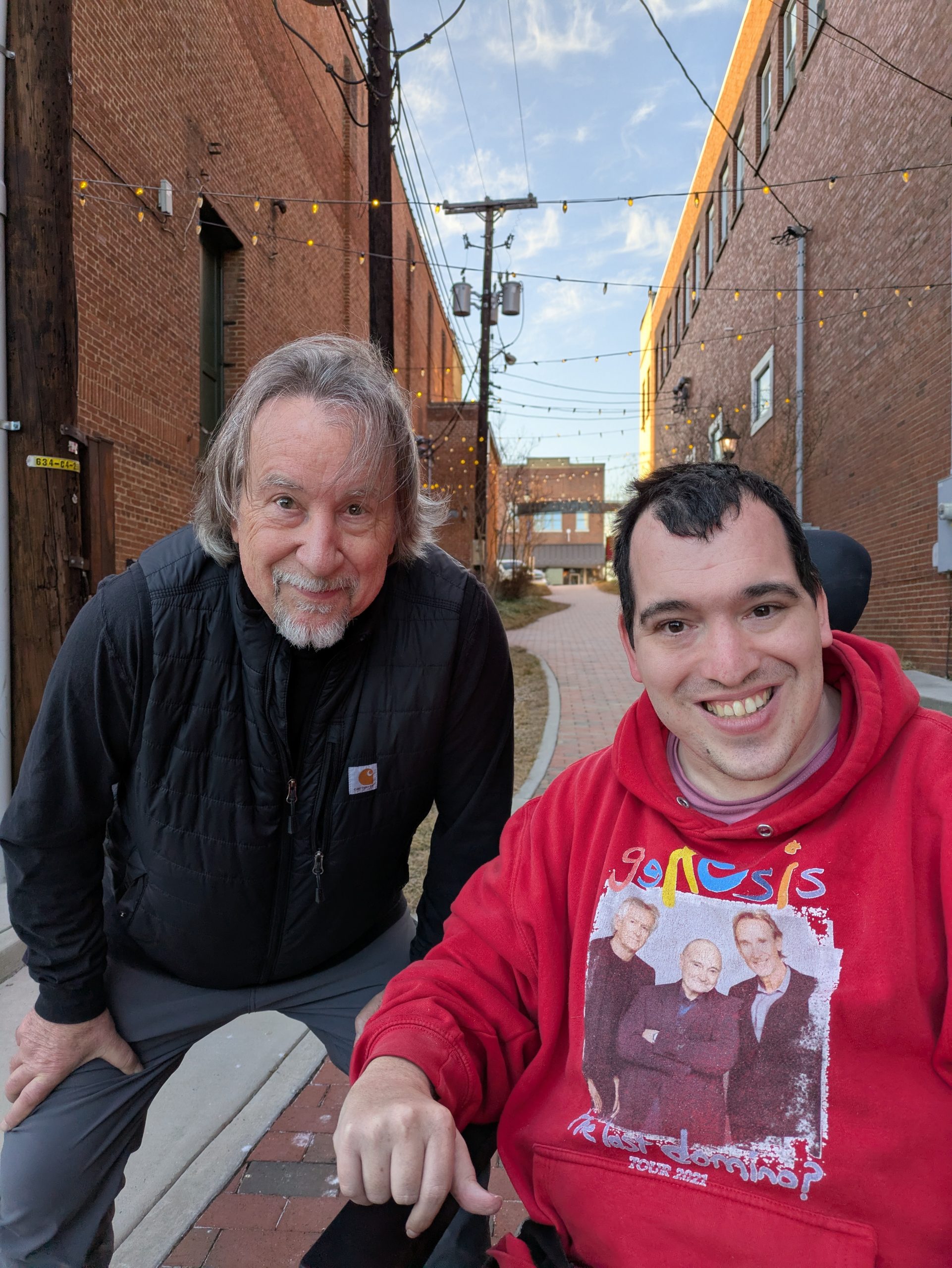
A highlight of my childhood was riding through the Big Walker Mountain Tunnel over the West Virginia state line to the Mercer Mall in Bluefield. While most children my age were begging their parents for toys or candy, my requests most often involved a cassette tape. I loved going to the Disc Jockey record store and purchasing a tape, even if I didn’t have a particular song in mind at the time. When I was four years old, I can recall coming home with the single “Call It Love” by Poco. I never dreamed that 36 years later, I’d be talking to the bass player of that particular song on my podcast for my editorial column. However, Jim Messina was the subject of an interview ahead of his March 12th performance in my hometown at the Millwald Theater in Wytheville. I started the interview by telling him that, having been born with cerebral palsy and bound to a wheelchair my entire life, music took me to places that life otherwise did not afford me. “Call It Love” is one of those songs that takes me back to that era of my life. I was also a big fan of the other half of his famous duo, Loggins and Messina. Kenny Loggins’ “Danger Zone” represented a much larger part of my childhood. My mother had originally bought the Top Gun soundtrack because she liked the songs, and as big a fan as she was of Kenny Loggins, I think I made her play that song so much that she began to hate it. At any rate, Jim Messina was kind enough to share with me his thoughts on the making of the Poco hit, sung by his former bandmate from Buffalo Springfield, Richie Furay. However, Furay wasn’t keen on singing the suggestive lyrics to the song, nor the steamy nature of the video. It was Messina who played mediator and made minor modifications to both the lyrics and video content to satisfy the newly ordained Christian minister. The Top 20 hit single was featured on a 1989 album called From the Inside, which represented a reunion of the original Poco members, who had disbanded in 1970. “There was a group of Nashville writers who had written the song for us,” Messina recalled. “We heard the original guitar solo that became the hook of the song, and I wrote it down. “It’s a fun song,” he said. “I’m looking to see if we can get Richie to do some dates with us so that we can include that in our repertoire on the road.” Unfortunately, that could not be done in time for the March 12th show at the Millwald Theater. It was the summer of 1970 when a 6-foot gangly kid with a long beard and braces came into Jim Messina’s studio for an audition to potentially be his next artist for production. He asked for demo tapes. Loggins didn’t have any. As it turned out, he didn’t even own a guitar. Messina let him borrow one of his own for the recording session. Despite his lack of preparedness, Jim Messina quickly learned that Kenny Loggins had an extraordinary ability as a singer. But could he play the songs he wrote? Loggins sang to his future partner what would become some of their staple songs, including “Danny’s Song,” “Return to Pooh Corner,” and “Vahavelia.” “Since he didn’t have a guitar or tapes, I asked him how he made a living,” Messina recalled. “It turned out that he worked for a publishing company who called upon Kenny to do whatever song they needed. If they needed an Elton John song, he could sound like Elton John. If they needed a Leon Russell song, he could sound like Leon Russell. As I soon discovered, Kenny would be a great marketable artist with such an epiglottis of various sounds he could sing.” Legendary producer Clive Davis was head of Columbia Records at the time and was very impressed by the demos the duo produced. Messina, however, was not looking to return to the road. But Davis was so impressed with his playing on the demos that he gave them representation and the means to create their first album, which took almost two years to make. This was due to Messina’s incredible ability to record a song to perfection. It was that precision with which Kenny Loggins learned how to record a great album. In his 2021 autobiography, Still Alright, Loggins calls Messina a “master of recording.” I asked Messina why he never considered writing his own story. “I’ve had many offers but turned them all down,” he told me frankly. “All the publishers ever want to hear is the nasty, salacious stuff about the music business, and I’m not that kind of guy.” I told him if he was ever interested in putting down his story with a co-writer who would honor his every word, I would be more than happy to be the guy for the job. The stories that he imparted to me about being present in the demo process of Joni Mitchell’s debut album, as well as working with the likes of David Crosby and Neil Young, had my mouth agape for the entire time we spoke. I was only supposed to be on the phone with him for a maximum of 30 minutes, but he was generous enough to give me twice that amount of time. I truly felt like I had come a long way from that 4-year-old boy listening to a cassette tape of “Call It Love” on the car radio. I am very grateful to Mr. Messina for his time and for giving me this opportunity. I will always treasure it. Wytheville can thank Jim Messina for making history on March 12th as the first-ever living rock and roll legend to grace the stage of our beautiful Millwald Theatre. In his electrifying, jam-packed 90-minute set, the former member of Poco and Buffalo Springfield left some 300…

Strictly Observing, Zach's At It Again

Dusty Springfield

Dusty Springfield

Twenty-six years ago this week, the world lost Dusty Springfield, the woman widely considered the “White Queen of Soul.” Known for her hits in the 1960s such as “You Don’t Have to Say You Love Me” and “Wishin’ and Hopin’,” the London born singer also pioneered the beehive hairdo and panda-eye makeup crazes that swept the fashion world. Universally regarded as one of the first white women to sing black soul music, Springfield’s style served as a blueprint for modern followers, such as Adele. I first fell in love with Dusty Springfield’s voice when I was two years old. I saw her on MTV in the video for The Pet Shop Boys’ “What Have I Done to Deserve This?” in 1987. From there, I discovered the 1960s icon she would forever become in her native Britain. Few knew the lady herself better than her longtime backup singer, Simon Bell, who agreed to an email interview in November 2024. “I was working with Madeline Bell, who had been Dusty’s backing singer in the ‘60s,” he recalled of their first meeting in 1978. “One night, after a show, we got back to Madeline’s home, and Dusty was on the answering machine asking for recommendations for backing singers, as she was coming back from LA to do Top of the Pops with ‘A Love Like Yours.’” There is a single photograph and an existing recording of under a minute featuring Springfield on her Ready, Steady, Go television series, duetting with another favorite of mine, Tina Turner, in the mid-’60s. Bell mentioned having heard the clip. “When Dusty had the success with the Pet Shop Boys, she got a congratulatory message from Tina,” Bell said. These British TV shows exhibited Springfield’s incredible versatility in duets with artists like Mel Tormé and Jimi Hendrix. Her version of Martha and the Vandellas’ “Dancing in the Street” surpasses the original. While I would love for American fans to hear these outstanding performances, Bell said the likelihood of them appearing on CD is slim. “Though not impossible, different companies own all those recordings,” he explained. “I think that would be a challenge.” “There is no surviving footage of the Hendrix duet,” he added. I also wanted to know if there was any truth to the rumor that Phil Collins was supposed to produce a never-released Dusty album around 1989. If so, that would have been the greatest musical collaboration in history—and a golden opportunity missed for worldwide music lovers. “I remember the Phil Collins rumor,” Bell recalled. “But Dusty never mentioned it.” “Neil [Tennant] was a huge fan of Dusty,” he said of the Pet Shop Boys collaboration. “He simply wanted to have her on the record.” Of course, after hearing that song, I discovered “Son of a Preacher Man” in Pulp Fiction, which led me to the Dusty in Memphis album. Not only did it become an all-time favorite, but it also inspired my book Dusty in Memphis: Chronicle of a Classic, which I published in 2019. “I think it’s because there is a kind of cohesion between the tracks that makes it a solid body of work,” Bell said of the album’s enduring legacy, though he was not quick to list it as her crowning achievement. “Other fans from the ‘60s hold other albums in higher regard,” he added. “That’s worth noting.” Not mentioning my work, I asked Bell to recommend a writing on the Memphis sessions. “I haven’t read anything I would recommend,” he said. It is tragic to me that America never properly recognized Springfield as the rock pioneer she was. “I think Philips [her record label] badly handled her American releases,” Bell offered. “There was no coordination with her UK successes.” Despite being inducted into the Rock and Roll Hall of Fame two weeks after her passing, Bell says Springfield, at 59, was aware of the accolade before her premature death from breast cancer on March 2, 1999. The Rhythm and Blues Hall of Fame included Springfield on their list of inductees just last year. Still, I can’t help but wonder if a tour of the American South, particularly during the Memphis era in 1969, might have endeared Springfield to fans in the States. To Bell’s knowledge, she never performed in our area. She recorded in Nashville twice: once with the Springfields, the group that became the first-ever British act to have an American hit with “Silver Threads and Golden Needles” in 1962, and again in 1994 when she recorded her final album, A Very Fine Love. As for how Springfield might have reacted to a wheelchair-bound, crazed Southern fan like me, Bell did not venture to comment. Wherever she might be now, I hope she knows there are Americans who loved her as the world should have. We will never see the likes of Dusty Springfield again.

Strictly Observing

Mikey Watson: Wheelchairs 4 Kids

Mikey Watson: Wheelchairs 4 Kids

Mikey Watson celebrated his 17th birthday on February 8th with an extra special gift. Like me, the Marion resident suffers from cerebral palsy and desperately needed a travel power wheelchair. When insurance denied his claim, Mikey’s devoted aunt and my longtime friend, Sarah Taylor, located a Florida-based company that funds mobility devices for children up to the age of 21. Through sponsorship, Mikey received his power wheelchair from Wheelchairs 4 Kids just in time for his birthday. “I like the opportunity to be more independent,” Mikey told me. “I want to go on more trips and the new chair will make that easier. It is easy to lift and travels at a walking speed, not too fast and not too slow.” I spoke with Programs Manager Nina Shaw, who explained to me how they helped my young friend. “A lightweight power chair gives Mikey the independence of a motorized device without the need for a special vehicle,” she explained. “They can fold up like a stroller and be stowed in the trunk of a car, which opens up a whole new world of opportunities for Mikey.” Wheelchairs 4 Kids is a nonprofit organization dedicated to improving the lives of children with physical disabilities, founded in 2011 by Madeline Robinson, who formerly with another wish-granting organization. She founded her organization with her loving husband Lonnie who encouraged her when she was dismayed at the disheveled condition of these children’s equipment. “Well, are you going to talk about it or do something?” he asked. As a result, Wheelchairs 4 Kids was born. Since then, more than 1,800 children with mobility impairments from across the country have been aided at no cost to them. Nina Shaw joined the organization just over eight years ago when she moved to Florida. She started out as a program coordinator before being promoted to project manager, where she now leads a team of five. “We have the most fun job in the company,” Shaw stated. “We get to talk to the kids and their families and be there when they receive their equipment.” She also noted that kids aren’t always as thrilled about receiving wheelchairs as their parents are. So, Shaw and her team go the extra mile by bringing gifts for the kids and creating presentations to make the experience more enjoyable for them. For Shaw, it is particularly heartwarming to see the tears of joy on the faces of the parents when they receive the equipment that insurance had previously denied for their child. “These families have fought with Medicaid for basic needs for their children and been turned down,” she said. “We get to come in and give them what they deserve—free, to keep forever. It’s a really awesome job to have.” Shaw also mentioned their Wheely Fun Day program, an inclusion event created by the organization, which allows wheelchair-bound kids to experience things like zip lining at Gatorland in Orlando. “I just got a letter from a parent expressing gratitude because she never believed her child could experience anything like that,” she added. “Most people are not aware that things like this are possible for their kids, and it’s great to make families aware of that.” Shaw says these events also foster a sense of community, where parents of disabled children can connect and form support groups. Disabled children also have the chance to meet peers who are like them. Though Shaw did not meet Mikey personally, she acknowledges that the company is growing, which allows them to sponsor children nationwide. Wheelchairs 4 Kids reaches out to local charities and social clubs for sponsorship and conducts social media campaigns encouraging friends and family to donate. “I tell family and friends that we will do whatever it takes to find the equipment their kids need,” she asserted. “We will look under rocks for the money if we need to, but we will make it happen.” Besides wheelchairs, the organization provides other mobility equipment, such as standers, gait trainers, and walkers. They also assist with small home modifications, like widening doorways to accommodate wheelchairs, and provide entrance and exit ramps and bathroom remodels for roll-in showers. They can even subsidize the addition of small lifts to modified vehicles, enabling unoccupied wheelchairs to be properly transported. “Even though power chairs are often obtained through insurance, families are often faced with only being able to use the power chair inside their homes or on the school bus,” Shaw noted. “These are problems we try to solve.” Shaw says she has learned about the endless variety of individual equipment needs for every person. No two cases are the same, so there is no blueprint for mobility equipment. “The prices of these equipment modifications are astounding,” she said. “They are unnecessarily high simply because they are for special needs.” “People don’t know how to interact with people with disabilities,” she added. “They don’t understand that they’re just like everyone else. I enjoy getting to be an advocate for them to help break the barrier between the disabled community and the rest of the world.” In closing, Shaw mentioned the Guardians of the Wheel Kids Club, where donors can set up automatic monthly donations to the program, starting at a minimum of $10. As for Mikey, he plans to celebrate his birthday by hosting a Wheelchairs 4 Kids fundraiser party. For more information on the organization and how to donate, visit www.wheelchairs4kids.org.

Strictly Observing

Traci Baker

Traci Baker

Traci Baker and I have never met. However, we share a bond through the music of Phil Collins, our all-time favorite musician. While I refuse to concede that she is the bigger fan, she certainly has more resources than I do. She has flown all over the world to see Phil’s solo concerts and many Genesis shows, placing first in the international VIP Genesis trivia contest held at the O2 Arena in London just before the band’s last-ever concert on March 26, 2022. Perhaps most importantly, Traci is the head of the official Facebook campaign to induct the multi-talented legend into the Rock and Roll Hall of Fame, an honor denied him again this year. She leads the campaign in memory of her late husband Rodney, who passed away from cancer on April 28, 2021, at the age of 58. Now, Traci has reached another triumph in tribute to our favorite artist. It has taken nearly two years to bring her incredible film Phil Collins at Live Aid: A Complete Look Back to the virtual world. Because of the lack of rights to copyrighted music, media outlets like YouTube continuously rejected the film, a fact that devastated the Arizona resident, who spent months perfecting it. Finally, on July 13, 2024 — the 39th anniversary of the historic concert benefiting third-world hunger—Traci could release the 107-minute documentary with a flourish on the Patreon website. She also included 27 minutes of bonus footage. “A first of its kind, this 2-hour-8-minute special takes a look back at Phil Collins’ history-making day, July 13, 1985, at Live Aid,” she writes in promotion of the film. “Through interviews, rare backstage video footage, and photos, we will start at the beginning of Phil’s day in England and stay with him to the end, eighteen hours later, in New York, after being in Philadelphia. On two continents, on two stages—one mega superstar wows the world.” For Traci, this was a labor of undying love for Phil Collins. “I hope you will enjoy this complete look back,” she told fellow fans of the English drum virtuoso. “This movie is something I poured my heart into. It combines two things I love so much: Live Aid and Phil Collins’s music and career.” Of course, her primary cause—getting the Genesis frontman elected to an organization that has ignored his contributions for decades—remains her biggest concern. “I hope this movie, which recognizes Phil’s history-making contribution to a now legendary event, will further expose the #getphilvotedin campaign and that members of the Rock and Roll Hall of Fame Nominating Committee and Voting Body—and members of the media—might see this and support the effort to #getphilvotedin,” she said. Live Aid was a 16-hour charity concert that took place in London and Philadelphia on July 13, 1985. The goal of the concerts was to raise money for the starving population of Ethiopia. Phil Collins’s Live Aid appearance was historic because he performed at both the London and Philadelphia shows on the same day. He was the only artist to perform at both concerts. Although some regard Collins’s Live Aid performance as one of the most iconic of his career, the artist himself had a contrasting opinion. On a blisteringly white-hot stage, Collins’s sweaty finger slipped off the piano key, causing an audible error during Against All Odds. He was so distraught by the mistake that, after his Philadelphia set, he never played the song on the piano again, now claiming to have forgotten how. The Led Zeppelin set, which featured Collins on drums, went awry because of lack of rehearsal time and technical difficulties. The band was terribly out of sync, and Plant’s vocals were off. Jimmy Page blamed Collins for the fiasco, but Collins asserts he knew his stuff. Plant had confessed to Collins backstage before the performance about Page’s belligerence. Initially, Phil was not the only person scheduled to perform at both locations. Robert Palmer-fronted band Power Station was among other performers who planned to grace both stages, but after they all reneged, Collins made history as the only artist to do so. His reasoning was simply that his friends Robert Plant, Eric Clapton, and Sting invited him to drum during their sets besides performing his own solo hits “In the Air Tonight” and “Against All Odds” at both locations. The entire time Phil Collins spent on stage in both locations that day was enough to fill an entire concert set list on its own. As well as his own set at both venues, he also played drums for Sting in London, then for Eric Clapton, and played with the reuniting surviving members of Led Zeppelin at JFK. On the Concorde flight, Collins encountered actress and singer Cher, who was unaware of the concerts. Upon reaching the U.S., she attended the Philadelphia concert and performed as part of the concert’s “We Are the World” finale, in which Collins was originally to have sung. By that time, an exhausted Collins was in a hotel room before making his way home the following morning. Traci’s film takes you through the breakneck pace of those eighteen hours in a brilliant and fast-paced 128 minutes. The viewer feels pity for the artist who exerted all efforts for an unpaid charitable event, only to be criticized for the rest of his life. Critics would forever view his philanthropy as arrogant ubiquity, and die-hard Zeppelin fans never let up on blaming him for their downfall after that disastrous 1985 performance. Phil Collins’s contribution to rock and roll is as endless as his repertoire and talent. Traci Baker’s documentary sheds light on this as much as any footage I have ever seen. Collins fans and music buffs alike can appreciate Phil Collins at Live Aid: A Complete Look Back for its unprecedented glimpse into this historic day in rock history. Watch it for free here: https://www.patreon.com/posts/documentary-phil-108043096.

Strictly Observing