Zach Cooley

Author: Zach Cooley

Perfect night for symphony

Perfect night for symphony

Sunday, September 14th was an evening made to order. The weather cooperated perfectly—warm, around 80—setting a stage that felt cinematic before a single note was played. The Roanoke Symphony Orchestra, in full force, took the stage at Elizabeth Brown Memorial Park in Wytheville for a one-of-a-kind concert facilitated by the Millwald Theatre. Several hundred people gathered; my wife and I were among them, enjoying a rare date night. After a satisfying meal at Burger Express on Main Street, we strolled along the beautifully bricked Heritage Walk toward the park. By the time we arrived, twilight had settled in, and the mood was just right. The concert, in two acts lasting about 67 minutes in total, opened with the stirring strains of The Star-Spangled Banner, featuring the Roanoke Symphony Orchestra Chorus. Maestro David Stewart Wiley, who leads the Roanoke Symphony, greeted the audience with warmth. “We are honored to be your orchestra,” he said. “We are an ensemble whose geographic reach is among the largest in Virginia.” What followed was a program that wove together patriotic fare, popular film scores, and adventurous percussion—all delivered under a spacious, open sky. One of the evening’s most inventive features was the group Plastic Music, who served up drums made of plastic and sticks fashioned from drain-pipe, along with boomwhackers—tubular percussion instruments pitched to different notes. Their work in In the Hall of the Mountain King shone: those unusual instruments added texture and surprise, carrying through later numbers as a recurring highlight. Next came a five-minute medley from Titanic (1997), composed by James Horner. The Roanoke Symphony tackled both the sweeping oceanic beginning and the impending danger of the iceberg, building toward the iconic My Heart Will Go On. Principal oboist William P. Parrish Jr. was featured beautifully in that latter part; his clarion tone added poignancy to the melody. Patriotic tunes held center stage next: a spirited pairing of Yankee Doodle and You’re a Grand Old Flag, presented under the banner of Star-Spangled Spectacular by George M. Cohan. Later, they performed God Bless America and an Armed Forces salute. These numbers were colored by the rich voice of Mayar Moneir, who also delivered stirring renditions of You’ll Never Walk Alone, Feeling Good, and even Dolly Parton’s Jolene—a nod to country classicism amid the evening’s eclectic mix. The first act wound down around the 45-minute mark; the second, shorter roughly 20 minutes, opened in striking fashion with Gioachino Rossini’s William Tell Overture, once again featuring Plastic Music’s boomwhackers. One of the evening’s climaxes came with a rendition of Led Zeppelin’s Kashmir, featuring a blistering electric guitar solo by Mike Havens. Maestro Wiley had high praise. “Mike is a wonderful educator, a great guitar player, and an all-around wonderful human being,” he said. Another highlight was The Raiders March from Raiders of the Lost Ark, John Williams’s adventurous and instantly recognizable theme from the 1981 film. It opens with a bold brass fanfare, has sweeping strings, woodwinds, and the sort of rhythmic drive that captures both daring and grandeur. It’s classic Williams—heroic, cinematic, and full of energy. Toward the end of the program, the audience was treated to Alexander Borodin’s Finale from Polovsian Dances, a suite from the 19th century opera, Prince Igor. A Russian composer by night, Borodin serves as a chemist at his day job. Maestro Wiley also took time to reflect on the community and connections. He spoke of Wytheville’s history of collaboration with the Roanoke Symphony, citing Wytheville as the hometown of Ashley Hall, who got her start in the Youth Symphony and later joined Canadian Brass. He also praised Dolly Parton—not simply for her songs, but for her generosity, particularly her Imagination Library, which has given widely to her home region. In summary, Emily and I enjoyed a very special evening. We are deeply grateful to the Millwald Theatre, the Roanoke Symphony Orchestra, and Elizabeth Brown Memorial Park—not just for the beautiful atmosphere but for the unforgettable artistry. It was a night we will always treasure. I also want to thank friends at the Millwald—Mastin Paisley, Donnie Bales—for making sure I was part of this event. Supporting what they bring to our community is one of the highlights of my life and career.  

Strictly Observing

Zach finds “Home” in new novel

Zach finds “Home” in new novel

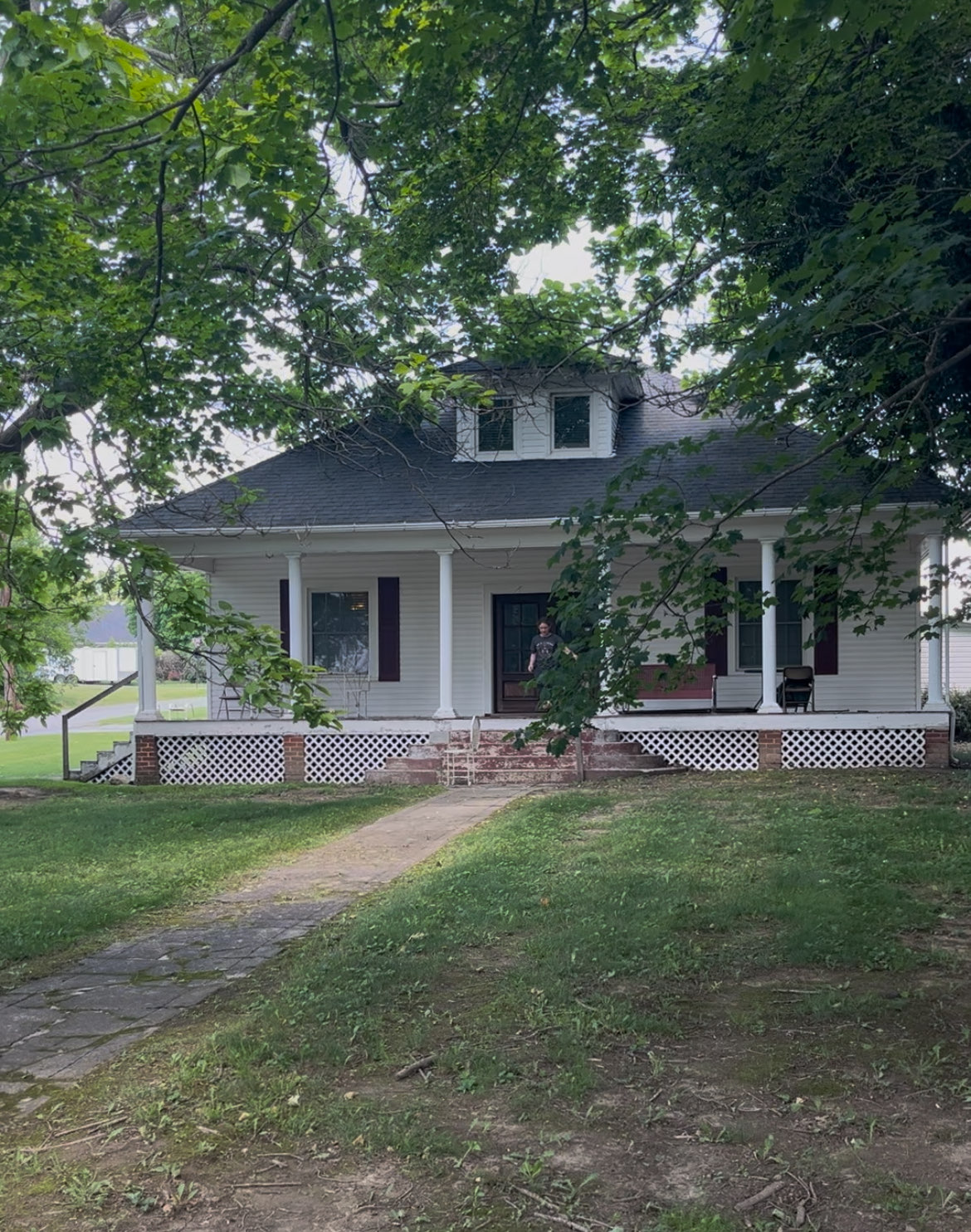
When it came time to build the world of my newest novel, Home, I realized I didn’t need to imagine an entirely new place. I already lived in one. For many, a house is just a structure—a roof, four walls, and a place to rest at the end of the day. But for me, my home is a living, breathing thing with a century’s worth of stories etched into its bones. It’s a place where memories linger, where joy and heartbreak have left invisible imprints. It’s a place of deep magic. I never expected to own a home like this. Growing up with cerebral palsy, my parents didn’t prepare me for milestones like marriage, parenthood, or homeownership. Those dreams felt impossibly distant. So when my wife Emily and I got married in 2010, we fully expected to rent for the rest of our lives. But life has a way of surprising us. One day, while looking for a new lease, a friend mentioned we might be able to afford a mortgage for about the same price as rent. At first, I didn’t believe it. I’d grown up riding around Wytheville with my parents, gazing out the car window at the old houses lining Fourth Street—grand, century-old homes that seemed like palaces. Owning one of them felt like an impossible dream. And yet, through a combination of providence and perfect timing, one of those very homes came up for sale—foreclosure had brought its price within our reach. We bought it. The day we moved in, Emily and I looked at each other and knew, without a doubt: We were home. As we settled into our new life, I couldn’t help but wonder about the house’s past. Who had walked these halls before us? What laughter, arguments, and dreams had filled these rooms over the decades? I dug through courthouse records, uncovering a fascinating timeline that stretched back to 1915, when the house was first built by a young couple named William and Daisy Moore. Their story began in joy but ended in tragedy—both of them died young, leaving their dream home behind. Over the next century, other families came and went. There were eras of great happiness, like when the Pope family lived there for fifty years, raising children and hosting weekly card nights. And there were darker times, when conflict and grief seemed to drain the very warmth from the house. One detail stood out to me: in one hundred years, no child had ever been born living in the house. Many had lived there, of course, but none had entered the world under its roof. That changed in 2014, when our daughter Bella was born. To me, that felt like magic—like a blessing written into the very foundation of the home. That spark of wonder grew into a story. At first, it was just a simple poem for Bella. I called it The Rose Princess. With illustrations from a friend, we turned it into a children’s book, but as time passed, I realized there was more to tell. The house wasn’t just the setting for a sweet little poem. It was the heart of a much larger story—a battle between light, darkness, hope, and despair. Bella would the center of this magical legacy. That’s when Home was born—a full-length novel blending fantasy with the very real history of Wytheville and my own family. In the world of Home, the roses that bloom around the house are magical. When love and goodness fill the rooms, the roses flourish. But when evil stirs, they wither and fade. The first owner, Daisy, becomes an enchantress who sacrifices everything to protect the home she built. Across generations, families come and go, while a dark force—personified in the villainous Cyrus Owens—plots to corrupt the magic for his own ends. And then comes Bella, the first child ever born in the house, whose mysterious birthmark—a small rose at the back of her head—marks her as the one destined to defeat the darkness once and for all. It’s a story full of wonder, danger, and redemption. But at its core, Home is about something very simple: the love that turns a house into a home, and the courage it takes to protect that love. For me, Home isn’t just a fantasy novel. It’s a love letter to my family, my town, and to every person who has ever felt the power of a place to shape their story. I want to share this book with you—not just as readers, but as neighbors. That’s why I’m thrilled to announce that my first shipment of 50 signed copies will arrive by September 17th. These are special, limited editions, and once they’re gone, they’re gone. Here’s how to claim yours for $20 for scheduled local pickup or $30 to have a signed copy shipped directly to you. Payment can be accepted by PayPal at paypal.me/zacharygcooley, Cash App at $ZacharyCooley1, in person at 820 S. 4th St., Wytheville, VA, or by phone at (276) 620-7492 to arrange payment or pickup. As I sat on my front porch, watching Bella play in the yard, I’m reminded why I spent a decade writing this story. Life is full of challenges, and sometimes the world feels dark and uncertain. But even in the hardest seasons, there are places and people that bring light and renewal. For me, that place is this house. For you, it might be somewhere else entirely. My hope is that, when you read Home, you’ll feel a little of that magic for yourself. This book is about family and faith, about how the past shapes us and how love can heal even the deepest wounds. And it’s about finding courage—the kind that grows in the soil of our everyday lives, blooming quietly until we need it most.  

Strictly Observing

Fab Four to hit Roanoke

Fab Four to hit Roanoke

Southwest Virginia fans of The Beatles are in for a rare treat this fall. Voted one of the top 10 Beatles tribute bands in the world, The Fab Four will bring their internationally acclaimed show to the Berglund Performing Arts Theatre in Roanoke on Thursday, September 25, at 7:30 p.m. This Emmy-winning tribute act is celebrated for its uncanny recreations of The Beatles’ legendary music and style. The Roanoke performance will feature a special spotlight on the Help! album era, alongside an array of the band’s most beloved hits from across their career. The Fab Four has built its reputation on authenticity and attention to detail, and with three rotating lineups traveling worldwide, they keep Beatlemania alive for audiences everywhere. While longtime fans may know Gavin Pring as one of the world’s premier George Harrison impersonators, he will not be performing in Roanoke. But, Pring assures, Southwest Virginia will not be disappointed. “Robbie Berg is one of the best George Harrison impersonators I’ve ever seen,” Pring said in a recent phone interview. “He’s an excellent musician and the spitting image of a young George Harrison. The audience will be in great hands.” Joining Berg onstage will be Neil Candelora as Paul McCartney, Erik Fidel as Ringo Starr, and Adam Hastings — flying in from London — as John Lennon. “The great thing about The Fab Four,” Pring added, “is how well they bring out the individual talents of each player. Everyone has to resemble the Beatle they’re portraying, and they must be able to play those parts convincingly.” But Pring explained that tribute work isn’t always straightforward. Certain Beatles albums required creative solutions for live performances. “With Sgt. Pepper’s, for example, Paul played both bass and lead parts in the studio. Of course, you can’t do that live, so whoever’s playing George has to handle the lead while Paul sticks to bass,” he said. “You have to be flexible and ready to play whatever’s needed.” That flexibility, Pring noted, is key to success in a top-tier tribute band. “Resemblance is important,” he said. “Even if you’ve got the best voice in the world, you can’t play Paul McCartney if you’re 250 pounds and look like Carrot Top. You need the look and the attitude.” The band’s structure reflects that dedication to quality. The Fab Four maintains three versions of each Beatle, ready to step in at a moment’s notice if needed. “Each one of us has to be prepared,” Pring said. “I’ve filled in for Robbie before. There was a gig in Liverpool where Robbie couldn’t make it. I planned to manage backstage and visit my mother, but I brought my suits just in case. Good thing I did, because I had to go on as George that night without rehearsal. You have to know the material so well you can just jump in.” Beyond the music, there’s a whole layer of work audiences never see. “I’m usually the one who does the interviews,” Pring shared. “I’ve always been good at talking to people and being on television, so the band sends me to handle that side of things. Others, like Adam, who looks remarkably like John Lennon, are more often in front of the camera for promotional photos.” At its heart, though, the success of The Fab Four comes down to teamwork — the same quality that helped make The Beatles timeless. “We complement each other,” Pring said. “Everyone has strengths and weaknesses, and we balance them. That’s why the show works so well, no matter which lineup is on stage.” For Roanoke audiences, the promise is simple: a night of nostalgia, energy, and uncanny performances of music that defined a generation. Doors open at 6:30 p.m. on Thursday, September 25, at the Berglund Performing Arts Theatre, with the show starting at 7:30. Tickets are on sale now at https://www.etix.com/ticket/p/76064213/the-fab-four-roanoke-berglund-performing-arts-theatre.

Strictly Observing

Philippines native brings soulful art to Southwest Virginia

Philippines native brings soulful art to Southwest Virginia

Vall Dino was born in the Philippines and came to America at the age of nine, when his mother married a man from Virginia. One of three children, he and his younger sister left their island home and settled in Smyth County, Virginia, stepping into a world that was entirely new in both language and culture. When Vall entered Sugar Grove Elementary School, he couldn’t speak a word of English. Yet he carried with him a gift that transcended words — a gift that would endear him to countless classmates and, eventually, to an entire region. “I may not have been able to speak to them,” Vall told me during an August 14th telephone interview, “but I could draw them a picture.” That simple statement is more than just a childhood memory; it is a thread that has run through Vall’s life ever since. His artistic ability, once a quiet bridge between him and his peers, has now blossomed into a talent recognized across the Southwest Virginia region. I first met Vall this past winter at The Art Place in Chilhowie. Entering the gallery, I was instantly struck by his work — pieces that seemed to lift images straight from a dream, vivid with color and emotion, and tinged with the smoky shadows of 1940s film noir. That period of American history has always fascinated me, and Vall’s art seemed to capture its essence without imitating it. But more than his technical skill, I was moved by his warmth and kindness, the openness of someone who carries both depth and generosity in equal measure. I was humbled when he presented me with a copy of one of his most celebrated works: a black raven perched on a bare limb, silhouetted against a brilliant red and orange sunset. “The raven represents the darker side of life,” he explained. “It’s a part of all of us. The sunset — with those deep reds and oranges — represents the difficult periods we all go through.” It is a gift I will treasure for the rest of my life. The raven was created as part of a pair, its counterpart a white owl resting against the backdrop of a clear blue sky. “The owl represents the daytime, the lighter side of life,” Vall told me. “I wanted it to be pure white to balance the dark color of the raven.” Though he has not returned to the Philippines to live, the now 28-year-old artist admits he misses its pace of life — and, especially, the family he left behind. “I have way more family in the Philippines than I do here in Virginia,” he said. “I think that’s part of why I paint so much — I miss them, and I miss the life I had on the island.” Vall’s artistic roots stretch back to his childhood there, on his grandparents’ farm. “We would make things from clay,” he recalled. “We’d draw with charcoal and burned wood from the cooking fire. We’d weave art from coconut tree leaves we tied together.” Those early days of improvised creativity were the beginning of a lifelong practice. When Vall entered high school in Smyth County, he began participating in art competitions. “I didn’t win at first,” he reflected. “But over time my passion grew, and I got better at it.” Vall’s first languages were Bisayan and Tagalog, but after years of speaking mostly English, he now finds his native tongue slipping away. “My mother still speaks to me in our language, and I can understand her,” he said. “But I have trouble speaking it now.” Following the death of his stepfather, Vall’s mother remarried and had another daughter, now ten years old. Through the changes in his family life, Vall’s art remained a constant — though he treats it with humility. “Art is always an aside for me,” he said. “I have a full-time job in a factory. I keep art as something I work on until I can save enough to really do something with it.” When asked about his goals as an artist, Vall’s answer is simple: to inspire others. He also values the personal commissions he’s received over the years. “I want to use my art to create self-awareness for people who need it,” he told me. “We all know the mental health struggle is real, and we should use our gifts to help people through it.” His connection with The Art Place in Chilhowie began, as he put it, “out of necessity.” “I’d been looking at The Art Place for a long time, thinking I’d like to display my work there,” he said. “Eventually I worked up the courage to talk to someone, and they let me bring my paintings in. I’ve had several shows there now.” With a warehouse full of paintings and space running low, Vall also approached the gallery about storing some of his work. That decision brought more than storage — it brought community. “I’ve met so many great people there,” he noted. “I wish I’d gone to them sooner.” One of those people is our mutual friend, Liam Besneatte-Cullinane, a fellow artist whose work often uses unconventional materials like newsprint as a base. Where Liam’s palette is more muted and textured, Vall’s style bursts with color, making their work a vivid complement to one another. “Liam and I are planning another art show there in the next couple of months,” Vall said. “We’re looking forward to that — and to more in the future.” As our conversation drew to a close, Vall summed up his philosophy simply: “Art is the expression of the soul. It’s the language we cannot speak.” As we wait to see what new visions his soul will offer us next, I remain grateful for his friendship and for the blessing of knowing someone with such talent and such heart. I am in awe of his gift — and eager to see how his art will continue to illuminate the lives of so many….

Strictly Observing

Atlanta Rhythm Section rocks Millwald

Atlanta Rhythm Section rocks Millwald

Twenty years ago, the Atlanta Rhythm Section lit up the Chautauqua Festival in Wytheville in what was promised to be one of the most exciting performances our hometown summer tradition had ever seen. By all accounts, it was. Unfortunately, I missed it—my father was undergoing open-heart surgery in Cleveland, and I was staying with a relative who couldn’t take me to the show. Two decades later, I finally had another chance to see this legendary rock ’n’ roll group in my hometown. This time, it was in the beautifully restored Millwald Theatre, playing to a sold-out crowd of more-than-enthusiastic fans—many of whom had waited as long as I had, and some even longer. I had the added career highlight of interviewing the band’s original lead singer, Rodney Justo, before the event. He assured me I would not be let down. That turned out to be a serious understatement. The Atlanta Rhythm Section delivered a non-stop, 90-minute set of pure rock and roll. They started at 7:30 on the dot on Saturday, August 9, and didn’t let up until the last note rang through the Millwald. “We’re not a band who jumps around the stage or does a lot of gimmicking,” Justo told the crowd. “We play and sing songs—that’s our job. We come on stage, we do our job, and that’s it. We have a good time doing it, and we want to make sure the audience has a good time as well.” As my Aunt Hazel would say, a good time was had by all. The Atlanta Rhythm Section has been steadfast for 56 years, and their fans have been equally loyal. One woman sitting behind me—barred from sneaking backstage—waited after the show to tell Justo, “I fell in love with you all when I was 12 years old. I’m 61 now, and I’m still in love.” Every one of the dozen-plus songs blended high-energy rock with the soul and blues edges that make ARS impossible to pigeonhole into a single genre. “Some people like to say we’re a Southern rock band,” Justo said. “But we don’t sing about trailer hitches and Jack Daniels. We like to sing songs with a clear message from beginning to end—musically and lyrically.” Opening with “Homesick” and “Champagne Jam,” the band treated the crowd to “Spooky”—a nod to the Classics IV, the band from which ARS was formed. “Half of us came from the Classics IV,” Justo explained. “The other half came from Roy Orbison’s backing band, The Candymen.” The set rolled on with “Doraville,” their tribute to hometown Georgia, followed by rousing dance numbers “Large Time” and “Boogie Smoogie.” “I’m Not Going to Let It Bother Me Tonight” was paired with a medley of “Do It” and “Angel.” Then came “Crazy,” and finally, their 1977 Top 10 hit, “So Into You,” which featured a blistering five- or six-minute guitar solo from Steve Stone that brought the crowd of 500 to its feet. From my front-row seat, I had a direct view of guitarist David Anderson, whose shimmering gold electric guitar matched his flawless playing. Drummer Rodger Stephan drove the evening forward with riveting licks, while bassist Justin Senker kept the funk alive and keyboardist Lee Shealy added the bluesy textures. Before launching into another of their biggest hits, Justo grinned and said, “The Atlanta Rhythm Section is the only band in history who can predict the future. Everybody wants a selfie with us these days—we were writing about selfies decades ago. Back then, we just called it ‘Imaginary Lover.’” That tune sent the band offstage to a roaring ovation before they returned for one last electrifying number: “Back Up Against the Wall”—the perfect closer for Wytheville’s rock ’n’ roll party. I’m grateful to my friend Jeremy Miller for getting me to the show, and to Donnie Bales, Lydia Showalter, and Mastin Paisley at the Millwald Theatre for ensuring this night was a career highlight—from the concert to my interview with Rodney Justo. Meeting all the current members of ARS was an honor. Justo, still holding his own at 80, and the rest of the band—none under 50—played non-stop jams for the entire set. They may not be household names like some who’ve passed through ARS’s ranks, but these men have spent decades—three, four, even five—keeping the band’s legacy alive with the highest class and talent. Here’s hoping they make good on their word and return to Wytheville. If they do, it will be our reward.  

Strictly Observing

Beloved Wythe teacher and friend passes away

Beloved Wythe teacher and friend passes away

The reality that my dear friend Frances Watson has passed away still hasn’t fully sunk in. Even though she lived 82 years, she strikes me as someone who was too young to leave this world. That’s because Frances was ageless. She was the same vibrant, witty, and kind-hearted person from the very first time I remember meeting her—early in my own life, which has now spanned over 40 years. I never had her as a teacher at Spiller Primary School, but everyone wished they had her. And it wasn’t just because she was beloved—it was because she made every moment feel like something special. Frances didn’t need a school-wide play for her students to experience joy. She put on plays—with her own class, no less—in front of the entire school. I can still remember being in second grade, obsessed with the story The True Story of the Three Little Pigs—the one where Alexander T. Wolf explains how he was framed. And who do you think played the wrongly-accused, over-the-top wolf, pleading his innocence in our school’s version? Frances, of course. Larger than life. Stealing the show. And then there was third grade, when Billy Ray Cyrus’s Achy Breaky Heart was topping the charts. Frances’s class did a pantomime of that song, with the student playing Billy Ray picking Frances from the audience to dance with him. For 60 years, she and her husband Graham ran one of the finest farms in the county from their home in Max Meadows. I’ll never forget one day when she walked past me in the lunchroom and saw that I hadn’t touched my milk. “You’d better drink that milk,” she said, looking me dead in the eye. “That cow gave its life so you could have that milk today.” Needless to say, I left lunch with a very dry, very empty milk carton. But it was later in life that I was lucky enough to become Frances’s friend. We bonded over our support for the Wythe County Public Library, and through that shared passion, we met our mutual friend Anita Libby. It was Anita who called me to say that Frances had taken a fall and wasn’t expected to live another 24 hours. And it was Anita who first told me that Frances had passed. I called her back immediately to offer my deepest condolences, because Frances wasn’t just a friend to Anita—she was like a sister. And Frances proudly called Anita the same. Just a few months ago, Frances told me she wanted to attend an event at the Millwald Theatre with me. I promised her we’d make it happen. I also promised her a part in the stage play I’ve been working on, based on my first novel in 17 years, Open Secret. I wrote a role just for her—a sister character named Frida, who would appear opposite the main character, to be played by Anita. When I sent Frances an early draft of the script, she raved about it. “What an honor it would be to be in your first play,” she wrote to me. “I absolutely loved the part. Because, as you know, Anita is like my sister, and I love telling her what to do.” I’m so sorry I let you down, dear friend. I’m sorry we never made it to that Millwald show together. I’m sorry you never got to be in the play. But rest assured—it will not happen without you. I’m sorry you never got to read the book with the character I wrote for you. I’m sorry I never got to sign you a copy. There was no bigger supporter of the arts in Wythe County than Frances Watson. She championed the Millwald Theatre. She never missed a show when my wife sang at the Bolling Wilson Hotel. I remember once after my wife sang, Frances came up and said, “If you sang that well, honey,—you deserve a little bit of wine.” Then she produced a goblet bigger than a fishbowl, drained the contents of her bottle into it, and offered it to my wife. “You realize if you drink that,” I warned her, “you won’t be able to drive us home… or get through your next song.” It was just Frances being Frances—joyfully generous, unapologetically full of life. She was ageless because she never stopped living. You wouldn’t have known—just two days before her passing—that she was on the verge of a brain bleed. You wouldn’t have guessed she was 82. She was vibrant until the end. And she wanted the people around her to be just as alive. From the thousands of students she inspired, to her beloved grandchildren, to her many family members and friends—Frances leaves a void that no one else could ever fill. When I think of her, I think of sayings like: “Dance like nobody’s watching.” “Live every moment like it’s your last.” Except Frances didn’t dance like no one was watching. She wanted everyone watching—not for attention, but to show us all how to squeeze every drop out of life. No one lived a fuller life than Frances. And no one set a better example of how to seize every moment we’re given. So from now on: When I attend a Millwald Theatre show… When my wife reaches for a sip of wine… When I sign a copy of Open Secret… …those things will be done in memory of Frances Watson. I know that when I’m singing loudly to my favorite song, or laughing a little too hard at a friend’s joke—Frances will be there. In spirit. In laughter. In joy. And in every moment we choose to truly live.  

Uncategorized

Snow keeps Mayberry Motor Inn legacy alive

Snow keeps Mayberry Motor Inn legacy alive

On July 15th— 15 years and 9 days after the night my wife Emily and I spent our wedding night in Mount Airy, North Carolina—we returned for an overnight trip to the historic Mayberry Motor Inn. We were there at the kind invitation of my dear friend Mikel Snow, who now shares ownership of this Mount Airy staple following the passing of his beloved grandmother, Alma Venable, in 2022. The 38-year-old Mount Airy native co-manages the hotel, which opened in 1967, alongside his twin brothers, Jeremy and Josh. Emily and I were accompanied by our 11-year-old daughter, Bella, who has also grown up with fond memories of staying at the Mayberry Motor Inn. It has truly been one of the great blessings of my life to be called a friend by the late Alma Venable, who captured the heart and spirit of Aunt Bee better than even Frances Bavier herself. Her three grandsons, whom she lovingly raised and homeschooled, had been by her side since birth as she ran the inn—a treasured destination for Mayberry fans across the country. It seemed only natural that they would someday take the reins. I’m fortunate to have become good friends with all three of the Snow brothers, but it’s Mikel—with his calm spirit and warm heart—who I feel the closest bond with. After I wrote a tribute article to Alma upon her passing, I mentioned that it would be difficult to return to Mayberry knowing that she, along with other real-life icons like Russell Hiatt (who inspired the real Floyd character) and Betty Lynn (the actress who played Thelma Lou), were gone. When Mikel read those words, he was kind enough to send me a gift certificate for a free night’s stay at the Mayberry Motor Inn—just to remind me that I still had friends in Mount Airy. It took me two years to finally make use of it, as various mishaps caused me to cancel the trip three times. But having finally made it this summer, I can tell you that my wife, daughter, and I thoroughly enjoyed every moment of our visit. We could not be more grateful to Mikel Snow and his brothers for their generosity and kindness during our stay. The rooms are as charming and well-kept as ever. There’s always a feeling of returning to a home away from home when you stay there. Most importantly, I’m thankful for the hours I spent talking with Mikel—especially after we were unexpectedly thrust together in a small laundry room during one of the most severe storms Mount Airy has seen. Just moments earlier, we had been talking outside when the skies broke loose. Mikel quickly rushed my wheelchair into the laundry room before it shorted out, and we ended up spending hours inside, talking about things only close friends can share. It was a conversation I’d always felt we’d eventually have—but neither of us expected it to happen that way. A true friendship is tested when you go through something together. And helping a wheelchair-bound guest into a laundry room to save him and his chair from a flooding storm might be a first in the long history of the Mayberry Motor Inn. I suppose I had to leave my mark somehow. At any rate, I treasured every minute with Mikel, a man who carries the kind and loving spirit of his grandmother—along with her charm, wisdom, and emotional insight. I had mistakenly thought that the true spirit of Mayberry might die with people like Alma, Betty, and Russell. That spirit now thrives in Jeremy, Josh, and especially Mikel Snow—all of whom went above and beyond to ensure that my family was made to feel completely at home. Emily and our daughter Bella especially enjoyed the pool, their favorite summer activity. Meanwhile, Jeremy kindly loaned me a copy of Neal Brower’s new book, The Essential Mayberry, which I read as they swam. We topped off our visit with dinner at Libby Hill, a locally beloved seafood restaurant, open since 1953, that’s as much a Mount Airy institution as Mayberry itself. For only $11.75, I enjoyed a delicious three-item seafood combo featuring fried flounder, Alaskan whitefish, and Calabash popcorn shrimp. Another Mayberry institution I miss dearly is Walker’s Soda Fountain, run by my cherished friends Lora and David Jones. They sold the business last year, and I was heartbroken when Lora, a Wythe County native, delivered the news. The last time I visited, it was the only place in town I could get a decent malt. Sadly, I had no luck finding one during this visit and left town a little bitter about it. I miss my dear friends but wish them the very best in retirement. There was truly no place like Walker’s, and I’ll always treasure the memories I made there. As wonderful as our visit was, it’s true that things aren’t quite the same without Russell Hiatt, Betty Lynn, and Alma Venable being there in person. But when it comes to Alma, I can tell you her spirit is very much alive in every part of the inn. She and her late husband, Luther Parker “L.P.” Venable, dedicated their lives to creating more than just a roadside motel. Her custom, fully restored Mayberry squad car—a 1963 Ford Galaxie, complete with the Mayberry sheriff’s star and working siren—still remains proudly parked out front. For years, it bore a North Carolina license plate reading Barney F. Now, in tribute to his grandparents, Mikel has updated the tags to read Alma & L.P. To the Snow brothers, my dear friends, she will always be Grandma—a woman they miss deeply every single day. Their mother, Vicki, Alma’s only child, passed two years after Alma. And yet, through it all, the Snow brothers have maintained the positivity, warmth, and grace their grandmother embodied. Alma would be beyond proud of the men they’ve become. Mikel is even looking forward to keeping the business running into a fourth generation, hoping to one day pass…

Strictly Observing

Oasis Head Spa gives royal cranial treatment

Oasis Head Spa gives royal cranial treatment

When my family and I were invited to Oasis Head Spa in Wytheville on July 23 by its owner, Jenna Williams, I had no idea what to expect. I told her I had struggled with psoriasis for decades, and she assured me that they offered several treatments that might help. I assumed it would be something simple—a light facial, perhaps. I was completely wrong. From the moment we walked in, the experience was far more involved, therapeutic, and compassionate than I imagined. The first thing Jenna and her co-owner, Christine Hite, did was help transfer me from my wheelchair to a full-body massage chair. At 180 pounds, I worried I’d be too much for them to lift. But with 40 years of combined nursing experience between them, they handled the transfer with ease and confidence. That chair, which I was told has no built-in sensors, seemed to know exactly where my pain was. Having lived with cerebral palsy my entire life, I often suffer from chronic pain in my hips, lower back, and sacroiliac joints—especially since turning 40 earlier this year. Somehow, the chair focused on each of those trouble spots with precision. As the massage chair worked, it also gently squeezed my legs. Christine explained this was part of the lymphatic drainage system. Since I spend 12 to 14 hours a day seated, my legs often swell. This treatment clearly addressed that as well. Then came targeted skin care. The mask of my CPAP machine frequently irritates the psoriasis around my nose, and Christine applied a special exfoliant to those areas. My face was then covered for a red light therapy session, followed by a series of shampoo treatments designed to relieve scalp psoriasis. “We started your treatment with an exfoliant and a head serum painted directly onto the roots,” Christine explained. “Then we washed your hair with a specialty shampoo, reapplied it using different tools to help loosen dry skin and improve circulation, and finally applied a conditioning agent that was steamed in to restore moisture.” I left that spa room feeling like I had shed 10 years’ worth of dead skin, muscle tension, and stress. “Am I going to look 30 when we’re done?” I joked. “Even if you don’t look it,” Christine said with a smile, “you’re definitely going to feel it.” And she was absolutely right. A standout part of my visit was a detailed scalp analysis using a microscopic camera. For years, I assumed my dandruff was caused by psoriasis. Christine quickly discovered it was more likely due to dry skin and seasonal allergies. “You don’t just get allergies in your nose,” she explained. “Your skin gets them too—especially the scalp.” She pointed out only minor redness and flaking, with small psoriasis patches—not the severe flare-ups I feared. Meanwhile, my wife received the premium treatment, which included many of the same services, but customized for her longer, fuller hair. Jenna explained her exfoliant and scalp serum were blended with oils and scents for hair growth and softness. Her scalp analysis also showed some dryness, so her treatment was adjusted accordingly. “There’s a lot of massage in our treatments,” Jenna shared. “We use our hands and specialized tools—brushes, rollers, and more. When we apply the scalp detox, we section the hair and brush it in directly. That helps exfoliate dead skin, product buildup, and sebum. Then we follow up with shampoos tailored to each client’s needs.” My wife’s treatment included a luxurious hot towel wrap, as well as a lymphatic drainage massage that worked from the forehead down through the shoulders—relieving inflammation, tension, and even headaches. While I experienced my treatments on the massage chair, my wife opted for the spa bed. “Some clients prefer the chair,” Jenna said. “Others find it overstimulating and prefer to focus on just the head and neck massage. We let everyone choose the experience that suits them.” One highlight for both of us was the Water Halo—a rainfall-like rinse that felt like a gentle waterfall flowing over the scalp. Unlike some spas that recycle rinse water, Oasis Head Spa uses only clean, fresh, sterilized water. “You’d be surprised how many places use recycled rinse water,” Christine said. “We don’t do that here. Everything we use is clean and hygienic—especially important with guests who may have skin sensitivities or medical concerns.” I had never met either Christine or Jenna before, but within an hour I felt like I had known them for years. Even just sitting in their tranquil lobby—with relaxing music and the scent of peppermint in the air—felt like a gift. “That’s our goal,” Christine said. “We want people to know we genuinely care. Whether they’re here for a treatment or just need a safe place to rest for an hour, we’re here for them.” There’s truly no better place than Oasis Head Spa to unwind, heal, and be cared for—body and soul. Hour-long treatments range from $100 to $150, with monthly subscribers receiving premium treatments for just $100. To book your appointment, call (276) 200-8655 or visit them at 1480 East Main Street, Suite 403, Wytheville, VA. You can also visit their website: www.theoasisheadspa.com.

Strictly Observing

Interim sheriff to seek office in November

Interim sheriff to seek office in November

On August 1st, Anthony Cline will officially assume the role of Interim Sheriff of Wythe County after 24 years of service with the Wythe County Sheriff’s Office. As someone who grew up in that department—my father, Herb Cooley, served as Chief Deputy for 14 years—I’ve seen firsthand the bond that forms within the walls of that agency. As a child, I was spoiled rotten by those deputies, many of whom became a second family to me. According to Cline, that familial bond still exists today. “Sheriff Foster instilled the family atmosphere in the Sheriff’s Office,” Cline told me. “That’s something I fully intend to carry on in my own administration.” Cline has served as Chief Deputy for the past four years, but his roots in the department go much deeper. Hired in 2001 by former Sheriff Kermit Osborne as a court security officer in the Civil Processing Division, Cline soon advanced to night shift patrolman. After seven years on patrol, he was promoted to criminal investigator. “That’s when my career really took off,” he recalled. “That’s when I found what I truly wanted to do—solve crimes.” Climbing the ranks to lieutenant, Cline has since worked every major crime scene in Wythe County since 2008, including cases involving homicide, rape, and armed robbery. His dedication began early—he knew from the age of five that he wanted to be a police officer, and he started his career right after graduating from Wytheville Community College with an associate degree in police science. Interestingly, Cline never set out to run an agency. His passion was always the street—the crime scenes, the investigations, the daily grind of protecting the public. “Being in an administrative position is so different from what I was used to,” he admitted. “It’s a surreal feeling to realize that this time next month, I’ll be serving as Sheriff of Wythe County.” But like my father before him, Cline has excelled in administrative leadership. Over the past decade, he has secured more than $1.5 million in grant funding for the Sheriff’s Office—money that has both saved lives and spared taxpayers. From acquiring necessary equipment to funding officer overtime, his initiative has made a real impact. “I don’t like paying taxes any more than the next guy,” he said. “The last thing I want is to see taxes raised and our citizens struggling. If I can find ways to bring in money without burdening the public, I’m going to do everything I can to make that happen.” One of the most inspiring parts of Cline’s legacy is his dedication to children. His Shop with a Cop program, which started with the modest goal of helping ten underprivileged children, now delivers Christmas gifts to over 100 kids across the county each year. Likewise, his Pack the Bus program ensures that Wythe County students receive free school supplies through a partnership with Walmart. As a father of three school-age daughters, Cline has seen tragedy up close—he’s worked traffic fatalities involving children who were not properly restrained in their seats. One of those children was only two years old. The other, just eight. Those tragedies prompted him to create the Sweet Treats for Safety initiative, which rewarded children like my own daughter with a free ice cream from McDonald’s simply for being buckled in properly. That initiative sparked a friendship between Cline and my daughter that continues to this day—he even served as her recreation league basketball coach in third grade. While the memory brings a smile, its origin was somber. Cline created it so no other Wythe County family would have to face that kind of loss. Another initiative he championed—the Baby in the Box Safe Haven program—offers a lifeline for mothers unable to care for a newborn. By placing the baby safely in a secured, alarm-equipped box located at the hospital, the child receives immediate care. This program was born after Cline worked a horrifying case involving a newborn left to die in a cave. In collaboration with Wythe County Commonwealth Attorney Mike Jones, Cline brought this program to Wythe County to ensure such a tragedy would never be repeated. And while Cline’s passion for children is well documented, he’s equally committed to protecting Wythe County’s senior citizens. “None of us would be here today if not for our senior citizens,” he said. “It’s the least we can do to ensure they feel safe and protected in our community.” Like his predecessor, Sheriff Charles Foster, Cline credits Wythe County’s citizens for maintaining peace and neighborliness. His goal is to preserve that sense of safety and stability that defines our area. “I want every citizen to know they can contact this office at any time,” he said. “And if they have a problem or concern, they can speak to me directly. Any citizen should be able to talk to their sheriff, and I intend to keep that tradition alive. It is an honor to serve in Wythe County.” Anthony Cline has worn nearly every badge this department offers. He’s served the community on the street, in the courtroom, behind the desk—and soon, as Sheriff. I can say with confidence that he is the right person to lead us forward, continuing a legacy of compassion, integrity, and service. On November’s ballot, Wythe County would be wise to make Interim Sheriff Anthony Cline our permanent Sheriff.  

Strictly Observing

Wythe County sheriff retires

Wythe County sheriff retires

In 1987, my father, Herb Cooley, then Chief Deputy of the Wythe County Sheriff’s Office, along with Sheriff Wayne Pike, hired an 18-year-old Wytheville native named Charles Foster as a dispatcher. Now, after a remarkable 38-year career, Foster is retiring as Sheriff of Wythe County—a position he has held for the past four years. Almost immediately after graduating from George Wythe High School, Foster was earning $3.25 an hour working at a local gas station. His father, who had always dreamed of being a police officer himself, encouraged young Charles to speak with Sheriff Pike about a future in law enforcement. “They had me observe Pam Hall, who was a dispatcher at the time,” Foster recalled. “She had a receiver on each ear and a foot pedal to dispatch cars. I was scared to death. I knew I couldn’t do it.” But when Wayne Pike offered to double his salary, Foster agreed to give it a try. “I’ve been here ever since,” he said with a chuckle. “There’s not a job in this department I haven’t done before becoming Sheriff.” In his four years as Sheriff, Charles Foster earned a level of respect and admiration rarely seen in public service. In all my years living in Wytheville, I’ve never heard a single negative word spoken about him. That admiration was reflected at the polls—he won two unopposed elections, and in his first campaign, he even received more votes than gubernatorial candidate Glenn Youngkin. “I couldn’t believe it,” Foster said. “I thought surely somebody had miscounted. But that vote count reflected the kindness and support I’ve been blessed to receive from the citizens of Wythe County—something I will never forget.” Though only 56, Foster says he feels it’s time to step aside and make room for the next generation. “I’m a simple man who likes to fish and spend time with my family,” he said. “You just don’t have time to do things like that when you’re the Sheriff of an entire county.” He praised his interim successor, Chief Deputy Anthony Cline, who will serve until the officially running for the job in November, for his leadership and tireless work securing grants and funding to benefit local children through programs like Shop with a Cop and Pack the Bus—providing Christmas gifts and school supplies for families in need. “I can’t tell you the hours Anthony has spent securing funding,” Foster said. “He’s saved countless lives and helped reduce taxpayer costs. We have everything that the most equipped sheriff’s office in the state has because of Anthony Cline’s dedication.” Foster also extended deep gratitude to the Wythe County Board of Supervisors. “They’ve become part of my extended family in helping me budget for the department,” he said. “I never asked for anything that wasn’t a true need, and they’ve always supported us to make sure we had what was necessary for an effective and professional department.” He credited the citizens of Wythe County for creating a peaceful and cooperative community. “When a community lives peaceably with one another, it gives you more time to focus on improving things—like securing grants and equipment,” Foster said. “Providing our officers with the resources they need has probably been the greatest achievement of my time as Sheriff.” Foster also reflected on the most difficult chapter of his career—the loss of his friend and fellow officer, Cliff Dicker, who was tragically gunned down in 1994 by a 15-year-old assailant. “I don’t recall a word being spoken in the entire department for months,” he said. “It was the saddest, most surreal time of our lives.” That tragedy became a turning point. Foster and other leaders made it a mission to ensure the department offered the best possible wages and support. “Money isn’t the answer to everything,” he acknowledged. “But when you hear other agencies struggling to find people willing to risk their lives for low pay, you realize how important it is to properly compensate those who serve.” His final request to the citizens of Wythe County is simple: continue to pray for the safety of our officers. “My last prayer every night is that none of my officers are hurt or killed on my watch,” he said. “We’re here to keep the peace, not cause trouble.” Foster credited the late Cliff Dicker as a mentor who helped shape him into the leader he became. “You can have all the degrees in the world,” he said, “but you need someone to take you under their wing and teach you how to do the job. Cliff was one of those people.” In a small community like Wythe County, being a sheriff isn’t just about enforcing the law—it’s about being a friend. And in that regard, Wythe County has truly been blessed. It’s hard to imagine a better friend than Charles Foster.  

Strictly Observing