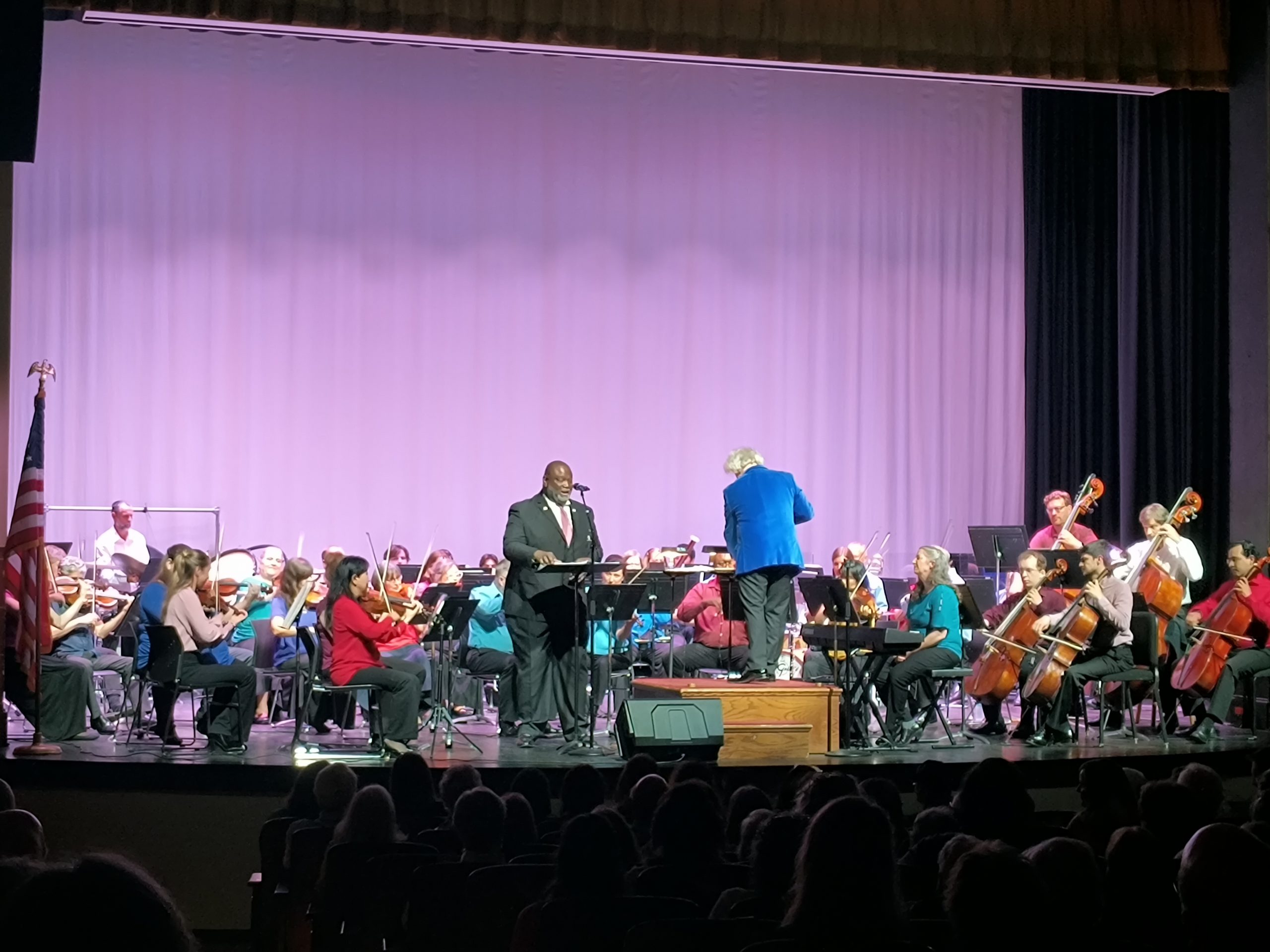
The Winston-Salem Symphony Orchestra was in full swing on Saturday, April 5th, delivering a tribute to the Queen of Rock and Roll with Simply the Best: The Music of Tina Turner. The 85-minute concert was performed to a packed house at the beautiful and historic R.J. Reynolds Auditorium. Under the direction of conductor Michelle Merrill, the Winston-Salem Symphony Orchestra provided a gorgeous backdrop for a fitting tribute to my favorite female artist.
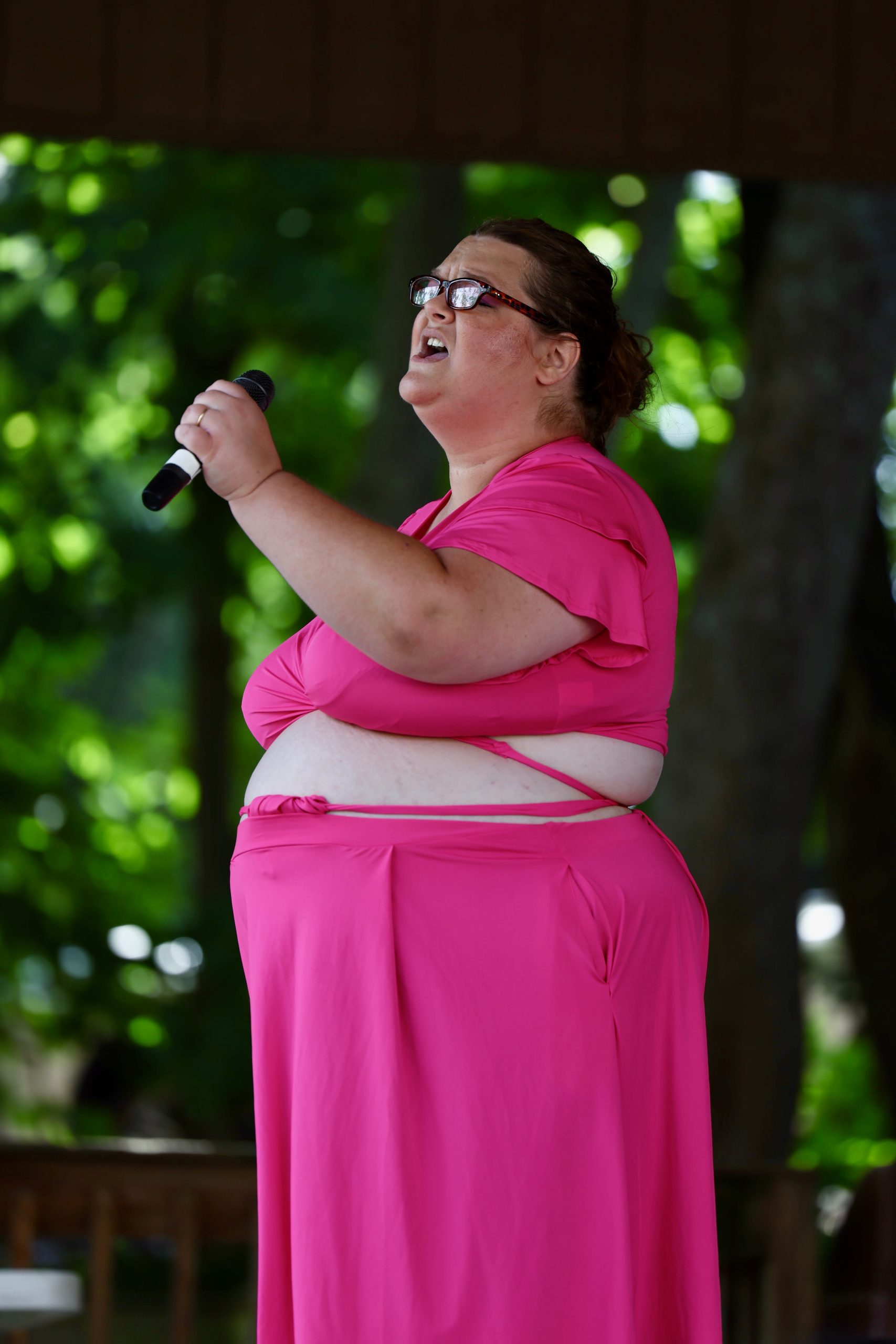
While I typically find vocalists to be a hindrance in orchestral performances, the trio of vocalists selected for this program were surprisingly well-matched for the performance. Two-time Grammy Award winner Tamika Lawrence brought the rough edge needed to execute a Tina Turner song properly. She also connected playfully with the audience, bending and twisting to the songs, captivating everyone with her energy and the appropriate rock and roll flair of her flowing mane of hair. Broadway sensation Shaleah Adkisson had a surprising edge to her voice, which allowed her to execute Tina Turner ballads beautifully. She showcased a flowing voice without sounding overly conventional or parochial. Then there was Scott Coulter, who captured my envy from the first note that escaped his throat. Growing up as a young Caucasian male who only dreamed of being able to sing Tina Turner songs, Coulter completed the task with effortless ease—leaving those of us who couldn’t carry a tune in a bucket filled with a combination of jealousy and endless admiration.
The 15-song program, spread over two acts, began and ended with “Simply the Best”—the song originally covered by Bonnie Tyler, which went on to become a distinct hit for the Queen of Rock and Roll. The title itself defined Tina Turner’s legacy.
“We are here tonight because of I, Tina,” Coulter said, holding up a copy of Tina Turner’s 1986 autobiography. “This book has been with me in every home I’ve lived in—from my parents’ house to my current home. I bought this book when I was a teenager, using money I saved up from mowing lawns. The story has been a constant source of inspiration for me.”
Her breakout hit, a cover of Al Green’s signature song “Let’s Stay Together,” followed next, spawning the Private Dancer album in 1984. This was followed by her signature number-one hit, “What’s Love Got to Do with It.”
“This song has served as sage advice from my aunt and mother,” Lawrence shared. “When I had a history of dating losers, trying to convince my family that I loved the guy, they would respond with the title of this song.”
I absolutely loved that the setlist also included a couple of songs from Wildest Dreams, the 1996 album that was largely unnoticed by the mainstream public but also sparked a record-breaking tour. It was during this tour that I had the opportunity to see Tina Turner live for my very first concert on June 20, 1997, at the Blockbuster Pavilion in Charlotte. Less than two weeks later, on July 2, she performed in Winston-Salem at the Joel Veterans Memorial Coliseum. According to conductor Michelle Merrill, this concert was supposed to be a private event where she was flown to Winston-Salem by the makers of Hanes pantyhose, her sponsor for the tour, to see the place where the Hanes brand originated. One audience member even shared her presence at that concert with the crowd, leaving everyone impressed.
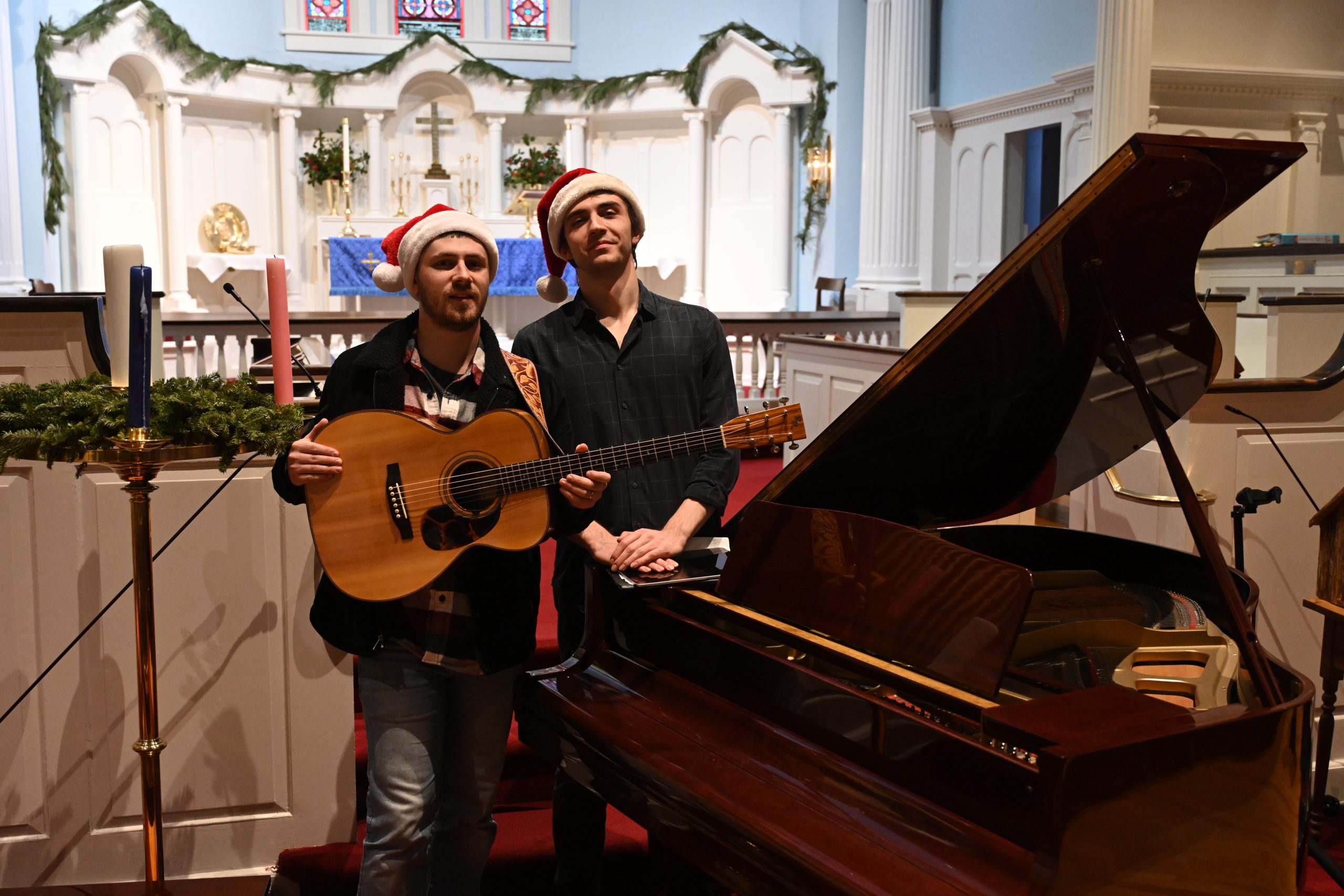
Scott Coulter performed two songs from Wildest Dreams: the theme from James Bond’s Golden Eye and the John Waite cover “Missing You,” the latter of which Coulter delivered in a hauntingly beautiful rendition with guest pianist John Boswell.
“When I saw Tina Turner as Auntie Entity in Mad Max Beyond Thunderdome,” explained Shaleah Adkisson, “that was the first time I realized that a singer could be an actress as well.” With that, she launched into the song’s main theme, “We Don’t Need Another Hero.” The performers then discussed how Tina Turner was the first female artist and the first African American to ever appear on the cover of Rolling Stone magazine. She also sold more than 100 million albums as a solo artist and collected a dozen Grammys, along with countless other accolades throughout her 50-year career.
The trio then offered a selection of relatively unknown tracks that Tina Turner performed while struggling on the road, including a little-known cover of Aretha Franklin’s “Respect” as a member of the Ike & Tina Turner Review, a rendition of Bob Seger’s “Hollywood Nights,” and The Tramps’ “Disco Inferno.” The latter was a personal highlight of the show for me, performed with the full effervescence and soulful grit of Tamika Lawrence.
The first half of the show closed with the orchestral delight of “River Deep Mountain High” before opening the second half with Tina Turner’s original “Nutbush City Limits,” which paid tribute to her rural Tennessee hometown. Adkisson joined Boswell at the piano again for an emotional rendering of “I Don’t Wanna Fight,” Turner’s last top-ten hit that served as the main theme of her biographical movie, What’s Love Got to Do with It, which showcased the horrendous abuse suffered at the hands of her ex-husband, Ike Turner.
The evening culminated in the epic showstopper “Proud Mary,” brilliantly executed in both vocal performance and dance by Lawrence. She also nailed “Private Dancer,” complete with a dead-on saxophone solo from Winston-Salem Symphony Orchestra member Ron Rudkin. The three vocalists then took the stage together for the final number, “Better Be Good to Me,” leaving the crowd in a joyful and celebratory mood. I must thank Winston-Salem Symphony Orchestra Public Relations and Marketing Manager Joe Bolenbaugh for inviting me to review the show and giving me an evening I will never forget. I also thank my friend Jeremy Miller for getting me there. It was a fitting tribute to the one and only Queen of Rock and Roll.