Zach Cooley

Tag: Downtown Wytheville

Easton sells out Wytheville’s Millwald in enthralling showcase

Easton sells out Wytheville’s Millwald in enthralling showcase

Despite turning 67 this month, Scottish pop star Sheena Easton proved she still has what it takes to wow an audience when she brought her nostalgic ’80s dance sound to the Millwald Theatre on Saturday, March 21. Opening with the Lisa Stansfield classic “Around the World,” Easton immediately had the sold-out crowd of 500 on their feet, and the energy never dipped throughout the 85-minute set. She followed with her 1988 hit “Days Like This,” setting the tone for an evening that balanced humor, nostalgia, and vocal strength. “Some of you are here because you know my name,” she joked after sipping from a mug she claimed was “fifty percent likely to have tea in it.” Then, with a grin, she added, “But let’s face it—some of you are here because your mother dragged you.” Before launching into the ballad “Almost Over You,” Easton shared that its tear-jerking lyrics reflected a true story from her own life. The performance was met with warm appreciation from the audience. She followed with a heartfelt rendition of “It Must Have Been Love” by Roxette, then delivered the Burt Bacharach classic “Always Something There to Remind Me” in a style closer to Sandie Shaw’s original version than the later ’80s interpretation by Naked Eyes. “That is my trilogy about getting dumped,” she quipped at the end of the sequence. “I would never dump you!” one audience member shouted. “Hi, sugar,” Easton replied in a playful Mae West-style drawl. Later in the evening, a fan called out, “You lost your accent!” “That’s because I stole yours,” she shot back, effortlessly keeping the crowd engaged. Introducing her hit “Strut,” Easton teased, “This next song will remind you of the moment your mother regretted playing you my music—after she came home and found you in her high heels singing the naughty lyrics.” She added with a laugh, “Some of the girls were doing it too.” A highlight of the night came during her tribute to her late friend Prince, whom she credited with boosting her confidence as a songwriter. She performed “The Arms of Orion,” their duet from the Batman soundtrack, alongside “Nothing Compares 2 U”—famously recorded by Sinéad O’Connor. Easton joked that she had been “dead jealous” that O’Connor recorded the song instead of her. Both numbers featured her backup singer and duet partner, Jason Martinez, whose versatility—ranging from country to R&B—added depth throughout the evening. “The Lover in Me” stood out as a high-energy callback to her ’80s peak, while a Prince medley—including “U Got the Look” and “Sugar Walls,” with a nod to Sheila E.’s “The Glamorous Life”—kept the momentum strong. Martinez rejoined Easton for her country hit “We’ve Got Tonight,” originally recorded with Kenny Rogers and written by Bob Seger. Of course, the show would not have been complete without Easton’s talented band. As she noted in a prior interview, she truly brought “the best musicians in Vegas.” Saxophonist Tony Q drove many songs to their peak energy, while guitarist Andrew Weir delivered standout performances—perhaps inspired, as Easton joked, by his wife Ann being in the audience for her birthday. Musical director Brian Triola anchored the sound on keyboards, and drummer Michel Angelo Vattima provided a powerful rhythmic backbone. “Telefone (Long Distance Love Affair)” proved to be a major crowd-pleaser, but it was her signature hit “Morning Train (9 to 5)” that brought the audience to its feet before the first note—and kept them standing through the final chord. Easton closed the night with her James Bond theme, “For Your Eyes Only,” ending the show with grace, warmth, and consummate professionalism. As delighted as the Wytheville crowd was to welcome her, one can only hope that this performance marks the beginning of many more artists of Easton’s caliber gracing the stage at the Millwald Theatre. As for Easton herself, the artist could not have been warmer and more gracious. Having been given the honor to meet and interview her was an even greater privilege than watching the double Grammy winner perform. She has lost nothing in talent or showmanship in a half-century of performing. One can only hope she will see fit to return to our humble, but grateful hamlet again soon.  

Strictly Observing

Martin returns to Millwald with homespun comedy

Martin returns to Millwald with homespun comedy

More than half his life has been devoted to stand-up comedy, but long before the stage lights and sold-out crowds, William Lee Martin once imagined a different calling. The 60-year-old native Texan considered becoming a preacher and even pursued music in college as a drummer. That musical thread still weaves its way through his performances. If you were fortunate enough to arrive early to his February 28 show at the Millwald Theatre, you were treated to an array of country songs — all personally composed and performed by Martin himself. This was not his first visit to the Millwald. He has played the historic downtown venue at least once before and assured the audience he plans to return — hopefully next April. “I love to drive around Wytheville and see all the antique shops,” he opened. “You all need to throw some of that stuff away.” He joked that he plays a game while driving through town, trying to determine what’s a garage sale and what’s a hoarder’s collection. Martin then introduced his friend and fellow comedian, Ohio native Sid Davis, who now lives in Charlotte, North Carolina. Davis delivered a tight 10-minute opening set that included memories of serving as an opening act for Joan Rivers until her passing. “I knew I had made it in the business,” Davis said, “when I came off stage and Joan Rivers said to me three words: ‘You got it.’ No one in my life has ever said those three words to me — except that doctor at the free clinic in college.” Davis also mined laughs from his frugality, including a story about sneaking a jar of peanuts into a New York Yankees game by hiding it in his trousers. When a security guard questioned the suspicious bulge, Davis replied, “It’s my colostomy bag.” The guard promptly waved him through. As part of his Seemed Smart at the Time tour, Martin cataloged a series of life decisions that, in hindsight, may not have been his best — including his first two marriages. “My first wife and I are good friends now,” he said. “I call her the previous administration.” His second wife, a redhead, earned the nickname “the sequel.” “And not a Godfather sequel,” he clarified. “More like the Caddyshack sequel.” When a few men in the audience groaned knowingly at the redhead joke, Martin added, “I see a few other men in the audience have also had their tires cut.” Though happily married to his current wife of 13 years, he didn’t shy away from playful commentary. “I like to go out to country bars and dance,” he explained. “I asked God for a third wife who could dance. I clearly forgot to add the word ‘well’ to the end of that prayer.” Having studied percussion in college, Martin confessed he cannot understand how anyone struggles with a simple two-step rhythm. The only way his current wife can manage it, he joked, is after a couple glasses of wine. “I know when she’s feeling good because her hands start to raise toward her head,” he said. “If her hands get above her head, I’m going to be holding her hair for the rest of the night.” Beneath the punchlines, however, ran a deeper current. Martin spoke candidly about reconciling with his father on his deathbed. “I just wanted you to know I’m sorry for the things I said to you when I was 15,” Martin recalled telling him. “I just want you to know that everything I said to you when you were 15, I meant,” his father replied. “At that moment,” Martin quipped, “I pulled the plug.” Throughout the 88-minute performance, Martin blended humor with heartfelt reflection, often leaning into a gentle evangelism that challenged the audience to consider the weight of their own lives. Having recently lost his father, he shared the experience of writing his father’s obituary and encouraged others to try writing their own. “This is where you really understand the weight of your life,” he said. “You start to list your accomplishments. The more commas you put into your list of achievements, the more fulfilled you realize your life is.” After the show, when I briefly met him, he signed a poster for me with two simple words: “All commas.” I took that message to heart and intend to continue living fully, as he seems to have done. Of all the gifts a person can offer during one brief lifetime, few are more valuable than laughter — and William Lee Martin has provided it in abundance.  

Strictly Observing

Studdard brings short but sweet set to Wytheville

Studdard brings short but sweet set to Wytheville

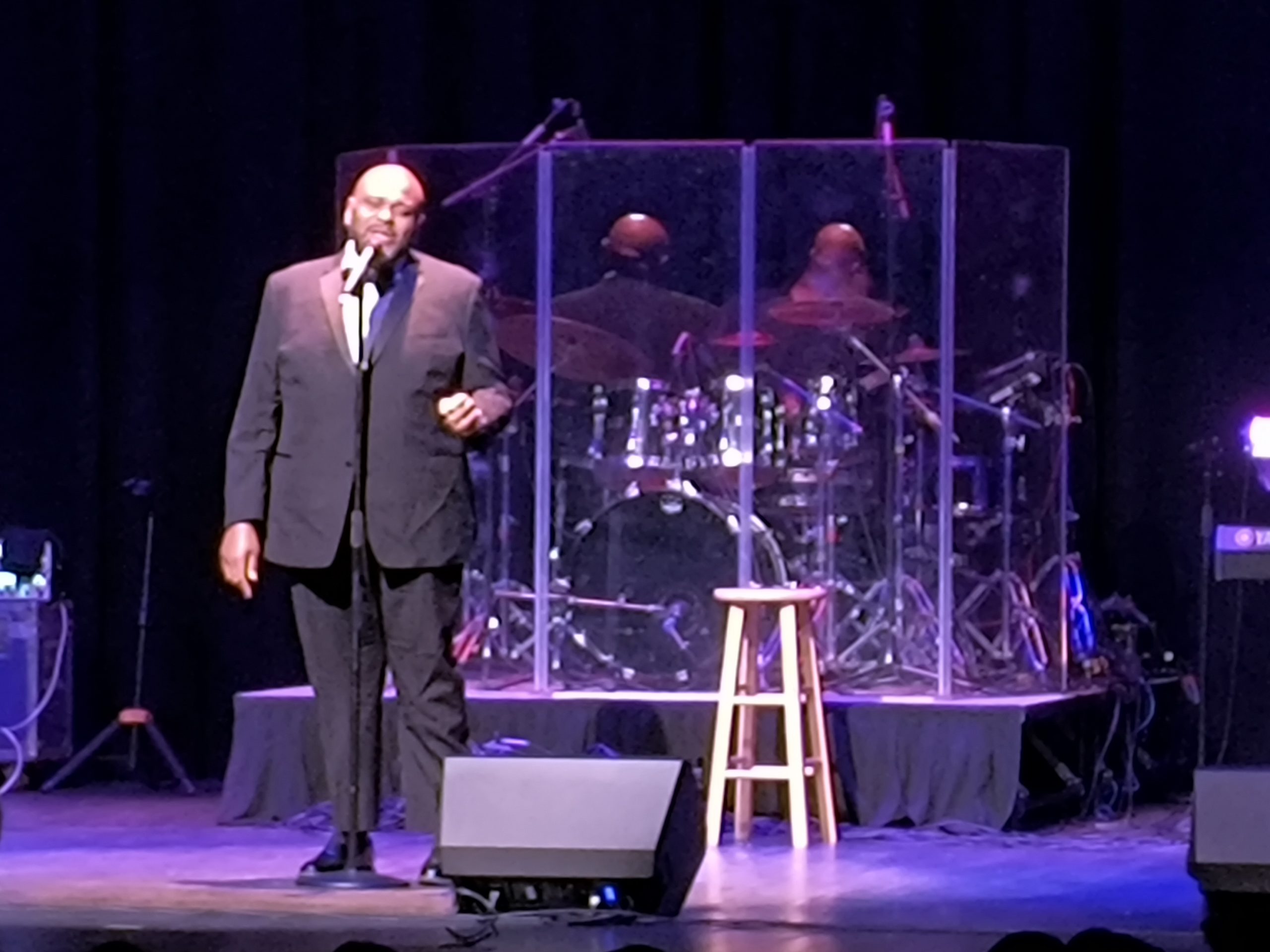
It has been 23 years since America watched Ruben Studdard claim the second-ever American Idol title on American Idol. Early in the audition process, executive producer Nigel Lythgoe reportedly told him he didn’t “look like” an American Idol. Studdard’s response was simple: he sang. Within three lines of his audition, he had secured his ticket to Hollywood. “The first episode of American Idol I ever watched was the night Kelly Clarkson won,” the now 47-year-old singer told the Wytheville audience of about 200 at the Millwald Theatre on February 26. A backup singer in his wedding band asked him to accompany her to an American Idol audition in Nashville. “I discovered I could sing better than 95 percent of the people who were auditioning,” he said with a smile. Studdard went on not only to win the competition but also to earn a Grammy nomination for his stirring cover of “Superstar,” made famous by Luther Vandross. Upon winning, each Idol champion received a signature single; Studdard’s was “Flying Without Wings,” produced by another hero of Studdard’s, Kenneth “Babyface” Edmonds, and often remembered as his coronation anthem. During a brief but mesmerizing 72-minute performance — half music, half storytelling — the Birmingham, Alabama native revisited those career-defining moments. He shared the story of attending the Grammy Awards with his mother, who fainted after being photographed with her lifelong idol, Smokey Robinson. After recounting that memory, Studdard launched into Robinson’s solo classic “Cruisin’.” He opened the evening with the standard “The Best Things in Life Are Free,” followed by a heartfelt rendition of “Love, Love, Love” by Donny Hathaway. Then came a powerful interpretation of Vandross favorites, including “Don’t You Know That?” and a medley of “Let’s Have a Party” and “Bad Boy.” A personal highlight for many was “Never Too Much,” delivered with warmth and effortless phrasing. Ironically, Studdard admitted he was not always a fan of the R&B legend he now honors so convincingly. “When I was little, I couldn’t stand Luther Vandross because I thought my mother was cheating on my father with him,” he joked. “Every time he came on TV, my mother was on the verge of having a heart attack.” In 1984, when Vandross performed in Birmingham, Studdard’s mother bought nosebleed seats. Six-year-old Ruben had to attend because there was no babysitter. “As a husky kid, I was upset because my mama didn’t have money for nachos, popcorn, or Pepsi,” he recalled. “Luther also made it a rule not to turn the air conditioning on until he came on stage. I had sweated through my Bugle Boy suit. I was not happy.” But within minutes of Vandross taking the stage, everything changed. “He was singing the paint off the walls,” Studdard said. “You couldn’t help but be a fan after that.” The concert also included “Superstar,” which he introduced with a few lines of Aretha Franklin’s “Until You Come Back to Me,” written by Stevie Wonder. From his 2003 debut album Soulful, he performed “Sorry 2004,” and from 2006’s The Return, he offered “Change Me.” Additional soulful tributes included “Would You Mind” by Earth, Wind & Fire. His backing band matched his polish and precision. Guitarist Jon Snow delivered several electric solos that energized the room, keyboardist John Jackson provided silky accompaniment, and drummer David Smith laid down a powerful backbeat. Together, the trio made the small-stage production feel orchestral. Dubbed “The World’s Velvet Teddy Bear” by Gladys Knight, Studdard demonstrated that his voice — despite his own self-deprecating humor — remains remarkably intact. “These notes get hard to hit when you get near 50,” he told the crowd. “I was 24 when I recorded most of these songs.” Judging by the audience’s enthusiastic reception, no one noticed any decline. Ruben Studdard still has what it takes. While some may have questioned paying $81 for premium seating to a performance that ran just over an hour, the overall response appeared overwhelmingly positive. The evening not only satisfied longtime fans but also elevated Wytheville’s profile as a legitimate tour stop along the national circuit with an A-list name like Ruben Studdard on the marquee. For one night at least, the Velvet Teddy Bear proved that time has done little to diminish his resonance — both vocally and nostalgically. As always, I am eternally grateful to Donnie Bales and the top-notch Millwald team for allowing me to attend and cover first-rate entertainment right here in my own hometown.

Strictly Observing

‘Alice’ brings Barter magic to Wytheville

‘Alice’ brings Barter magic to Wytheville

It was such a genuine thrill to see the Barter Players on stage again—especially here in my hometown at our beautiful Millwald Theatre on Friday, February 13. Their gorgeously whimsical and vibrantly colorful production of Alice in Wonderland was nothing short of magical. In just 45 minutes, the six Barter Player actors had more than 300 audience members—predominantly children who attended the show for free—utterly spellbound from beginning to end. The performance was made free to local public-school children thanks to the generous sponsorship of the Wythe Bland Foundation, whose support ensured that so many young people could experience live theatre at no cost. What a gift to this community. One can rest assured, however, that us adults were equally enthralled. For me, it was an especially meaningful evening. For over two decades, attending productions at the Barter Theatre in Abingdon has been one of the great joys of my career. Though I’m no longer able to travel back and forth regularly, this touring production felt like a rare and cherished homecoming. The ensemble of half a dozen brilliant actors—each a true triple threat of singer, actor, and dancer—brought boundless energy to this wacky and wondrous adaptation of the original work by Lewis Carroll. The book and lyrics were written by longtime in-house Barter playwright Catherine Bush, with music by Dax Dupuy. Together, they crafted a script that remained loyal to Carroll’s riddling verse while infusing it with fresh theatrical vitality. Jay Ruttenberg took center stage as Alice, adorably embracing the precocious character with equal parts curiosity, determination, and a healthy distaste for rules and the mundane. Stephen Cradic was my personal favorite of the evening, portraying the flamboyant King of Hearts as well as the satirical Caterpillar. His tremendous humor and discernible upbeat energy illuminated the stage with immense enjoyment. Whether grooving to a psychedelic ’60s beat before Alice takes a bite of the mushroom or swaying to elevator music as she plummets down the rabbit hole, he added lightheartedness and laughter to every scene in which he appeared. Tyler Cramer, a longtime favorite Barter Player of mine, flawlessly performed the roles of the White Rabbit, the Mushroom, Alice’s Uncle Charles, and several others with his trademark humor, confident singing, and crisp dancing. Marissa Emerson was a joy to watch in a myriad of roles, including Alice’s sister Lorena, the Mad Hatter, the Deuce of Spades, and more. Abigail Martin perhaps had the biggest stretch, playing Alice’s little brother Freddy, the Cheshire Cat, and several roles traditionally portrayed by men. Reilly Blevins was equally brilliant in her maternal portrayals—Alice’s mother, the Queen of Hearts, and the anxious Mother Pigeon who feared that a ten-foot-tall Alice might be after her unhatched eggs. The dialogue in this adaptation was particularly impressive. We were given deeper glimpses into Carroll’s original text than many of us are accustomed to from the familiar Alice in Wonderland. The set design was drenched in brilliant pinks and purples, anchored by a Roman numeral clock spinning seemingly out of control in the background. And in this telling, Alice does not simply chase the White Rabbit out of curiosity—she ventures into Wonderland to retrieve a blank book her sister has given her to fill with her adventures. Clever references to both Alice’s Adventures in Wonderland and Through the Looking-Glass appeared throughout, including a nod to the character of Time during the Mad Hatter’s tea party scene. The blur between fantasy and reality is executed clearly here as well as morals of moderation, appreciation, and autonomy. All are clearly conveyed in his one-of-a-kind production. The implementation of characters from Alice’s real-life into her imagined one via fantastical alter-egos, as done with Dorothy for The Wizard of Oz, was also a key component to the plot of this production. Just as I was enchanted when I first saw a Barter Theatre production of The Emperor’s New Clothes as a seven-year-old first grader, I remain captivated by the quality and imagination of every Barter production I encounter. Theatre has been a major part of my life as a columnist, and Barter has been central to that journey. It is my fervent hope that future touring productions from Barter Theatre will continue to return to Wytheville. Live theatre—especially when made accessible to children—has the power to ignite imaginations and create lifelong memories. On this particular February evening, it did exactly that.  

Strictly Observing

Bohn brings much needed laughter to Wytheville

Bohn brings much needed laughter to Wytheville

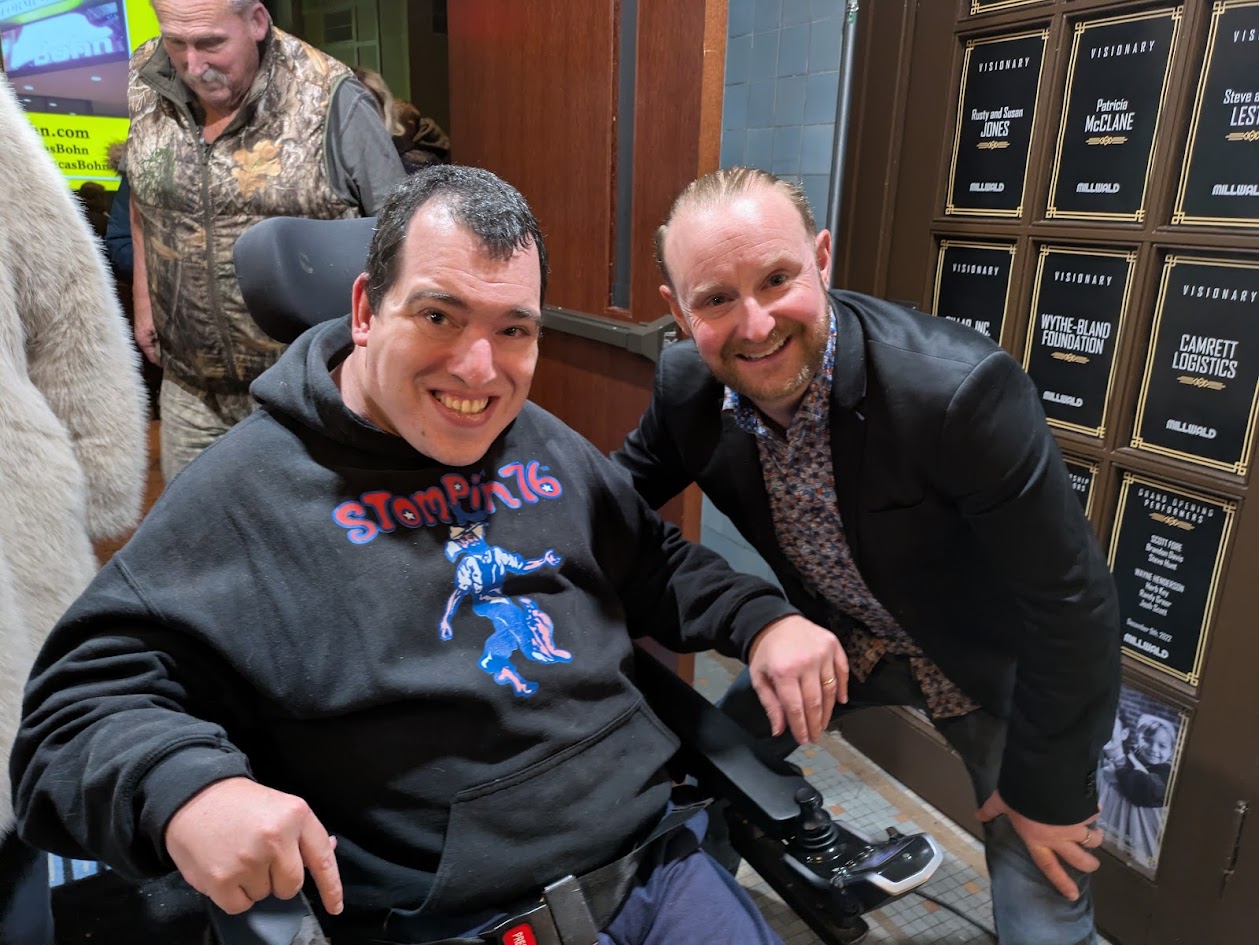
February 7th was one of the darkest and bitterly coldest nights of the year. I won’t recount the difficulty I faced getting to the Millwald Theatre as a person with a disability under those conditions. I will simply say that seeing comedian Lucas Bohn made every bit of it worthwhile. A native of the D.C. side of Virginia, Bohn is a former fifth-grade teacher who credits his students for much of the material that helped turn him into a nationally touring comedian. Over the years, he has shared the stage with the likes of Jimmy Fallon, Dave Chappelle, and Kevin Hart—and he brought visual aids to prove exactly where his comedy began. In one cause-and-effect exercise, the cause reads: “Jimmy wants a new bike, but his parents won’t buy him one.” The student’s written effect: “He will ask his grandparents and get a bike.” When asked to support the claim with evidence, the student writes, “Grandparents love him more.” In another example, when the effect reads, “Jane has five brothers and two sisters,” the student identifies the cause as, “Jane’s mom needs a new hobby.” Bohn also demonstrated how much he can learn about a student he’s never met simply by reading a word-association worksheet. “I know this kid goes deer hunting with his dad, likes NASCAR, and knows how to use a duck call,” he said after reading the words “green frog, blue lake, red Solo cup.” “I’m surprised he didn’t write ‘Git-R-Done’ underneath.” Among my other favorite student responses were: “My mom looks beautiful when… that man comes over and she gives us melatonin.” When asked how to make a marriage work, one fifth-grade boy wrote, “Tell your wife she’s beautiful even if she looks like a dump truck.” “There is nothing more I can teach that boy,” Bohn deadpanned. “He is way ahead of the game.” The slideshow that accompanied his 97-minute act only amplified the laughter, complementing his razor-sharp wit, neighborly Southern accent, and uncanny ability to perform a range of character voices with startling precision. His trio of toddler-aged nephews apparently attest to his talent by catering to his every whim—provided he makes the request in his best “Elmo” voice. “Do you want to get Elmo a beer?” Bohn implores. “Yay! You got Elmo a beer! Elmo loves you!” That voice, however, does not translate well when calling into radio stations with rap DJs. “They will cuss you out and hang up on you at the same time,” he reported. Entitled Lesson Plans to Late Night, the show offered the Wytheville audience—made up largely of local teachers thanks to generous sponsorship from the Wythe Bland Foundation—a heartfelt and hilarious look at Bohn’s journey from public schoolteacher to comedy sensation. Bohn also spoke candidly about adopting two Black children and the ignorant questions he sometimes encounters. While playing in the park with his daughter Ella, one woman asked how the child would know to come to him, given that they were of different races. Bohn replied that he simply used the opening African chant from The Lion King to call her. Ella came running, and Bohn lifted her high, just as Rafiki held up Simba on the edge of Pride Rock. “I had no idea,” the woman replied. Lucas and his wife of 17 years, Christy—a first-grade special education teacher in Loudoun County—later adopted a second child, Alexander, whose birth mother and father are both well over six feet tall. Alexander is also Black. “I’m just happy to finally have someone in the family who can dunk,” Bohn joked. During the second half of the act, Bohn pointed out how comedy often writes itself. A street sign reading “Senior Citizen Center,” posted next to a cemetery, provided ample opportunity for comedic adjustment. Another sign read, “Everything happens for a reason. Sometimes the reason is you’re stupid and make bad decisions.” A store sign in Little Rock, Arkansas advertised: “We have all your school supply needs. Miller 12-pack, $7.99.” “You will graduate with a 4.0 blood alcohol level,” Bohn reassured. A Walmart pharmacy sign in West Virginia read: “Compare and save: Trojan condoms $3.79, Huggies diapers $22.” “They’re trying to help you out by doing God’s work,” Bohn observed. “They did the math—and they showed their work.” Bohn also chastised Hollywood for endlessly remaking ’80s and ’90s blockbusters with improved effects without ever asking audiences which films should actually be remade. His proposal: remake the original Star Wars trilogy using actors from classic ’90s movies and television. What followed was a hilarious montage of reenacted scenes. Adam Sandler’s character from The Waterboy would play Luke Skywalker. Princess Leia would be portrayed by Fran Drescher. CGI would resurrect Chris Farley—specifically from the iconic “van down by the river” Saturday Night Live sketch—to play Yoda. Matthew McConaughey would play C-3PO. Eddie Murphy would portray Lando Calrissian, with Mike Myers making a cameo as Shrek, yelling at Donkey to get out of there. Finally, Al Pacino would take on Darth Vader during the iconic “I am your father” scene. This exchange truly has to be seen to be fully appreciated. It was an evening I will always remember, and I hope Lucas Bohn returns to the Millwald soon.

Strictly Observing

Parker film aids in revitalization award nomination for Downtown Wytheville

Parker film aids in revitalization award nomination for Downtown Wytheville

When I heard that my good friend Cory Parker had released a new film in partnership with Downtown Wytheville, I couldn’t wait to see the finished product. Through his company, MountainCAP Media, Parker has delivered yet another visual triumph with the 25-minute documentary Downtown Wytheville: A Story of Revitalization. The film chronicles the rise of Downtown Wytheville, Inc. and its pivotal role in rejuvenating the town’s historic core—most notably the Millwald Theatre, now a true crown jewel of the community. Founded a dozen years ago, the organization has become a model for grassroots, trust-based civic transformation. Executive Director Todd Wolford, who is featured prominently throughout the film, spoke with me about the project and the milestone it commemorates. Wytheville has been selected as a Great American Main Street Award semifinalist, chosen by a national jury of industry professionals and community leaders. Out of more than 2,000 applicants, the town was narrowed down to the top eight. The ultimate winner will be announced in April. Once a bustling hub along the Great Wagon Road, downtown Wytheville saw its vitality wane in the late 20th century as new interstates redirected commerce to strip malls on the outskirts of town. Determined to reclaim the community’s civic heart, local residents formed Downtown Wytheville, Inc. in 2014. In just over a decade, the transformation has been remarkable. The district is now a thriving destination filled with breweries, restaurants, small businesses, public art, a boutique hotel, and a restored historic theater. More than $23 million in private downtown investment has been generated, alongside $10 million in public improvements, breathing new life into once-condemned buildings and turning them into active centers of community life. If Parker’s film is any indication, Wytheville stands as strong a contender as any town in the nation for the Great American Main Street Award. After watching it, I knew I wanted to be part of the campaign. “There are extensive volunteer opportunities for anyone wanting to work with Downtown Wytheville,” Wolford told me. “We’re also occasionally looking for new board members.” One especially compelling moment in our conversation came when Wolford shared that his grandfather once ran a soda shop on Main Street in the 1950s. As much as I would love a place to have a malt or old-fashioned Coke, those kinds of businesses are hard to keep afloat in the local economy. Though he added that reopening his grandfather’s shop isn’t in his plans, he urged the community to bring its business to downtown in order to keep them alive. “Small-town businesses are hard to sustain unless the community supports them regularly,” he said. “We must make them a routine part of our patronage.” That observation underscores a critical reality. With long-standing businesses like Kincer Miller Hardware, Wytheville Office Supply, and Gwynn Furniture now gone from Main Street, supporting newer establishments—such as Burger Express, The Eclectic Pearl, and The Turquoise Junkie boutique—is more important than ever. Much of downtown’s revival can be traced to the reopening of the historic George Wythe Hotel as the Bolling Wilson Hotel in 2014, which directly sparked the formation of Downtown Wytheville, Inc. “We had this beautiful hotel for people to stay in,” Wolford recalled. “Then we realized we needed things for people to do when they came to town. We knew we couldn’t leave an abandoned theater sitting in the middle of Main Street.” That theater reopened in November 2022 as a performing arts center and has since hosted national acts including The Drifters, The Coasters, Jim Messina, and Pam Tillis. Downtown Wytheville’s success is also rooted in strong leadership and collaboration. Charlie Jones, a former youth ambassador, went on to become the assistant director of Downtown Wytheville, Inc. Deb King, a longtime creative artist and marketing professional, has also played an essential role. “I can’t say enough about the people and how well we work together,” Wolford said. “Without them, Downtown Wytheville would never be what it is today.” If I could afford it, I would book a week in the Bolling Wilson Hotel, where my family and I would stay, then take in all the shows at the Millwald Theatre, have dinner at Moon Dog Brick Oven Pizza, one of the first businesses to open in the newly-resurrected Main Street, and hit all the other downtown spots as though I were a tourist. I think it would be a great lesson in that, sometimes, in order to have the best adventures, we need look no further than our own backyard.

Strictly Observing, Zach's At It Again

Wytheville native keynote speaker at MLK ceremony

Wytheville native keynote speaker at MLK ceremony

Returning to a place that shaped his earliest memories, Sterling Crockett stood on the stage of the Millwald Theatre Sunday afternoon and offered a keynote address that blended hometown reflection with a sober warning about economic neglect, division, and the unfinished legacy of Dr. Martin Luther King Jr. Crockett, a writer, community strategist, builder, and Wytheville native who has spent recent years living in Florida, was the featured speaker at the town’s Martin Luther King Jr. Day celebration. He opened with a simple declaration that set the tone for the afternoon. “It is good to be home,” he said. The Millwald Theatre, Crockett noted, was once a central gathering place for families and friends. He recalled attending movies there as a child, including Star Wars in 1977, a time when imagination felt boundless and the future seemed full of promise. For Crockett, the building symbolized shared experience and community—an idea that would echo throughout his remarks. “Most of you didn’t know me as Sterling back then,” he told the audience. “You knew me as Chris.” Crockett reflected on growing up in Wytheville, playing ball, and being encouraged by a town that watched him chase opportunities beyond its borders. Yet he was careful to stress that his return was not an act of judgment. “I am not standing here today as someone who came back to lecture his hometown,” Crockett said. “I am standing here as someone who was shaped by it—by the people, by the opportunities, and by the limits too.” Throughout the address, Crockett drew a sharp distinction between individual responsibility and systemic failure. When he spoke of neglect, he emphasized, he was not blaming neighbors or families, but rather decisions made by distant leadership and economic systems that left communities vulnerable. “That distinction matters,” he said, “because the story we tell about who is responsible determines whether anything ever changes.” Turning to Dr. Martin Luther King Jr., Crockett urged the audience to look beyond the familiar imagery of the 1963 “I Have a Dream” speech. While acknowledging its enduring power, he focused instead on King’s final years, when the civil rights leader warned that America was ignoring deeper structural problems. Near the end of his life, King famously said he feared he had been leading his people into a “burning building.” Crockett expanded on the metaphor, explaining that buildings rarely collapse from a single dramatic event. More often, they fail because foundations weaken—because small compromises and hidden erosion go unaddressed. “A building can look sound from the outside,” Crockett said. “The doors can still open. The signs can still say, ‘Welcome.’ And yet the foundation can already be compromised.” King, Crockett argued, recognized that America was willing to remove visible barriers while leaving the deeper architecture of economic inequality intact. Lunch counters could be integrated, but wages remained stagnant. Voting rights could expand, while housing segregation persisted through policy and finance. Rights, Crockett said, mean little without economic stability beneath them. He then brought King’s critique into the present, pointing to Wytheville and similar Appalachian communities that have seen opportunity steadily narrow. Decent work—jobs that provided dignity, stability, and the ability to plan for the future—has disappeared. Wages have flattened as living costs increased. Young people have left not because they lacked love for their hometowns, but because staying no longer guaranteed a viable future. “That did not happen because we failed as people,” Crockett said. “It happened because economic foundations were allowed to erode.” As those foundations weakened, Crockett said, deeper crises took root. He addressed the region’s drug epidemic directly, describing fentanyl and methamphetamine as symptoms of untreated economic and structural pain rather than personal weakness. “When economic security erodes,” he said, “pain goes untreated—and something more dangerous always moves in to fill the gap.” Crockett emphasized that addiction and loss have crossed racial lines, devastating poor and working-class white families and black families alike, though often through different systems. He warned that racial division has been encouraged because it distracts communities from confronting the structural causes of harm. “As long as we are arguing across racial lines,” he said, “the systems that hollowed out towns like this one never have to answer.” In closing, Crockett returned to the legacy of Dr. King’s later work, particularly his focus on economic justice and coalition-building through the Poor People’s Campaign. That shift, he said, was what made King truly dangerous—not his rhetoric, but his organizing. “This is not a call for perfection,” Crockett told the audience. “It is a call for participation.” Crockett left listeners with a final challenge. “The question before us is no longer whether we admire Dr. King,” he said. “The question is whether we will build what he was trying to make possible.”  

Strictly Observing, Zach's At It Again

Christmas with the Drifters

Christmas with the Drifters

The Drifters were the first major touring act to draw a truly large audience to the Millwald Theatre last year, and there was no better way to celebrate the holiday season than welcoming them back to Wytheville for Christmas with The Drifters on Saturday, December 20. A nearly sold-out crowd of over 400 patrons—spanning generations—filled the theater for a joyful, 97-minute double-set performance. Although all the original members of The Drifters have passed, the current quartet continues the legacy of the legendary doo-wop and R&B group that first formed in 1953. The most recent incarnation of the group took shape in January 2023, following the passing of Charlie Thomas, the last surviving member of the Drifters’ 1960s era. Backed by a tight, funky house band—each member hailing from West Virginia—the four vocalists, two tenors and two baritones, delivered polished harmonies and first-class showmanship, complete with the group’s trademark synchronized shuffle. The first 42-minute set focused heavily on hits from the Ben E. King–fronted era, including “On Broadway,” “Up on the Roof,” and “This Magic Moment.” A spirited cover of Wilson Pickett’s “Mustang Sally” also drew a rousing response from the audience. Emotion took hold of me during “Save the Last Dance for Me,” a favorite song of my late great-great-aunt Hazel. The feeling deepened when the group moved into Ben E. King’s solo classic “Stand By Me,” a song beloved by my Uncle Mike, who passed away far too young. That number was part of a medley that also paid tribute to Sam Cooke with portions of “Cupid” and “Chain Gang.” This year, the nostalgia hit especially hard as I reflected on my father, who passed away on October 26 and grew up listening to this golden era of R&B—music that dominated the charts before the British Invasion reshaped popular sound. The second act, lasting 55 minutes, opened with the buoyant “Saturday Night at the Movies,” a deeper cut from the Ben E. King era. Other lesser-known gems followed, including “Dance With Me” and “I Count the Tears,” each proving itself a highlight of the evening. Jackie Wilson’s “(Your Love Keeps Lifting Me) Higher and Higher” was another standout, igniting enthusiastic applause from the crowd. While the show closely mirrored the Drifters’ 2024 appearance, this year’s performance felt extra special thanks to the addition of holiday music. In the first act, the group treated the audience to their signature rendition of Irving Berlin’s “White Christmas,” a version many modern listeners recognize from holiday films such as Home Alone and The Santa Clause. Delivered with the same smooth elegance as the 1953 original recorded by Bill Pinkney and Clyde McPhatter, this was the lone offering from the Drifters’ 1950s era—my favorite period of the group. McPhatter, the original frontman, remains one of my all-time favorite vocalists. The most festive portion of the evening followed, as the Drifters launched into a soulful, gospel-infused set of Christmas classics, including “Joy to the World,” “The Christmas Song,” “Jingle Bells,” and “Silent Night.” This segued into an a cappella section that invited audience participation on “Rudolph the Red-Nosed Reindeer,” “Jingle Bell Rock,” and “Let It Snow.” A spontaneous audience request for a Temptations-style rendition of “Little Drummer Boy” fell apart when Jerome Jackson couldn’t recall the lyrics, but the moment only added charm to an already delightful Yuletide interlude filled with warmth and good humor. The energy remained high as lead singer Early Clover invited the audience to whistle along during Otis Redding’s “Sittin’ on the Dock of the Bay.” “If you can’t whistle, pantomime,” he joked. “It worked for Milli Vanilli, and they won a Grammy.” The 1959 chart-topper “There Goes My Baby” followed, leading into one of the evening’s biggest crowd-pleasers, “Under the Boardwalk,” which the group later reprised. The final number, a cover of the Isley Brothers’ “Shout,” kept the audience on its feet from start to finish, with the Drifters dancing in full Holy Spirit fashion as they exited the stage. Even after the vocalists departed, the band continued to groove for several minutes, extending the celebratory mood before the night finally came to a close. And for Wytheville, what a night it was! My heartfelt thanks go to the entire Millwald Theatre staff—especially Donnie Bales and Mastin Paisley—for their generous invitation and warm accommodation, as well as to my dear friend Jeremy Miller for getting me there.  

Strictly Observing

RSO Holiday Brass saves Christmas

RSO Holiday Brass saves Christmas

Inclement winter weather prevented the full Roanoke Symphony Orchestra from traveling to Wytheville to present the holiday pops concert we had eagerly anticipated on December 8. Fortunately, our good and faithful friends—the Roanoke Symphony Holiday Brass—stepped in to fill the gap, offering a replacement concert at the Millwald Theatre on Monday, December 15. Despite minor lift trouble with my handicap-accessible van that nearly kept my friend Jeremy Miller and me from attending, we arrived just in time. What followed was a sprightly, joy-filled 75-minute performance that flew by as effortlessly as last year’s concert had. From the opening note to the final encore, the evening was a delight. The program opened with an Aria in F Major by George Frideric Handel, led by my friend Jay Crone, principal trombonist of the Roanoke Symphony Orchestra and a trombone instructor at Virginia Tech. Crone shared a bit of musical history, noting that both Handel and Johann Sebastian Bach were dominant composers of the Baroque era. Though both were born in Germany and never met, Crone explained that their fates were linked in an unexpected way. “There was a man who fancied himself an oculist,” Crone told the audience, “who claimed he could cure blindness. He would perform surgeries and leave town before the bandages ever came off.” Bach underwent one such operation and did not live long afterward. The same unfortunate fate later befell Handel. The ensemble next performed A Rose Without a Thorn, a composition by King Henry VIII. The piece serves as a musical farewell to both his wife and his mistresses. Crone offered the audience a bit of dry humor to accompany the selection. “When King Henry VIII wasn’t preoccupied with chopping off heads,” he quipped, “he was actually composing music. He probably should have done more of that—life might have gone better for him and everyone around him.” Joining Crone onstage were Tom Bithell, principal trumpeter of the Roanoke Symphony Orchestra, and Jason Crafton, another Virginia Tech instructor on trumpet. Juan Berrios Rodriguez, a Virginia Tech musician who arrived in Southwest Virginia by way of Florida and the Dallas Brass, performed on both the French horn and the E-flat alto horn. Rounding out the quintet was tuba player Will Divers, a former student of Crone’s who now teaches in Botetourt County schools. Jazz arranger Zach Smith provided a buoyant New Orleans flavor to the first holiday medley of the evening, which featured The First Noel, Away in a Manger, and God Rest Ye Merry, Gentlemen. The unusually peppy arrangement set a joyful tone that carried through the remainder of the program. The next segment focused on holiday music from film and television. The group began with Let It Go from Disney’s Frozen, followed by Christmas Time Is Here—Vince Guaraldi’s beloved theme from the 1965 television special A Charlie Brown Christmas. The suite concluded with a medley from How the Grinch Stole Christmas, featuring Welcome, Christmas and You’re a Mean One, Mr. Grinch. I couldn’t help but wonder if I played a small role in that particular selection making its way into this year’s program. In last year’s review, the Grinch medley had appeared on the printed program but was not performed. After I mentioned it, Crone wrote to clarify that the program listed potential selections. This year, there was no printed set list, and at the conclusion of the medley, Crone acknowledged the moment. “I got yelled at last year for not getting this one in,” he told the audience. “I’m glad we could do it for you this year.” I assure readers there was no malice intended—only appreciation. If my gentle nudge helped secure that extra treat for this year’s concert, then everyone benefited. One of the evening’s most impressive moments came with a Christmas Medley arranged by German trombonist, Ingo Luis. The composition features songs in all twelve keys, weaving together carols such as Silent Night and O Christmas Tree. The arrangement blends jazz, classical, and even John Philip Sousa-style elements, making it extraordinarily complex. The Holiday Brass executed it flawlessly. The concert concluded with selections from Christmas Crackers, beginning with a mash-up of Jingle Bells and Deck the Halls, followed by Carol Fantasy, which incorporated O Come, All Ye Faithful, Joy to the World, Hark! The Herald Angels Sing, and O Little Town of Bethlehem. The final number was a jubilant New Orleans jazz arrangement of Just a Closer Walk with Thee. This was my first holiday-themed outing of the season. With the passing of my father, Christmas has arrived without the readiness of years past. Yet this concert proved more than worth the effort. My thanks go to Jeremy Miller for getting me there, Donnie Bales for allowing me to review the performance, and Jay Crone along with the Roanoke Symphony Holiday Brass for providing a much-needed measure of Christmas cheer—something that has been especially hard to come by this year.  

Strictly Observing

Millwald unveils new ‘speakeasy’

Millwald unveils new ‘speakeasy’

As I entered the Ghost Light Bourbon Bar, hidden away in the basement of the Millwald Theatre, secret password in hand, I was immediately transported back to 1928—the year this magnificent structure first opened its doors. Originally built to be a premier vaudeville theater, the Millwald never had the chance to fulfill that dream. Just one year after opening, the stock market crashed, plunging the nation into the Great Depression. Wytheville suffered like countless other towns across America. The shining new theater closed off its planned orchestra pit forever, and live vaudeville performances never took place there. For years, I had believed—and honestly hoped—that the Millwald had once been a home for vaudeville acts. Sadly, I wasn’t the only one whose dream was dashed. According to local legend, a young woman named Mary Alexander had pinned all her hopes on making her vaudeville debut at the Millwald. After the crash, she reportedly vanished without a trace. Where did she go? Did she leave town? Did she die? Did she go into hiding? Did she even exist? These questions have lingered for decades, adding an air of mystery to the theater’s history. Today, following its beautiful renovation completed in December 2022, the Millwald has become a true jewel of Wytheville. It spent decades as a beloved movie house, defining childhood memories for generations of locals—including my mother and me. Now, the addition of the Ghost Light Bourbon Bar brings a new layer of history, mystique, and allure to this iconic space. The bar’s name is inspired by the “ghost light,” a single bulb left burning on every stage to keep actors safe in a dark theater. But here, the term takes on a more literal meaning. There are numerous ghost stories surrounding the Millwald. Tales circulate of children whose favorite place was the theater, and of former staff members so devoted to their work that perhaps they never truly left. And then, of course, there’s Mary Alexander. Some believe her spirit still lingers—either within the theater itself or in the secret space now known as the Ghost Light Bourbon Bar, rumored to have once been her dressing room. The idea for this hidden space came from Technical Director Suzy Booth and Executive Director Donnie Bales. They envisioned a separate, exclusive area where patrons could enjoy an intimate experience apart from the theater itself. “Given the Millwald’s history, a speakeasy just made sense,” Suzy told me during our conversation on September 27, as we sat surrounded by the bar’s rich atmosphere. “When we first started, this was just a plain beige room,” she explained. “We chose the red velvet curtains, painted the walls a deep green, and brought in mismatched, vintage-inspired furniture to give it character.” The décor includes an old film projector, books from the early 1920s, and dim, intimate lighting that evokes the Prohibition era. Though the Ghost Light Bourbon Bar is part of the Millwald, Suzy emphasized that they wanted it to have its own identity and vibe. On certain nights, silent movies are screened for guests. Most recently, Wytheville native Chase Altizer became the bar’s first live performer, playing to a packed audience of 35. The upcoming screening of the original Nosferatu has already sold out. “We’re still figuring out what all we can do in this space,” Suzy said with a smile. “It’s been exciting to see how people respond.” Bartender Mike Ambrose moved to Wytheville nine months ago from Bakersfield, California. In addition to serving drinks, he helped with the painting and restoration of the bar. The menu, curated by Brenton Underwood, is a tribute to the Golden Age of Cinema, Prohibition, and of course, the legend of Mary Alexander. Each cocktail is steeped in history and storytelling. The Millwald ‘28 is comprised of Tanqueray gin, lemon, Aperol, prosecco, and dried rose petals. The Method is a concoction of Maker’s Mark, house-made brown sugar syrup, Angostura bitters, black walnut bitters, dehydrated blood orange wheel, and soda. Matinee Mischief combines Tito’s vodka, house grapefruit syrup, lime, dehydrated lime wheel, and a Himalayan salt rim. Mary’s Prescription blends Maker’s Mark, Domaine de Canton, lemon, sugar, bitters, and dried rose petals. A wide variety of bourbons, wines, beers, and champagnes are also available. From the moment I entered through the secret door, I was completely captivated by the space. The dim lighting, deep red curtains, and the smooth sounds of Nat King Cole and Frank Sinatra transported me to an era I could only dream about, and here I was, living it. I’m deeply grateful to Suzy Booth and her husband, Dustin, for sharing their vision and passion for this project. This remarkable space is certain to become a favorite hangout for locals and visitors alike. To be part of its magic, you must join their mailing list at www.ghostlightbourbonbar.com to receive updates and access. I’m so glad I did. I’m also thankful to Mike Ambrose for his warm hospitality and conversation, as well as to Donnie Bales for giving me the chance to experience this hidden treasure. There is a $5 cover charge for entry, with special events carrying their own ticket prices. For me, the accessibility of the space made the evening even more meaningful—I was able to reach it easily by elevator. After all, no place is truly worth visiting unless everyone is given the chance to experience it. The Ghost Light Bourbon Bar is more than just a speakeasy. It’s a living piece of Wytheville history—a space where past and present meet beneath the glow of a single lightbulb. I look forward to watching its story unfold, and perhaps, to finally uncovering the truth about the mysterious Mary Alexander. Until then, I know this is a place I will return to again and again.

Strictly Observing