Zach Cooley

Tag: Downtown Wytheville

Christmas with the Drifters

Christmas with the Drifters

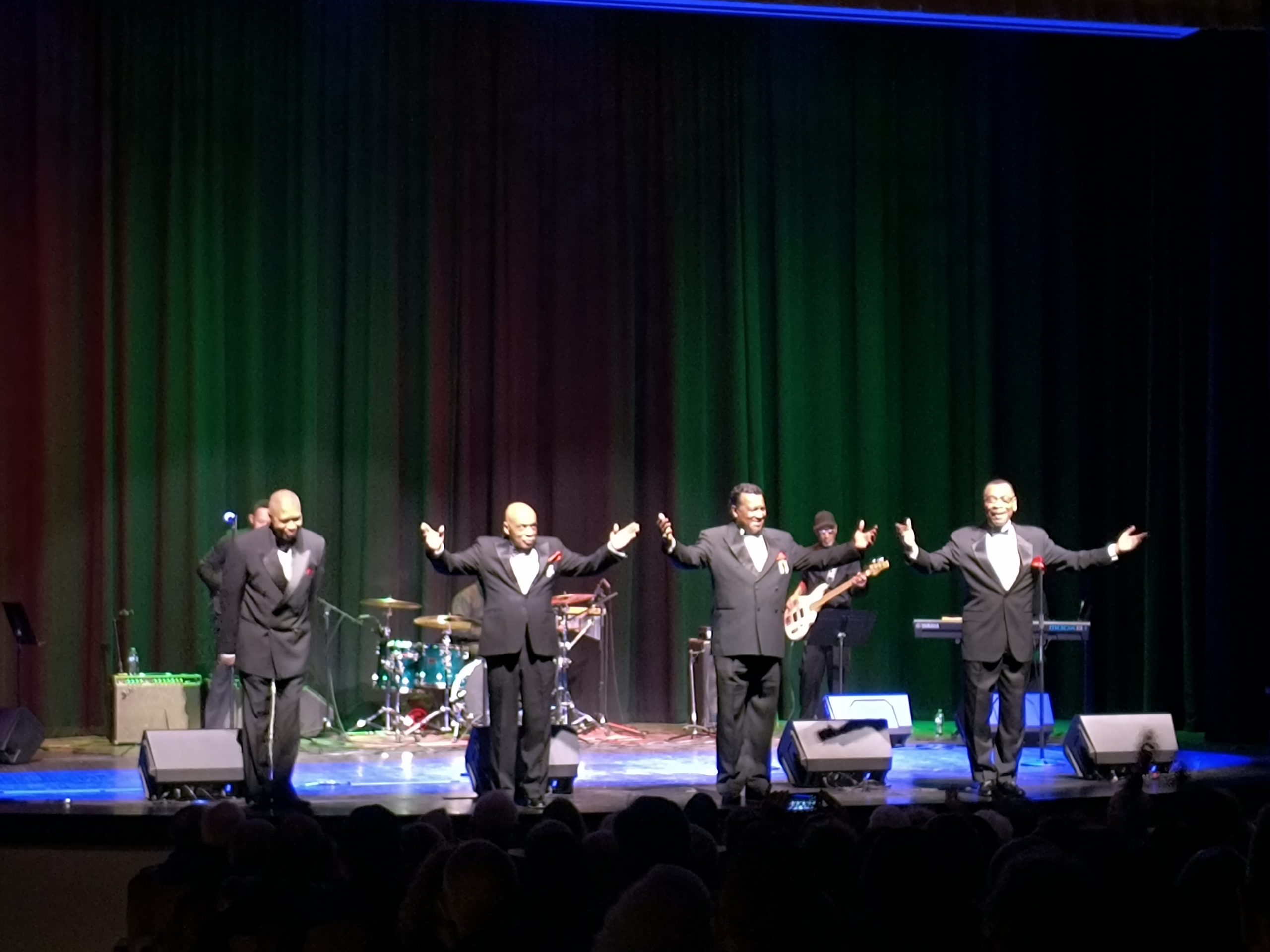
The Drifters were the first major touring act to draw a truly large audience to the Millwald Theatre last year, and there was no better way to celebrate the holiday season than welcoming them back to Wytheville for Christmas with The Drifters on Saturday, December 20. A nearly sold-out crowd of over 400 patrons—spanning generations—filled the theater for a joyful, 97-minute double-set performance. Although all the original members of The Drifters have passed, the current quartet continues the legacy of the legendary doo-wop and R&B group that first formed in 1953. The most recent incarnation of the group took shape in January 2023, following the passing of Charlie Thomas, the last surviving member of the Drifters’ 1960s era. Backed by a tight, funky house band—each member hailing from West Virginia—the four vocalists, two tenors and two baritones, delivered polished harmonies and first-class showmanship, complete with the group’s trademark synchronized shuffle. The first 42-minute set focused heavily on hits from the Ben E. King–fronted era, including “On Broadway,” “Up on the Roof,” and “This Magic Moment.” A spirited cover of Wilson Pickett’s “Mustang Sally” also drew a rousing response from the audience. Emotion took hold of me during “Save the Last Dance for Me,” a favorite song of my late great-great-aunt Hazel. The feeling deepened when the group moved into Ben E. King’s solo classic “Stand By Me,” a song beloved by my Uncle Mike, who passed away far too young. That number was part of a medley that also paid tribute to Sam Cooke with portions of “Cupid” and “Chain Gang.” This year, the nostalgia hit especially hard as I reflected on my father, who passed away on October 26 and grew up listening to this golden era of R&B—music that dominated the charts before the British Invasion reshaped popular sound. The second act, lasting 55 minutes, opened with the buoyant “Saturday Night at the Movies,” a deeper cut from the Ben E. King era. Other lesser-known gems followed, including “Dance With Me” and “I Count the Tears,” each proving itself a highlight of the evening. Jackie Wilson’s “(Your Love Keeps Lifting Me) Higher and Higher” was another standout, igniting enthusiastic applause from the crowd. While the show closely mirrored the Drifters’ 2024 appearance, this year’s performance felt extra special thanks to the addition of holiday music. In the first act, the group treated the audience to their signature rendition of Irving Berlin’s “White Christmas,” a version many modern listeners recognize from holiday films such as Home Alone and The Santa Clause. Delivered with the same smooth elegance as the 1953 original recorded by Bill Pinkney and Clyde McPhatter, this was the lone offering from the Drifters’ 1950s era—my favorite period of the group. McPhatter, the original frontman, remains one of my all-time favorite vocalists. The most festive portion of the evening followed, as the Drifters launched into a soulful, gospel-infused set of Christmas classics, including “Joy to the World,” “The Christmas Song,” “Jingle Bells,” and “Silent Night.” This segued into an a cappella section that invited audience participation on “Rudolph the Red-Nosed Reindeer,” “Jingle Bell Rock,” and “Let It Snow.” A spontaneous audience request for a Temptations-style rendition of “Little Drummer Boy” fell apart when Jerome Jackson couldn’t recall the lyrics, but the moment only added charm to an already delightful Yuletide interlude filled with warmth and good humor. The energy remained high as lead singer Early Clover invited the audience to whistle along during Otis Redding’s “Sittin’ on the Dock of the Bay.” “If you can’t whistle, pantomime,” he joked. “It worked for Milli Vanilli, and they won a Grammy.” The 1959 chart-topper “There Goes My Baby” followed, leading into one of the evening’s biggest crowd-pleasers, “Under the Boardwalk,” which the group later reprised. The final number, a cover of the Isley Brothers’ “Shout,” kept the audience on its feet from start to finish, with the Drifters dancing in full Holy Spirit fashion as they exited the stage. Even after the vocalists departed, the band continued to groove for several minutes, extending the celebratory mood before the night finally came to a close. And for Wytheville, what a night it was! My heartfelt thanks go to the entire Millwald Theatre staff—especially Donnie Bales and Mastin Paisley—for their generous invitation and warm accommodation, as well as to my dear friend Jeremy Miller for getting me there.  

Strictly Observing

RSO Holiday Brass saves Christmas

RSO Holiday Brass saves Christmas

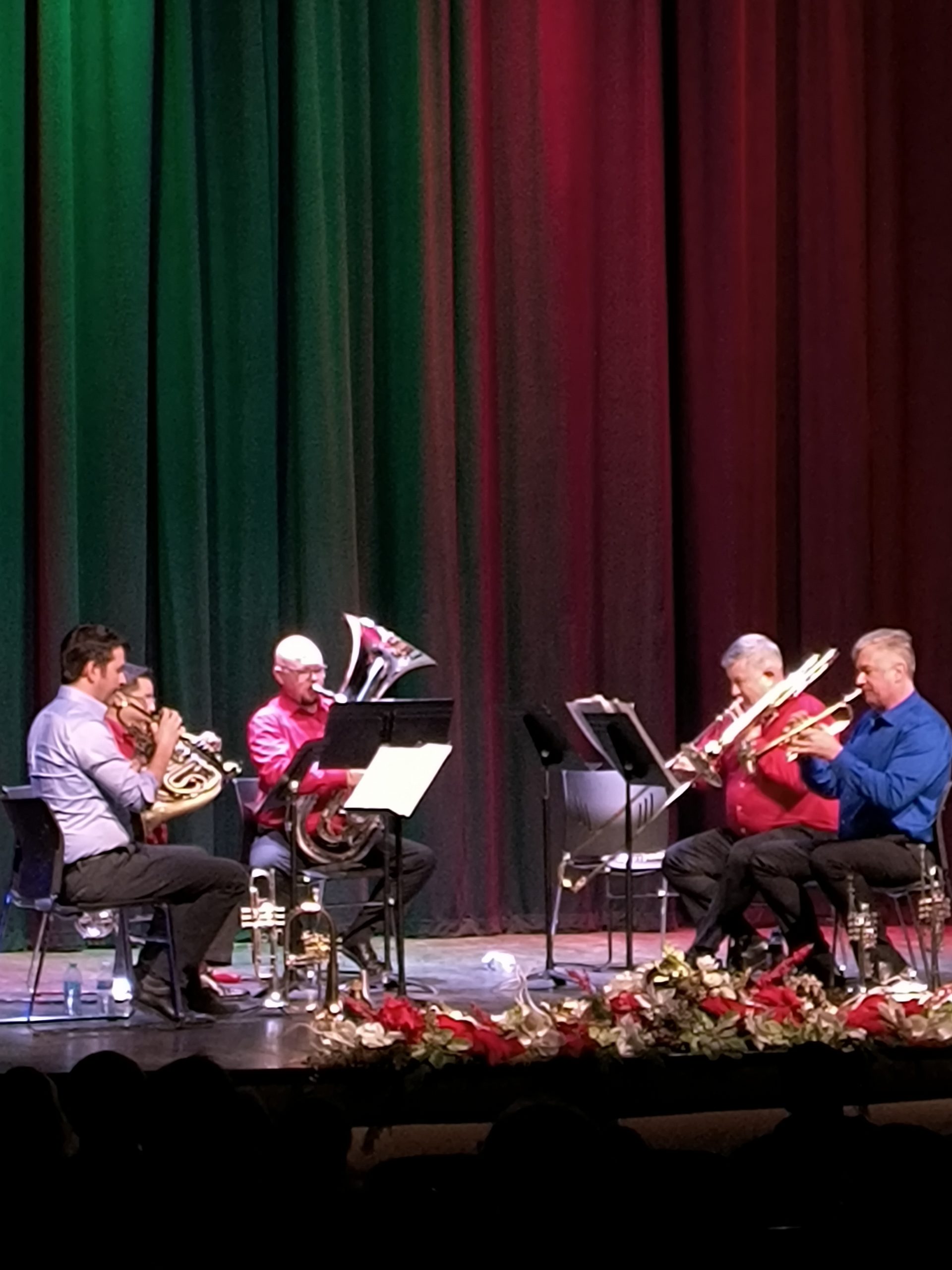
Inclement winter weather prevented the full Roanoke Symphony Orchestra from traveling to Wytheville to present the holiday pops concert we had eagerly anticipated on December 8. Fortunately, our good and faithful friends—the Roanoke Symphony Holiday Brass—stepped in to fill the gap, offering a replacement concert at the Millwald Theatre on Monday, December 15. Despite minor lift trouble with my handicap-accessible van that nearly kept my friend Jeremy Miller and me from attending, we arrived just in time. What followed was a sprightly, joy-filled 75-minute performance that flew by as effortlessly as last year’s concert had. From the opening note to the final encore, the evening was a delight. The program opened with an Aria in F Major by George Frideric Handel, led by my friend Jay Crone, principal trombonist of the Roanoke Symphony Orchestra and a trombone instructor at Virginia Tech. Crone shared a bit of musical history, noting that both Handel and Johann Sebastian Bach were dominant composers of the Baroque era. Though both were born in Germany and never met, Crone explained that their fates were linked in an unexpected way. “There was a man who fancied himself an oculist,” Crone told the audience, “who claimed he could cure blindness. He would perform surgeries and leave town before the bandages ever came off.” Bach underwent one such operation and did not live long afterward. The same unfortunate fate later befell Handel. The ensemble next performed A Rose Without a Thorn, a composition by King Henry VIII. The piece serves as a musical farewell to both his wife and his mistresses. Crone offered the audience a bit of dry humor to accompany the selection. “When King Henry VIII wasn’t preoccupied with chopping off heads,” he quipped, “he was actually composing music. He probably should have done more of that—life might have gone better for him and everyone around him.” Joining Crone onstage were Tom Bithell, principal trumpeter of the Roanoke Symphony Orchestra, and Jason Crafton, another Virginia Tech instructor on trumpet. Juan Berrios Rodriguez, a Virginia Tech musician who arrived in Southwest Virginia by way of Florida and the Dallas Brass, performed on both the French horn and the E-flat alto horn. Rounding out the quintet was tuba player Will Divers, a former student of Crone’s who now teaches in Botetourt County schools. Jazz arranger Zach Smith provided a buoyant New Orleans flavor to the first holiday medley of the evening, which featured The First Noel, Away in a Manger, and God Rest Ye Merry, Gentlemen. The unusually peppy arrangement set a joyful tone that carried through the remainder of the program. The next segment focused on holiday music from film and television. The group began with Let It Go from Disney’s Frozen, followed by Christmas Time Is Here—Vince Guaraldi’s beloved theme from the 1965 television special A Charlie Brown Christmas. The suite concluded with a medley from How the Grinch Stole Christmas, featuring Welcome, Christmas and You’re a Mean One, Mr. Grinch. I couldn’t help but wonder if I played a small role in that particular selection making its way into this year’s program. In last year’s review, the Grinch medley had appeared on the printed program but was not performed. After I mentioned it, Crone wrote to clarify that the program listed potential selections. This year, there was no printed set list, and at the conclusion of the medley, Crone acknowledged the moment. “I got yelled at last year for not getting this one in,” he told the audience. “I’m glad we could do it for you this year.” I assure readers there was no malice intended—only appreciation. If my gentle nudge helped secure that extra treat for this year’s concert, then everyone benefited. One of the evening’s most impressive moments came with a Christmas Medley arranged by German trombonist, Ingo Luis. The composition features songs in all twelve keys, weaving together carols such as Silent Night and O Christmas Tree. The arrangement blends jazz, classical, and even John Philip Sousa-style elements, making it extraordinarily complex. The Holiday Brass executed it flawlessly. The concert concluded with selections from Christmas Crackers, beginning with a mash-up of Jingle Bells and Deck the Halls, followed by Carol Fantasy, which incorporated O Come, All Ye Faithful, Joy to the World, Hark! The Herald Angels Sing, and O Little Town of Bethlehem. The final number was a jubilant New Orleans jazz arrangement of Just a Closer Walk with Thee. This was my first holiday-themed outing of the season. With the passing of my father, Christmas has arrived without the readiness of years past. Yet this concert proved more than worth the effort. My thanks go to Jeremy Miller for getting me there, Donnie Bales for allowing me to review the performance, and Jay Crone along with the Roanoke Symphony Holiday Brass for providing a much-needed measure of Christmas cheer—something that has been especially hard to come by this year.  

Strictly Observing

Millwald unveils new ‘speakeasy’

Millwald unveils new ‘speakeasy’

As I entered the Ghost Light Bourbon Bar, hidden away in the basement of the Millwald Theatre, secret password in hand, I was immediately transported back to 1928—the year this magnificent structure first opened its doors. Originally built to be a premier vaudeville theater, the Millwald never had the chance to fulfill that dream. Just one year after opening, the stock market crashed, plunging the nation into the Great Depression. Wytheville suffered like countless other towns across America. The shining new theater closed off its planned orchestra pit forever, and live vaudeville performances never took place there. For years, I had believed—and honestly hoped—that the Millwald had once been a home for vaudeville acts. Sadly, I wasn’t the only one whose dream was dashed. According to local legend, a young woman named Mary Alexander had pinned all her hopes on making her vaudeville debut at the Millwald. After the crash, she reportedly vanished without a trace. Where did she go? Did she leave town? Did she die? Did she go into hiding? Did she even exist? These questions have lingered for decades, adding an air of mystery to the theater’s history. Today, following its beautiful renovation completed in December 2022, the Millwald has become a true jewel of Wytheville. It spent decades as a beloved movie house, defining childhood memories for generations of locals—including my mother and me. Now, the addition of the Ghost Light Bourbon Bar brings a new layer of history, mystique, and allure to this iconic space. The bar’s name is inspired by the “ghost light,” a single bulb left burning on every stage to keep actors safe in a dark theater. But here, the term takes on a more literal meaning. There are numerous ghost stories surrounding the Millwald. Tales circulate of children whose favorite place was the theater, and of former staff members so devoted to their work that perhaps they never truly left. And then, of course, there’s Mary Alexander. Some believe her spirit still lingers—either within the theater itself or in the secret space now known as the Ghost Light Bourbon Bar, rumored to have once been her dressing room. The idea for this hidden space came from Technical Director Suzy Booth and Executive Director Donnie Bales. They envisioned a separate, exclusive area where patrons could enjoy an intimate experience apart from the theater itself. “Given the Millwald’s history, a speakeasy just made sense,” Suzy told me during our conversation on September 27, as we sat surrounded by the bar’s rich atmosphere. “When we first started, this was just a plain beige room,” she explained. “We chose the red velvet curtains, painted the walls a deep green, and brought in mismatched, vintage-inspired furniture to give it character.” The décor includes an old film projector, books from the early 1920s, and dim, intimate lighting that evokes the Prohibition era. Though the Ghost Light Bourbon Bar is part of the Millwald, Suzy emphasized that they wanted it to have its own identity and vibe. On certain nights, silent movies are screened for guests. Most recently, Wytheville native Chase Altizer became the bar’s first live performer, playing to a packed audience of 35. The upcoming screening of the original Nosferatu has already sold out. “We’re still figuring out what all we can do in this space,” Suzy said with a smile. “It’s been exciting to see how people respond.” Bartender Mike Ambrose moved to Wytheville nine months ago from Bakersfield, California. In addition to serving drinks, he helped with the painting and restoration of the bar. The menu, curated by Brenton Underwood, is a tribute to the Golden Age of Cinema, Prohibition, and of course, the legend of Mary Alexander. Each cocktail is steeped in history and storytelling. The Millwald ‘28 is comprised of Tanqueray gin, lemon, Aperol, prosecco, and dried rose petals. The Method is a concoction of Maker’s Mark, house-made brown sugar syrup, Angostura bitters, black walnut bitters, dehydrated blood orange wheel, and soda. Matinee Mischief combines Tito’s vodka, house grapefruit syrup, lime, dehydrated lime wheel, and a Himalayan salt rim. Mary’s Prescription blends Maker’s Mark, Domaine de Canton, lemon, sugar, bitters, and dried rose petals. A wide variety of bourbons, wines, beers, and champagnes are also available. From the moment I entered through the secret door, I was completely captivated by the space. The dim lighting, deep red curtains, and the smooth sounds of Nat King Cole and Frank Sinatra transported me to an era I could only dream about, and here I was, living it. I’m deeply grateful to Suzy Booth and her husband, Dustin, for sharing their vision and passion for this project. This remarkable space is certain to become a favorite hangout for locals and visitors alike. To be part of its magic, you must join their mailing list at www.ghostlightbourbonbar.com to receive updates and access. I’m so glad I did. I’m also thankful to Mike Ambrose for his warm hospitality and conversation, as well as to Donnie Bales for giving me the chance to experience this hidden treasure. There is a $5 cover charge for entry, with special events carrying their own ticket prices. For me, the accessibility of the space made the evening even more meaningful—I was able to reach it easily by elevator. After all, no place is truly worth visiting unless everyone is given the chance to experience it. The Ghost Light Bourbon Bar is more than just a speakeasy. It’s a living piece of Wytheville history—a space where past and present meet beneath the glow of a single lightbulb. I look forward to watching its story unfold, and perhaps, to finally uncovering the truth about the mysterious Mary Alexander. Until then, I know this is a place I will return to again and again.

Strictly Observing

Perfect night for symphony

Perfect night for symphony

Sunday, September 14th was an evening made to order. The weather cooperated perfectly—warm, around 80—setting a stage that felt cinematic before a single note was played. The Roanoke Symphony Orchestra, in full force, took the stage at Elizabeth Brown Memorial Park in Wytheville for a one-of-a-kind concert facilitated by the Millwald Theatre. Several hundred people gathered; my wife and I were among them, enjoying a rare date night. After a satisfying meal at Burger Express on Main Street, we strolled along the beautifully bricked Heritage Walk toward the park. By the time we arrived, twilight had settled in, and the mood was just right. The concert, in two acts lasting about 67 minutes in total, opened with the stirring strains of The Star-Spangled Banner, featuring the Roanoke Symphony Orchestra Chorus. Maestro David Stewart Wiley, who leads the Roanoke Symphony, greeted the audience with warmth. “We are honored to be your orchestra,” he said. “We are an ensemble whose geographic reach is among the largest in Virginia.” What followed was a program that wove together patriotic fare, popular film scores, and adventurous percussion—all delivered under a spacious, open sky. One of the evening’s most inventive features was the group Plastic Music, who served up drums made of plastic and sticks fashioned from drain-pipe, along with boomwhackers—tubular percussion instruments pitched to different notes. Their work in In the Hall of the Mountain King shone: those unusual instruments added texture and surprise, carrying through later numbers as a recurring highlight. Next came a five-minute medley from Titanic (1997), composed by James Horner. The Roanoke Symphony tackled both the sweeping oceanic beginning and the impending danger of the iceberg, building toward the iconic My Heart Will Go On. Principal oboist William P. Parrish Jr. was featured beautifully in that latter part; his clarion tone added poignancy to the melody. Patriotic tunes held center stage next: a spirited pairing of Yankee Doodle and You’re a Grand Old Flag, presented under the banner of Star-Spangled Spectacular by George M. Cohan. Later, they performed God Bless America and an Armed Forces salute. These numbers were colored by the rich voice of Mayar Moneir, who also delivered stirring renditions of You’ll Never Walk Alone, Feeling Good, and even Dolly Parton’s Jolene—a nod to country classicism amid the evening’s eclectic mix. The first act wound down around the 45-minute mark; the second, shorter roughly 20 minutes, opened in striking fashion with Gioachino Rossini’s William Tell Overture, once again featuring Plastic Music’s boomwhackers. One of the evening’s climaxes came with a rendition of Led Zeppelin’s Kashmir, featuring a blistering electric guitar solo by Mike Havens. Maestro Wiley had high praise. “Mike is a wonderful educator, a great guitar player, and an all-around wonderful human being,” he said. Another highlight was The Raiders March from Raiders of the Lost Ark, John Williams’s adventurous and instantly recognizable theme from the 1981 film. It opens with a bold brass fanfare, has sweeping strings, woodwinds, and the sort of rhythmic drive that captures both daring and grandeur. It’s classic Williams—heroic, cinematic, and full of energy. Toward the end of the program, the audience was treated to Alexander Borodin’s Finale from Polovsian Dances, a suite from the 19th century opera, Prince Igor. A Russian composer by night, Borodin serves as a chemist at his day job. Maestro Wiley also took time to reflect on the community and connections. He spoke of Wytheville’s history of collaboration with the Roanoke Symphony, citing Wytheville as the hometown of Ashley Hall, who got her start in the Youth Symphony and later joined Canadian Brass. He also praised Dolly Parton—not simply for her songs, but for her generosity, particularly her Imagination Library, which has given widely to her home region. In summary, Emily and I enjoyed a very special evening. We are deeply grateful to the Millwald Theatre, the Roanoke Symphony Orchestra, and Elizabeth Brown Memorial Park—not just for the beautiful atmosphere but for the unforgettable artistry. It was a night we will always treasure. I also want to thank friends at the Millwald—Mastin Paisley, Donnie Bales—for making sure I was part of this event. Supporting what they bring to our community is one of the highlights of my life and career.  

Strictly Observing