
Ebenezer offers dark, but classic new Carol adaptation
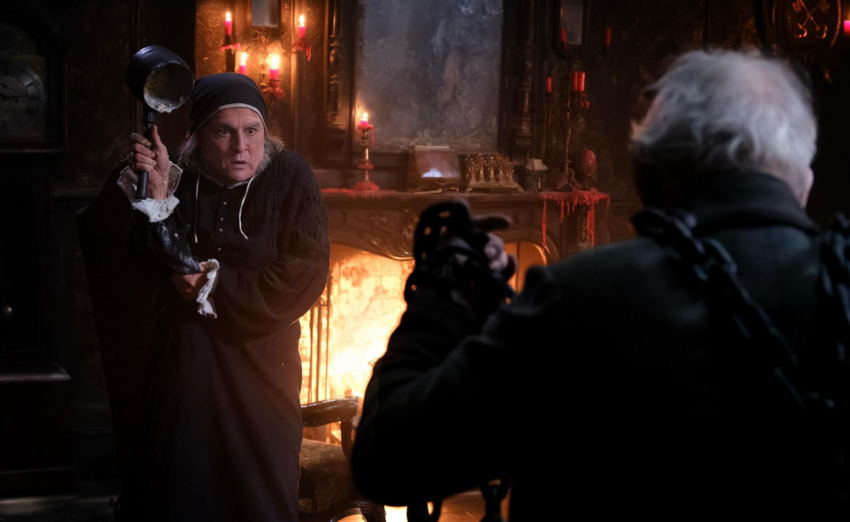
Academy Award nominee Johnny Depp stars in his first major theatrical role in eight years as the title character in Ebenezer, the latest adaptation of Charles Dickens’s A Christmas Carol. As my favorite story of all time, it has become something of an annual tradition for me to experience some adaptation of this beloved novella, whether on stage or screen. The Pirates of the Caribbean star’s much-anticipated performance did not disappoint. In fact, the film will likely become an instant holiday classic for Carol lovers like my family and me. I was pleased to see a relatively large crowd for the half-price 6:40 p.m. showing on Tuesday, November 17th at the Marquee Cinemas in Wytheville particularly considering the surprisingly reasonable ticket price of $6.25. Depp’s whimsical versatility adds considerably to the allure of this timeless character, and the film is brilliantly cast throughout. I have not paid to see a film at a movie theater in years, but would gladly pay to see this one a second time. Sir Ian McKellen is an inspired choice for Jacob Marley, while Rupert Grint, best known to audiences as Ron Weasley in the Harry Potter films, makes an excellent Bob Cratchit. Director and executive producer Ti West appears to have taken some cues from the TNT adaptation starring Patrick Stewart, particularly in the way the settings often feel enclosed and intimate. Many of the shots are close-ups, an apparent directorial preference that lends the film an unusually personal atmosphere. Kudos to West and screenwriter Nathaniel Halpern for taking on the difficult task of adapting arguably the most beloved Christmas story ever written and delivering another memorable interpretation. The film borrows a few touches from earlier adaptations, including the 1938 version starring Reginald Owen, my personal favorite. One particularly familiar moment comes when Fred asks Scrooge what could possibly account for his remarkable transformation, and the answer is Christmas itself, much as Tiny Tim explains in the earlier film. Perhaps my only real disappointment is that Scrooge gives the goose to Fred and his family rather than the Cratchits. The Cratchit family Christmas dinner and Fezziwig’s Christmas party are both abbreviated and unusually solemn, which adds to the deliberately dark tone of the film. That said, I particularly enjoyed Sam Claflin’s portrayal of Fred. Rather than the relentlessly cheerful character audiences are accustomed to seeing, this Fred feels more human. He desperately wants to connect with his uncle, who represents his last living connection to his deceased mother. His frustration with Scrooge’s cruelty is understandable, and he refuses to tolerate his uncle’s insulting dismissal of the Christmas dinner invitation. For those who prefer the darker, more unsettling side of A Christmas Carol, Ebenezer is certainly worth watching. The three spirits are not simply benevolent messengers guiding Scrooge toward redemption. They are former human beings condemned, as part of their own hellish penance, to reveal his past, present, and future, as was the case for Jacob Marley. Each is considerably more macabre and solemn than in most previous adaptations. Andrea Riseborough’s Ghost of Christmas Past is particularly in my opinion, out-frightened Robert Strange’s Ghost of Christmas Yet to Come, with her vacant white eyes becoming increasingly disturbing as the story progresses. Tramell Tillman, of Severance fame, offers a crude but visually fascinating Ghost of Christmas Present, whose appearance progressively wrinkles and ages throughout his encounter with Scrooge. Still, The Ghost of Christmas Future does not come without its share of spooky surprises. I have also come to appreciate that no matter which adaptation of A Christmas Carol one watches, Mrs. Dilber always seems to be perfectly cast. Claire Higgins is no exception. Arthur Conti and Ellie Bamber make a lovely young couple as Scrooge and Belle, while Imogen Turner offers a charming portrayal of Scrooge’s sister, Fan. As a writer, I was particularly taken with the title sequences created by Teddy Blanks. Working alongside the classic Paramount logo, the use of scarlet-red titles to introduce each stave as it appears in the film provides a wonderful homage to Dickens’s original book. The book itself is also reproduced as a fictional work authored by a central character, a clever touch that I particularly appreciated. On that note, Ebenezer takes some interesting liberties with the original story, offering possible answers to questions Dickens left unanswered about what became of certain characters. Some of these suppositions may appeal to viewers more than others, but I found that they fit surprisingly well into the film’s larger narrative. In my opinion, they do nothing to diminish the original story and may even enhance it. I also found Scrooge’s reaction to Marley’s visit particularly humorous. He actually wets himself. While perhaps an unexpected bit of comic relief, if I experienced such a haunting, that might very likely be my reaction. It is also likely the first time in which filmmakers could willingly put that on screen. I am thrilled that A Christmas Carol continues to make such an impact more than 180 years after its publication, and equally delighted that Ebenezer reached the number-one position at the box office during its debut weekend. Dickens’s timeless story clearly has plenty of life left in it, and Johnny Depp and Ti West have given audiences another reason to revisit it. Without hesitation, Ebenezer will become an annual part of my family’s Christmas viewing tradition.