Zach Cooley

Tag: Raymond Bird

Byrd remembrance brings ‘tears from God’
Byrd remembrance brings ‘tears from God’

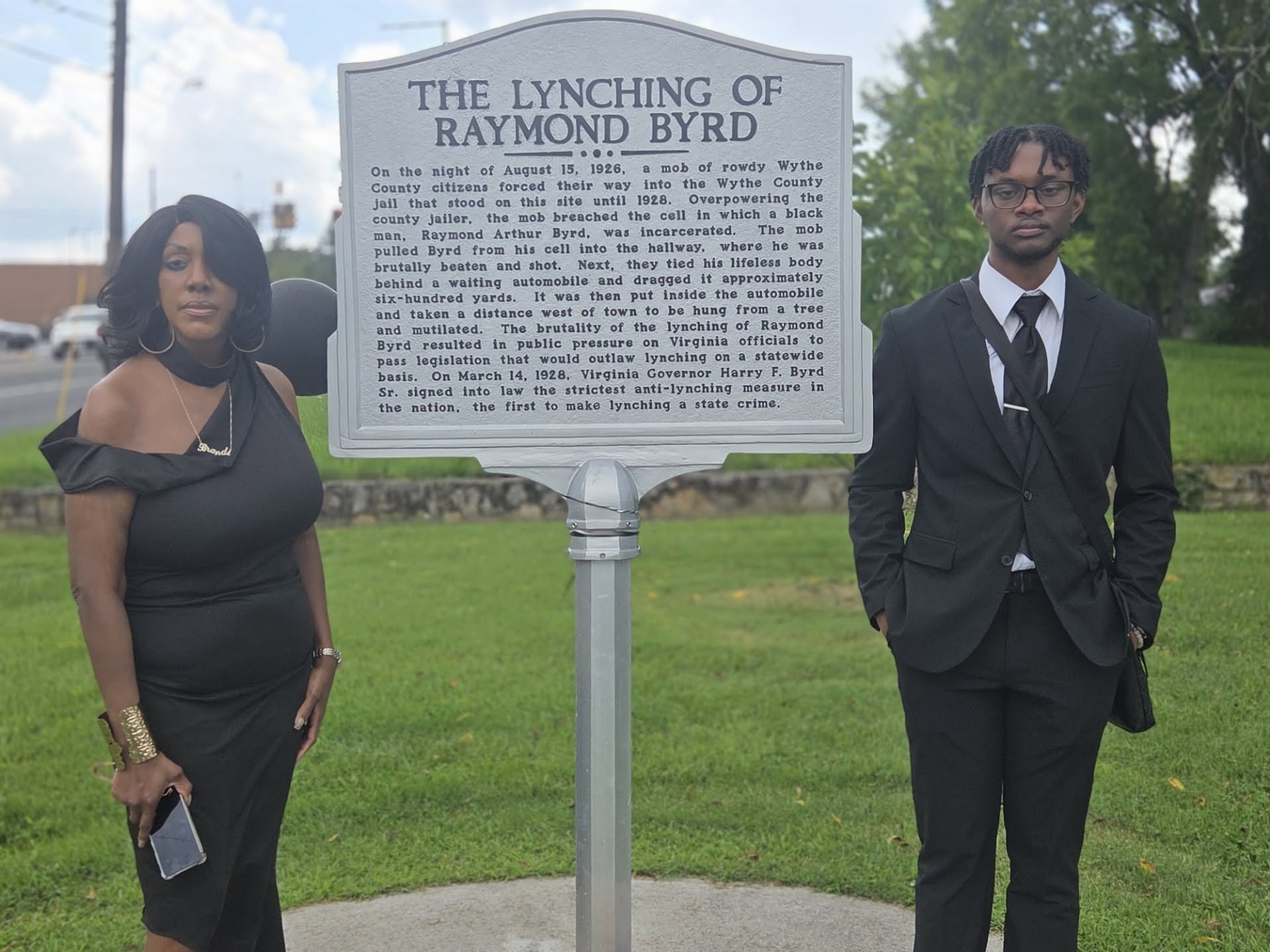
Patricia Austin called the torrential downpour that fell on downtown Wytheville as approximately fifty of us gathered to commemorate the centennial anniversary of one of the darkest chapters in our local history “tears from God.” One hundred years earlier, on Aug. 15, 1926, a 31-year-old Black man named Raymond Arthur Byrd was attacked, beaten, shot and lynched by an angry mob of white men from Wythe County. Byrd had been accused of a sexually assaulting a white girl, after which a group of racists took matters into their own hands and committed the unspeakable act of violence. Today, a historical marker commemorating Mr. Byrd’s life and legacy stands in front of the site of the old Wythe County Jail, where he was held before being taken by the mob. “We stand here not only to remember the injustice, but to confront the truth of what happened,” said Austin, executive director of the Wytheville Training School and Cultural Center. “This ceremony is an act of courage, an act of community responsibility, and it is an act of love for justice and a love for the future that we are building together.” The lynching of Raymond Byrd sparked statewide and national outrage and left generations of his family to live with the trauma of a failed justice system. Standing beside the marker, Byrd’s great-granddaughter, Brandi Quinn, wept as the tragedy that had been carried through generations of her family, was recounted. Her son, Raymond Byrd’s great-great-grandson Braylin, read a poem written by Byrd’s widow sometime after her husband’s horrific death. Overcome by emotion, he, too, shed tears. Braylin is currently attending college in Ohio going into his Junior year as a Political Science Major and Communications Minor. He was also elected Senator at Large on his campus. Raymond Byrd’s widow, Tennessee Hawkins Byrd Patterson, lived only 15 years longer than her husband, dying of malignant hypertension at the age of 39 in 1941. According to research presented during the ceremony, she had been refused medical treatment by white doctors in Wythe County. Dr. Thomas Edge, teaching professor of ethnic studies at Bowling Green State University, presented extensive research on Raymond Arthur Byrd, his tragic death, its effect upon his family and community, and the continuing search for acknowledgment and truth. A feature-length documentary on the story is also being planned. “My goal is not simply to recount the horror of what happened,” Dr. Edge said. “My goal is to continue the legacy of the family and to note how they coped with the trauma of such a horrible ending to their ancestor’s life.” One of the most emotional portions of the presentation focused on Hazel Byrd Hayes, the daughter of Raymond and Tennessee Byrd. In an effort to help her family, Hazel reportedly lied about her age to join one of the first female military units during World War II in order to send money home to help her siblings. Following her military service, she joined the Great Migration north and eventually built a successful career as a beautician in Ohio. “She not only had to deal with the tragedy of her father’s death, but also her mother,” Dr. Edge pointed out. “The fact that her mother died at an extremely young age after being refused medical treatment by white racists was equally traumatizing for the young woman.” It was not until a decade after Raymond Byrd was killed that his widow could apply for a military headstone for him. In 1936, the law was changed to allow qualifying military veterans to receive a government-issued headstone. Before then, victims of racial violence were often buried in unmarked graves. Brandi Quinn is the only grandchild of Hazel Byrd Hayes, who often shared with her granddaughter both the beauty of Virginia and the pain of living in a community that constantly reminded her of the father she lost when she was only 2 years old. “My grandmother shared with me so many things about the beauty of Virginia,” Quinn said. “But she also shared with me the difficulty of living in a community that constantly reminded her of the loss of her father.” A World War II veteran, Hazel Byrd Hayes moved north to Toledo, Ohio, where her family continued to grow and thrive. Today, her granddaughter and great-grandchildren carry on that legacy. Her great-grandson bears an uncanny resemblance to his great-great-grandfather, and it was a privilege to be introduced to this family. They approached the commemoration of an unspeakable family tragedy with tremendous grace and class and it was a singular honor to meet them. “Thank you for greeting us with warmth and love,” Brandi Quinn said. “We will carry you in our hearts back to Toledo with us.” Being part of such a ceremony is something my wife Emily and I will never forget. Despite the horrors of racism that still exist today in this community, there was something profoundly moving about witnessing such an outpouring of humanity. People stood together in the pouring rain, united by the belief that the truth matters and that the life of Raymond Arthur Byrd matters. May his soul rest more peacefully in the knowledge that there are those who will not forget his life, his struggles or the injustice inflicted upon him. May we never forget the plight of any human being who is treated as though they are somehow less worthy than another. And may the truth of Raymond Arthur Byrd’s story, and stories like his, never be lost on those who continue striving to make humankind better through the way they choose to live their own lives. Remembering is not enough if it changes nothing. It is where the responsibility begins.
Zach's At It Again

Not A Sparrow Falls drops today

Not A Sparrow Falls drops today

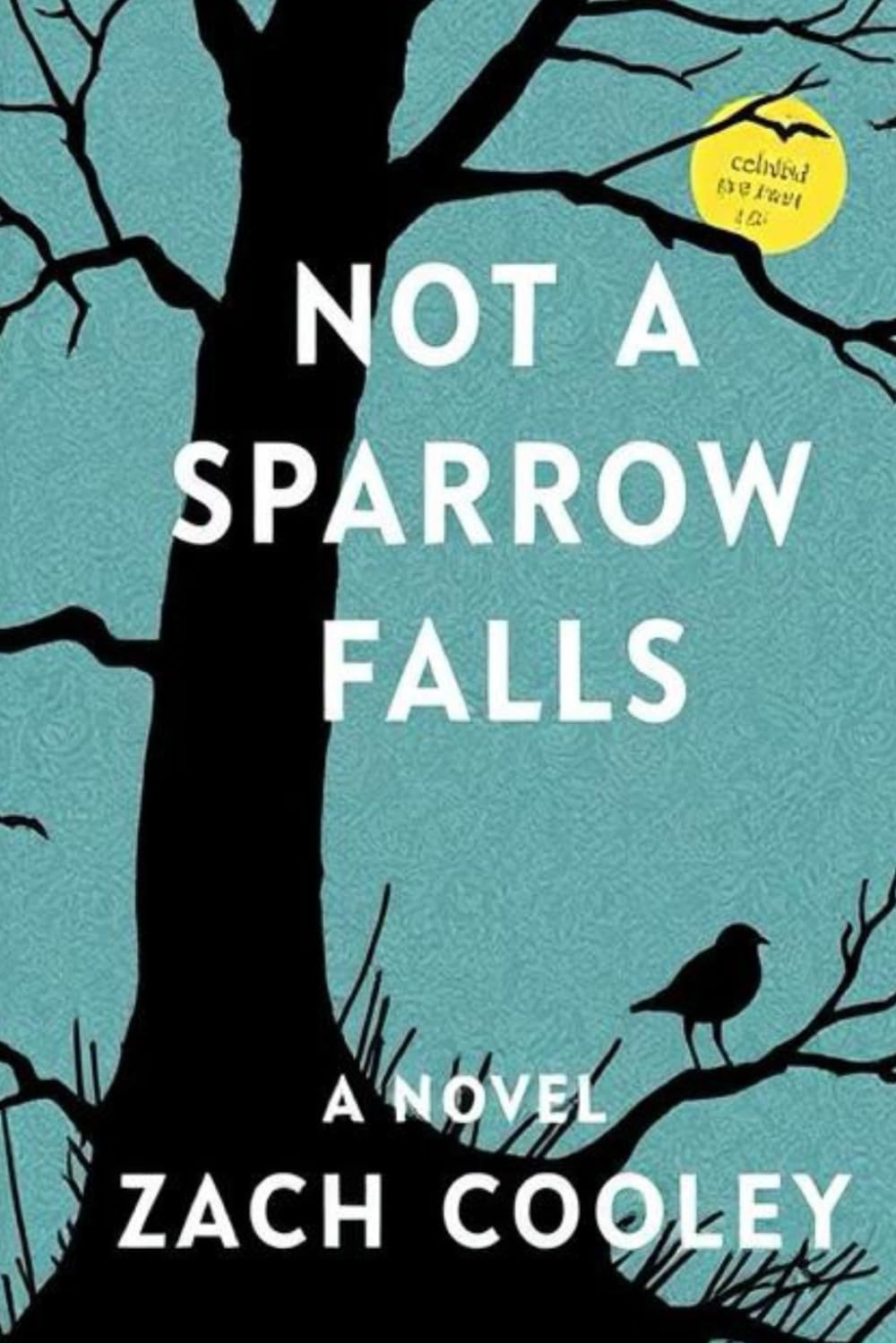
On August 15, 1926, Wytheville experienced perhaps the darkest hour in its history, when one of its citizens was lynched solely because the color of his skin was Black. Long before the lynching of Raymond Byrd was memorialized on a plaque at the site of the former Wythe County jail, a friend of mine, David Monahan, approached me with the idea of writing a novel inspired by this tragic event. From the very beginning, the idea both compelled and frightened me. I was deeply drawn to the story, yet I felt I lacked both the courage and, perhaps more importantly, the lived experience to tell it responsibly. For more than a decade, I wrestled with that truth. Ultimately, I arrived at a novel that includes this history—but in fictionalized form. Names have been changed, and certain circumstances differ from the historical record. I still do not feel qualified to tell the full truth of this story as it deserves to be told. That work has already been done with great care and scholarship by the late local historian John Johnson in his book They Gathered a Mob. My novel, however, seeks to tell a more multifaceted story. While I do not understand—and would never claim to understand—what it means to be societally ostracized because of race, I do know what it feels like to be treated as a third-class citizen as a person with a disability. A century ago, the experience was far harsher. If a disabled child survived birth at all, institutionalization was often immediate and permanent. That reality was another truth I wanted to confront in this story. One of my sister’s favorite books is To Kill a Mockingbird. It is one of mine as well. Inspired by it, I introduced a disabled teenage boy and his younger sister into the narrative, drawing from our own childhood. I included memories of strolling the streets of our neighborhood together, planning imaginary journeys, always accompanied by our dog, Fluffy—who was tragically killed by a car. After I lost another dog years later, I was devastated by the thought that I might never see him again. I had been told that animals do not go to heaven. That idea broke my heart. Dogs love unconditionally in the way God calls humans to love—and so often, we fall short where animals do not. I could not accept that such love would be excluded from eternity. Years later, a caseworker visited my home, and I shared that grief with her. She introduced me to Matthew 10:29: “Are not two sparrows sold for a penny? And yet not one of them will fall to the ground apart from your Father.” I held onto that verse. I carried it with me for years. It became the spiritual foundation of this book. I knew I wanted to write a story that paid tribute to Raymond Byrd, to the pets I have loved and lost, and to people with disabilities like myself—to affirm that a meaningful quality of life should never be denied to any of us. At its heart, though, this book is also a tribute to my sister. She is six years younger than I am, yet she often took better care of me than I ever did of her as her big brother. My childhood was wonderful because I had the greatest playmate in the world. She was my baby, and she is the reason I wanted to become a father. Through her, I learned the joy, tenderness, and purpose that come from loving a child. She has always been kind, funny, generous, and loving. Today, she remains among my truest friends and my most trusted confidants. This book is as much a tribute to her as it is to anything else. On a more serious note, I want readers to see the connection—however uncomfortable—between the mistreatment and misunderstanding of people of color, people with disabilities, and even animals. These are very different experiences, but they share a common root: the denial of dignity. In the end, we are all God’s creatures, and we are far more alike than different. If the idea that “not a sparrow falls” does not convey that truth, then my work has failed. Not a Sparrow Falls has the potential to be the most important book of my career—but only if people are willing to engage with its message. If you are open to examining the unsettling parallels between our present moment and the world of a hundred years ago, I humbly invite you to read it. As its back cover summarizes, “In the shadowed hills of 1920s Virginia, teenager Eli Ellis moves through life in a wheelchair, his sharp eyes and quiet strength carrying more than just the weight of his own body. Beside him is his little sister Sill, brave and bold with a sketchbook always in hand, and their dog Fluffy — until the day violence steals more than just their peace. When a lynching in their town is hushed, the siblings record the dirty secrets of Stones Mill. Their handmade book spreads faster than whispers in the church pews, drawing admiration, suspicion — and danger. As community support swells and opposition turns threatening, the Ellis family is pushed to the edge, facing down the powerful men who would rather preserve silence than face justice. Eli must find his voice, not just on the page but in the town square, as the truth begins to stir hearts and shake foundations. Based on true events, Not a Sparrow Falls is a tender, unflinching portrait of a small town at the crossroads of conscience. Told through Eli’s wise and wounded voice, it is a story of resistance, remembrance, and the quiet resilience of those who refuse to be erased.” This is the strongest statement I have ever made as an author. If you give it a chance, I would genuinely love to hear whether its message reached you. Not a Sparrow Falls is now available on Amazon in hardcover…

Strictly Observing