Zach Cooley

Tag: Southwest Virginia

Easton sells out Wytheville’s Millwald in enthralling showcase

Easton sells out Wytheville’s Millwald in enthralling showcase

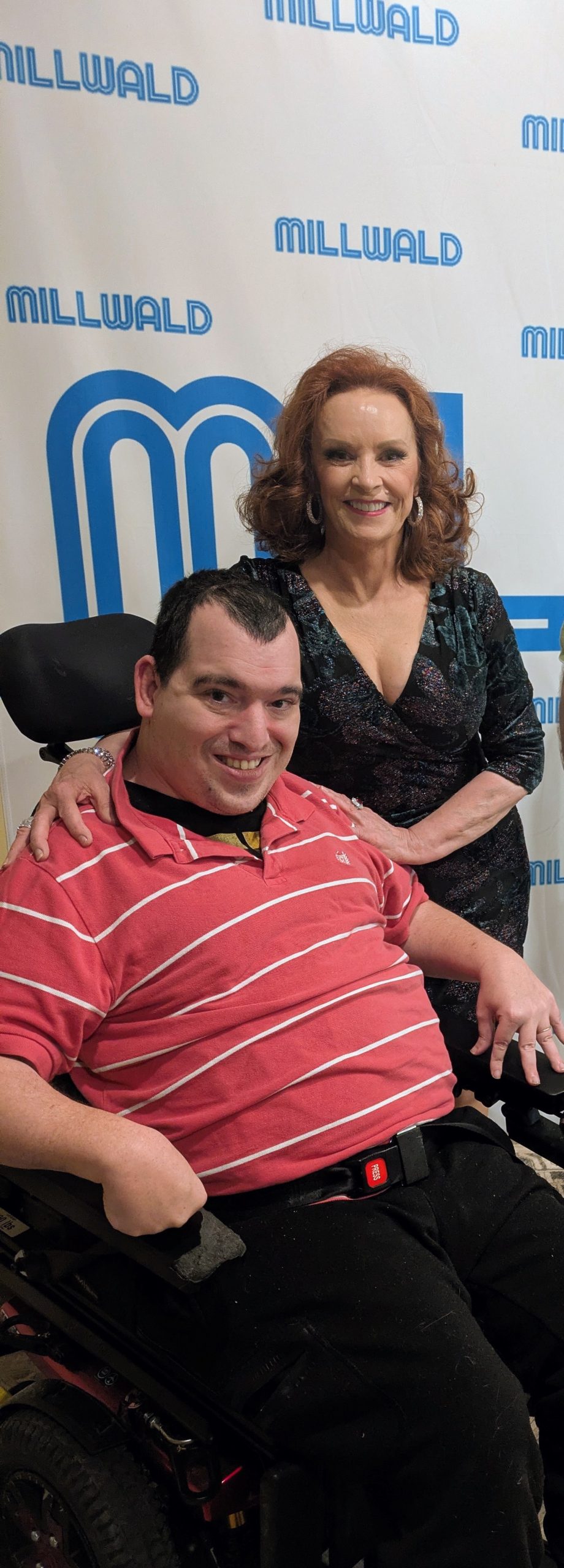
Despite turning 67 this month, Scottish pop star Sheena Easton proved she still has what it takes to wow an audience when she brought her nostalgic ’80s dance sound to the Millwald Theatre on Saturday, March 21. Opening with the Lisa Stansfield classic “Around the World,” Easton immediately had the sold-out crowd of 500 on their feet, and the energy never dipped throughout the 85-minute set. She followed with her 1988 hit “Days Like This,” setting the tone for an evening that balanced humor, nostalgia, and vocal strength. “Some of you are here because you know my name,” she joked after sipping from a mug she claimed was “fifty percent likely to have tea in it.” Then, with a grin, she added, “But let’s face it—some of you are here because your mother dragged you.” Before launching into the ballad “Almost Over You,” Easton shared that its tear-jerking lyrics reflected a true story from her own life. The performance was met with warm appreciation from the audience. She followed with a heartfelt rendition of “It Must Have Been Love” by Roxette, then delivered the Burt Bacharach classic “Always Something There to Remind Me” in a style closer to Sandie Shaw’s original version than the later ’80s interpretation by Naked Eyes. “That is my trilogy about getting dumped,” she quipped at the end of the sequence. “I would never dump you!” one audience member shouted. “Hi, sugar,” Easton replied in a playful Mae West-style drawl. Later in the evening, a fan called out, “You lost your accent!” “That’s because I stole yours,” she shot back, effortlessly keeping the crowd engaged. Introducing her hit “Strut,” Easton teased, “This next song will remind you of the moment your mother regretted playing you my music—after she came home and found you in her high heels singing the naughty lyrics.” She added with a laugh, “Some of the girls were doing it too.” A highlight of the night came during her tribute to her late friend Prince, whom she credited with boosting her confidence as a songwriter. She performed “The Arms of Orion,” their duet from the Batman soundtrack, alongside “Nothing Compares 2 U”—famously recorded by Sinéad O’Connor. Easton joked that she had been “dead jealous” that O’Connor recorded the song instead of her. Both numbers featured her backup singer and duet partner, Jason Martinez, whose versatility—ranging from country to R&B—added depth throughout the evening. “The Lover in Me” stood out as a high-energy callback to her ’80s peak, while a Prince medley—including “U Got the Look” and “Sugar Walls,” with a nod to Sheila E.’s “The Glamorous Life”—kept the momentum strong. Martinez rejoined Easton for her country hit “We’ve Got Tonight,” originally recorded with Kenny Rogers and written by Bob Seger. Of course, the show would not have been complete without Easton’s talented band. As she noted in a prior interview, she truly brought “the best musicians in Vegas.” Saxophonist Tony Q drove many songs to their peak energy, while guitarist Andrew Weir delivered standout performances—perhaps inspired, as Easton joked, by his wife Ann being in the audience for her birthday. Musical director Brian Triola anchored the sound on keyboards, and drummer Michel Angelo Vattima provided a powerful rhythmic backbone. “Telefone (Long Distance Love Affair)” proved to be a major crowd-pleaser, but it was her signature hit “Morning Train (9 to 5)” that brought the audience to its feet before the first note—and kept them standing through the final chord. Easton closed the night with her James Bond theme, “For Your Eyes Only,” ending the show with grace, warmth, and consummate professionalism. As delighted as the Wytheville crowd was to welcome her, one can only hope that this performance marks the beginning of many more artists of Easton’s caliber gracing the stage at the Millwald Theatre. As for Easton herself, the artist could not have been warmer and more gracious. Having been given the honor to meet and interview her was an even greater privilege than watching the double Grammy winner perform. She has lost nothing in talent or showmanship in a half-century of performing. One can only hope she will see fit to return to our humble, but grateful hamlet again soon.  

Strictly Observing

New PBS doc highlights SWVA’s role in American Revolution

New PBS doc highlights SWVA’s role in American Revolution

My first story since the passing of my father brought me back to one of my favorite local spots. The Millwald Theatre was offering a free screening of a new Blue Ridge PBS documentary, Resolved to Live and Die: The Revolutionary Roots of Southwest Virginia, an hour-long film committed to exploring the revolutionary roots of Southwest Virginia. Delivered with the full Ken Burns treatment, it is the first documentary of its kind to finally showcase our region’s major role in the beginnings of the Revolutionary War. Beautifully photographed and filmed on location here in Wytheville at the Willowbrook Jackson/Umberger Homestead Museum, the documentary features Michael Gillman, manager of historic sites and homestead museum operations with the Town of Wytheville Department of Museums. No one knows more about Wythe County history than Michael Gillman—a longtime friend and lifelong Wytheville native. He appears both as a reenactor in authentic Revolutionary War clothing and as one of the film’s primary speakers. “I learned from the best,” Michael told me after the fact. “Jim Spraker, Davy Davis, and the late John Johnson were among some of my greatest mentors.” Of course, the section that mattered most to me was the portion about the Fincastle Resolutions, which included footage of the plaque in modern-day Austinville, Virginia. I have always believed that the Austinville area—home to my mother’s side of the family for centuries—is the most historically significant part of our region, though too often overlooked. “Some of the first [immigrants] to arrive were Welsh miners, drawn by the newly discovered lead deposits near present-day Austinville in Wythe County,” the documentary states. “Founded in 1756 by Colonel John Chiswell, the mines faced early financial struggles, but eventually became vital to the Patriot cause.” “Chiswell goes to England and brings William Herbert and his family over here in 1761,” Michael explains in the documentary. “The first letter written out of modern-day Wythe County was from Captain William Herbert, who basically states that the enslaved arrived safe and well, and that they would get moving to get the lead, which they started mining leads successfully.” The Fincastle Resolutions, long said to be a precursor to the Declaration of Independence, were signed in Austinville. At least, that is what I always thought. However, Michael proposes in the documentary that it is more likely the document was signed at the McGavock home eight miles away in Fort Chiswell. Neither location can be proven definitively, but his reasoning is compelling. As Michael explains, James McGavock—one of the signers of the Fincastle Resolutions—likely played a central role in where the men gathered. “We know they met at his tavern,” he says in the film. “And since all of these men traveled the Great Wagon Road, they would have passed McGavock’s establishment on their way to Austinville. Given that, why would they travel eight miles farther just to sign the resolutions in Austinville?” It is a question that invites debate, curiosity, and the kind of historical dialogue this documentary so skillfully inspires. The first rough cut of the documentary ran over two hours, and the project took more than two years to complete. Inevitably, much Wythe County history ended up on the cutting-room floor. Still, the 56 minutes that did make it to air—premiering on PBS Appalachia and Blue Ridge PBS on Sunday, November 16th, ahead of the new six-part Ken Burns series on the American Revolution—offer a beautifully crafted piece of cinematography accompanied by a narrative rich in historical context. One key takeaway is how unsettlingly familiar the political forces that sparked and escalated the Revolutionary War feel when compared to today. While many skirmishes centered on land disputes, allegiance often fell along much more personal lines. A man might become a Patriot simply because a Loyalist had insulted his brother—cementing him on the opposing side of whatever his rival supported. Though our history books often portray the conflict as Americans versus the British, the documentary reveals that it was very much a global conflict that affected all nationalities, including pitting Americans against Americans. One particularly relevant story that did not make the final cut was that of Reverend George Flohr, a German-born minister who fled to Southwest Virginia to escape the brutal fighting of the Revolutionary War in his homeland. He founded the St. John’s churches in both Rural Retreat and Wytheville, and is buried in the St. John’s Lutheran Church Cemetery in Wytheville. For me, however, the heart of the film lies in its attention to Wythe County—my lifelong homeland. That is what draws me most deeply into this one-of-a-kind documentary. Blue Ridge PBS Director of Content Carol Jennings wrote the bulk of the script for this compelling documentary. During the question-and-answer panel at the end of the screening, she shared that she will be posting bonus video segments—scenes that did not make it into the final cut—on the Blue Ridge PBS website over the next couple of months. The story of Reverend Flohr will be among those added features. At any rate, I extend my deepest appreciation to everyone involved in creating this documentary, which finally shines a long-overdue spotlight on our hometowns and their pivotal role in the birth of this nation. To have our story told at this level is a rare and special honor, one of which we should all be proud.

Strictly Observing

Jay Leno brings laughs to Hard Rock Bristol

Jay Leno brings laughs to Hard Rock Bristol

Visiting the beautiful Hard Rock Hotel and Casino to see legendary comedian Jay Leno live in concert on Saturday, October 24, with my dear friend Jeremy Miller, was a rare treat. The 2,000-seat Hard Rock Live venue was filled to capacity to witness the former Tonight Show host make his first-ever appearance in Bristol, Virginia. At 75 years old, Leno took the stage promptly at 8:15 p.m. and delivered a 90-minute set straight through—no breaks, no tangents, just pure, classic stand-up. “It’s hard being a comedian today,” he admitted early in the show. “You say the wrong thing, and you get this cancel culture admonition.” That may have been Leno’s way of explaining the absence of political jabs that once defined his Tonight Show monologues during his 22-year run on NBC. He did, however, sprinkle in a few well-aimed jokes at the expense of current and former presidents Donald Trump and Joe Biden. “Trump said first she was Black, then she was Indian,” Leno recalled Trump’s comments about Kamala Harris. “He’s done the same thing—first he was white, then he was orange.” Leno also noted that a prestigious university recently analyzed one of Trump’s speeches and determined that Trump spoke at a fifth-grade level. “After hearing this,” he quipped, “Trump called the researcher a doo-doo head.” “Biden claimed the press was only there to dig up dirt on him,” he said. “Anyone qualified to dig up dirt on Joe Biden should be classified as an archaeologist.” From there, Leno shifted toward more personal and nostalgic material, and the evening truly came alive. The highlight of his set centered on his immigrant parents—his mother, a Scottish refugee, and his father, an Italian prizefighter. He recalled one memorable Thanksgiving dinner when his mother prepared a feast complete with both turkey and lasagna. Exhausted, she handed her husband an electric carving knife and asked him to carve the turkey. Two clicks later, the knife wouldn’t start. “The knife is dead!” his father shouted. “Do I have to do everything around here?” “If you think a cooked turkey can’t fly, I’m here to tell you—it can,” Leno grinned as he described what happened next. “We heard it hit three of the four walls, and nobody even looked up from their meal.” He also shared how his mother’s unintentional movie reviews became comedy gold on The Tonight Show. After sending her to see Scarface, he called for her opinion. “During that scene where they’re cutting him up in the bathtub,” she told him, “why do they have to use such bad language?” “There she was, enjoying this decapitation scene,” Leno laughed. “And she was offended by the foul language!” Another favorite memory involved introducing Sting to his father backstage at The Tonight Show. “My parents were never impressed by celebrities,” he said. “They didn’t know anyone past Alan Ladd.” “Stingman?” his father said, mishearing. “Nice to meet you, Stingman.” Leno also recounted taking his mother to dinner at the famous Chasen’s restaurant in Beverly Hills—a spot she recognized from her favorite show, Dallas. When she spotted actress Connie Stevens, one of her longtime idols, Leno arranged for Stevens to stop by their table. His mother lit up. “Connie Stevens!” she exclaimed. “Whatever happened to you?” Leno later reflected on aging and marriage with his trademark self-deprecating wit. “Thirty years ago, I wrecked my motorcycle on a Friday and was back at work Monday,” he compared his current aches and pains to his younger days. “Last Thursday, I yawned and turned my head at the same time—and I’m just now able to move my neck again.” He spoke lovingly of his wife of 45 years, Mavis, without mentioning her recent health challenges. Instead, he focused on their shared quirks. “My wife makes me turn off any show where an animal might be harmed,” he said. “The other night she was watching a show where a woman stabbed her husband 68 times—and she was so into it she started mimicking the stab wounds!” “Men can flirt until about 52,” Leno joked about his newfound invisibility. “After that, if you compliment a woman, you’re creepy. But after a while, women just stop noticing you altogether. At my age now, women are changing clothes right in front of me!” “A woman pulled up beside me, rolled down her window, and asked for my number,” he told of a recent encounter while driving. “I smiled and said, ‘Thanks, but I’ve been happily married for 45 years.’ She said, ‘No, you don’t understand—I’m a private nurse. Here’s my number in case you ever need my services.’” In summary, Jay Leno remains as sharp and charismatic as ever. His 90-minute set flowed effortlessly from start to finish, without audience interaction or topical pandering. It was simply vintage Leno—timeless, quick-witted, and observationally brilliant. It was an honor to see a living legend in person, someone I grew up watching every night behind the Tonight Show desk. Here’s hoping I’ll have the same opportunity to see Jimmy Fallon in the years to come.    

Strictly Observing

Philippines native brings soulful art to Southwest Virginia

Philippines native brings soulful art to Southwest Virginia

Vall Dino was born in the Philippines and came to America at the age of nine, when his mother married a man from Virginia. One of three children, he and his younger sister left their island home and settled in Smyth County, Virginia, stepping into a world that was entirely new in both language and culture. When Vall entered Sugar Grove Elementary School, he couldn’t speak a word of English. Yet he carried with him a gift that transcended words — a gift that would endear him to countless classmates and, eventually, to an entire region. “I may not have been able to speak to them,” Vall told me during an August 14th telephone interview, “but I could draw them a picture.” That simple statement is more than just a childhood memory; it is a thread that has run through Vall’s life ever since. His artistic ability, once a quiet bridge between him and his peers, has now blossomed into a talent recognized across the Southwest Virginia region. I first met Vall this past winter at The Art Place in Chilhowie. Entering the gallery, I was instantly struck by his work — pieces that seemed to lift images straight from a dream, vivid with color and emotion, and tinged with the smoky shadows of 1940s film noir. That period of American history has always fascinated me, and Vall’s art seemed to capture its essence without imitating it. But more than his technical skill, I was moved by his warmth and kindness, the openness of someone who carries both depth and generosity in equal measure. I was humbled when he presented me with a copy of one of his most celebrated works: a black raven perched on a bare limb, silhouetted against a brilliant red and orange sunset. “The raven represents the darker side of life,” he explained. “It’s a part of all of us. The sunset — with those deep reds and oranges — represents the difficult periods we all go through.” It is a gift I will treasure for the rest of my life. The raven was created as part of a pair, its counterpart a white owl resting against the backdrop of a clear blue sky. “The owl represents the daytime, the lighter side of life,” Vall told me. “I wanted it to be pure white to balance the dark color of the raven.” Though he has not returned to the Philippines to live, the now 28-year-old artist admits he misses its pace of life — and, especially, the family he left behind. “I have way more family in the Philippines than I do here in Virginia,” he said. “I think that’s part of why I paint so much — I miss them, and I miss the life I had on the island.” Vall’s artistic roots stretch back to his childhood there, on his grandparents’ farm. “We would make things from clay,” he recalled. “We’d draw with charcoal and burned wood from the cooking fire. We’d weave art from coconut tree leaves we tied together.” Those early days of improvised creativity were the beginning of a lifelong practice. When Vall entered high school in Smyth County, he began participating in art competitions. “I didn’t win at first,” he reflected. “But over time my passion grew, and I got better at it.” Vall’s first languages were Bisayan and Tagalog, but after years of speaking mostly English, he now finds his native tongue slipping away. “My mother still speaks to me in our language, and I can understand her,” he said. “But I have trouble speaking it now.” Following the death of his stepfather, Vall’s mother remarried and had another daughter, now ten years old. Through the changes in his family life, Vall’s art remained a constant — though he treats it with humility. “Art is always an aside for me,” he said. “I have a full-time job in a factory. I keep art as something I work on until I can save enough to really do something with it.” When asked about his goals as an artist, Vall’s answer is simple: to inspire others. He also values the personal commissions he’s received over the years. “I want to use my art to create self-awareness for people who need it,” he told me. “We all know the mental health struggle is real, and we should use our gifts to help people through it.” His connection with The Art Place in Chilhowie began, as he put it, “out of necessity.” “I’d been looking at The Art Place for a long time, thinking I’d like to display my work there,” he said. “Eventually I worked up the courage to talk to someone, and they let me bring my paintings in. I’ve had several shows there now.” With a warehouse full of paintings and space running low, Vall also approached the gallery about storing some of his work. That decision brought more than storage — it brought community. “I’ve met so many great people there,” he noted. “I wish I’d gone to them sooner.” One of those people is our mutual friend, Liam Besneatte-Cullinane, a fellow artist whose work often uses unconventional materials like newsprint as a base. Where Liam’s palette is more muted and textured, Vall’s style bursts with color, making their work a vivid complement to one another. “Liam and I are planning another art show there in the next couple of months,” Vall said. “We’re looking forward to that — and to more in the future.” As our conversation drew to a close, Vall summed up his philosophy simply: “Art is the expression of the soul. It’s the language we cannot speak.” As we wait to see what new visions his soul will offer us next, I remain grateful for his friendship and for the blessing of knowing someone with such talent and such heart. I am in awe of his gift — and eager to see how his art will continue to illuminate the lives of so many….

Strictly Observing